Novels for Tree Huggers

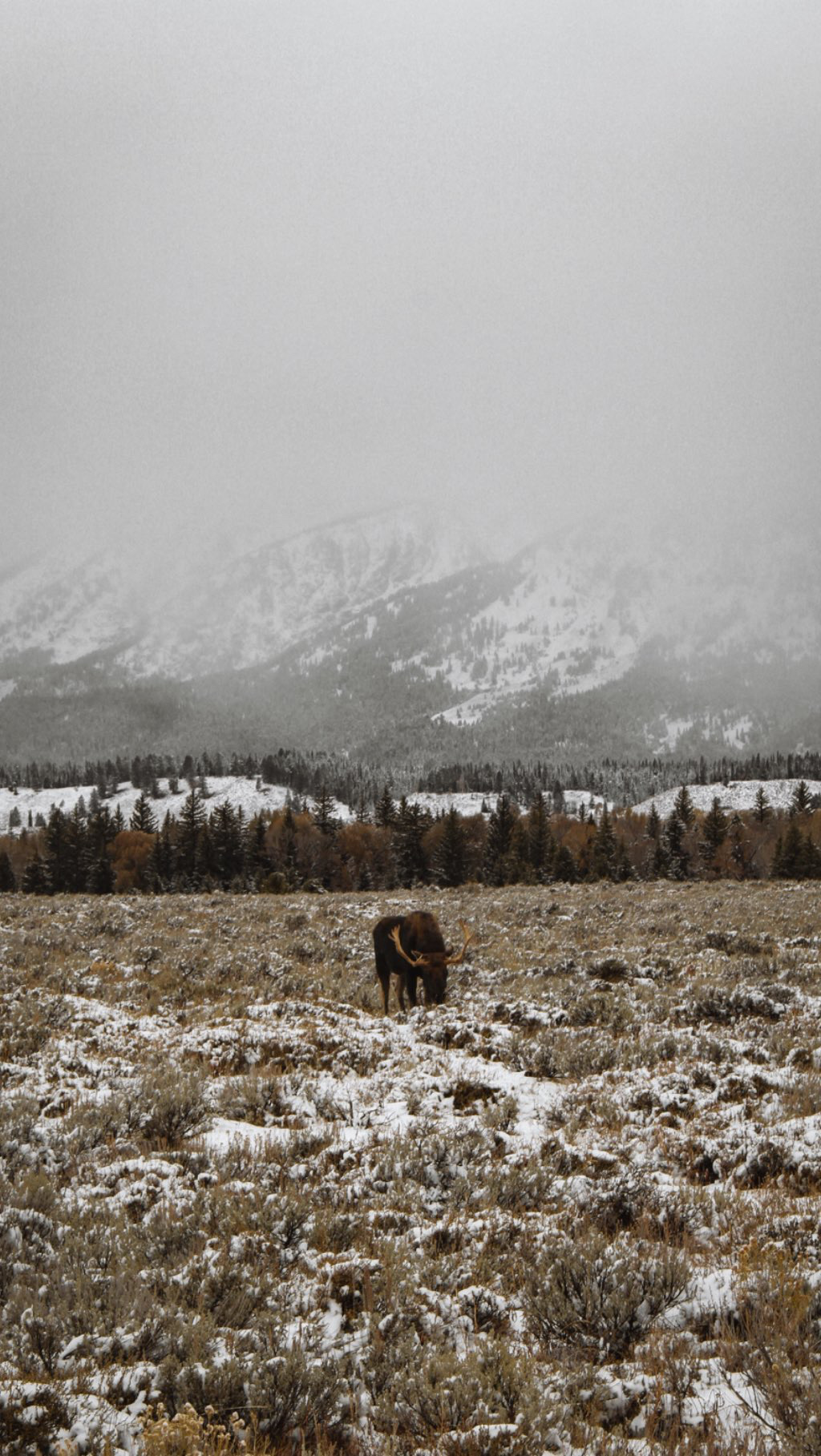
Lately I’ve been getting into the nature genre. That must sound strange to read, but there’s no other way to accurately state it. Saying I’ve always been a lover of nature isn’t as profound as claiming that I could easily see myself living out the rest of my days in the middle of a forest surrounded by mountains and creeks. Growing up, I used to spend all of my summers in the Catskills mountain range of New York. This might be part of the reason why I now have such a deeply rooted passion for exploring new terrain. Of all the national parks in this country, my favorites to visit are Olympic, Grand Teton, Joshua Tree, Zion, and the Redwoods. Driving for weeks can be exhausting, and there is certainly a lot of driving needed to visit all of these places. Whenever I’m not behind the wheel, I usually try to read something that will get me in the mood for our next hike. Here are some of my new (and classic) favorite nature-genre novels…

Wild: From Lost to Found on the Pacific Crest Trail by Cheryl Strayed: At twenty-two, Cheryl Strayed thought she had lost everything. In the wake of her mother’s death, her family scattered and her own marriage was soon destroyed. Four years later, with nothing more to lose, she made the most impulsive decision of her life. With no experience or training, driven only by blind will, she would hike more than a thousand miles of the Pacific Crest Trail from the Mojave Desert through California and Oregon to Washington State — and she would do it alone. Told with suspense and style, sparkling with warmth and humor, Wild powerfully captures the terrors and pleasures of one young woman forging ahead against all odds on a journey that maddened, strengthened, and ultimately healed her.

The Overstory by Richard Powers: The Overstory is a sweeping, impassioned work of activism and resistance that is also a stunning evocation of – and paean to – the natural world. From the roots to the crown and back to the seeds, Richard Powers’s twelfth novel unfolds in concentric rings of interlocking fables that range from antebellum New York to the late twentieth-century Timber Wars of the Pacific Northwest and beyond. There is a world alongside ours—vast, slow, interconnected, resourceful, magnificently inventive, and almost invisible to us. This is the story of a handful of people who learn how to see that world and who are drawn up into its unfolding catastrophe.

The Nature Fix by Florence Williams: From forest trails in Korea, to islands in Finland, to eucalyptus groves in California, Florence Williams investigates the science behind nature’s positive effects on the brain. Delving into brand-new research, she uncovers the powers of the natural world to improve health, promote reflection and innovation, and strengthen our relationships. As our modern lives shift dramatically indoors, these ideas—and the answers they yield—are more urgent than ever.

The Hidden Life of Trees by Peter Wohlleben: Wohlleben shares his deep love of woods and forests and explains the amazing processes of life, death, and regeneration he has observed in the woodland and the amazing scientific processes behind the wonders of which we are blissfully unaware. Much like human families, tree parents live together with their children, communicate with them, and support them as they grow, sharing nutrients with those who are sick or struggling and creating an ecosystem that mitigates the impact of extremes of heat and cold for the whole group. As a result of such interactions, trees in a family or community are protected and can live to be very old. In contrast, solitary trees, like street kids, have a tough time of it and in most cases die much earlier than those in a group. Drawing on groundbreaking new discoveries, Wohlleben presents the science behind the secret and previously unknown life of trees and their communication abilities; he describes how these discoveries have informed his own practices in the forest around him. As he says, a happy forest is a healthy forest, and he believes that eco-friendly practices not only are economically sustainable but also benefit the health of our planet and the mental and physical health of all who live on Earth.

Wintering: The Power of Rest and Retreat in Difficult Times by Katherine May:  Sometimes you slip through the cracks: unforeseen circumstances like an abrupt illness, the death of a loved one, a break up, or a job loss can derail a life. These periods of dislocation can be lonely and unexpected. For May, her husband fell ill, her son stopped attending school, and her own medical issues led her to leave a demanding job. Wintering explores how she not only endured this painful time, but embraced the singular opportunities it offered. A moving personal narrative shot through with lessons from literature, mythology, and the natural world, May’s story offers instruction on the transformative power of rest and retreat. Illumination emerges from many sources: solstice celebrations and dormice hibernation, C.S. Lewis and Sylvia Plath, swimming in icy waters and sailing arctic seas. Ultimately Wintering invites us to change how we relate to our own fallow times. May models an active acceptance of sadness and finds nourishment in deep retreat, joy in the hushed beauty of winter, and encouragement in understanding life as cyclical, not linear. A secular mystic, May forms a guiding philosophy for transforming the hardships that arise before the ushering in of a new season. 
Women Who Run With the Wolves by Clarissa Pinkola Estés

Women Who Run With the Wolves is not necessarily about lycanthropy. I was browsing my local book store one day when I noticed a new staff recommendation had made its way to the top shelf, displaying a stocky paperback that appeared more like some fragment of a graduate thesis than a fiction novel about wolves (as I had expected). I’ve come to realize this is one of those books that is meant to change your perspective on life, perhaps more than the usual story would. Clarissa Pinkola Estés has a magical voice that takes you on a wild journey through different myths about women throughout history. While twinning together these folk tales with her own shared experiences, Estés creates an ideology for all women to follow—that we are instinctively wild creatures, and that there is a deep power within all of us like some type of inner goddess.

At first, I worried that this might read a bit fanatical. It took me some months to really get into the stories, but when I did eventually start I simply could not stop. It feels like partaking in an otherworldly ritual when reading this essay. As a Jungian analyst and cantadora storyteller, the author is well equips with extensive theories and knowledge on how women can harness an inner strength through a psychological bond with notions of archaic femininity. In particular, the Wild Woman archetype is thoroughly analyzed and discussed in this novel, making it easier to understand where many of these myths originated.

Several fictional stories I love share a similar aesthetic with this one, and it became apparent that this book is like the backstory for all of the others to come. Although the first half might seem repetitive, it is certainly worth the try in reading it. Some of the writing sounded a bit too primitive, albeit I still greatly enjoyed this novel and will continue to recommend it to others who might want something a bit invigorating to add to their library. 

If You Like, Then You’ll Like: Book Edition

It’s time for another “if you like this, then you’ll probably enjoy this” article. Truth be told, I find most of the books I desire to read by looking up similar stories to some of my favorites. Not all of the time are they accurately depicted as being similar, although I find it interesting that people pair together certain novels based on unique vibes they share. I often do this with films as well, or even music when I try to encapsulate the feeling of a story beyond the page. For this post, I tried to stick to one well known novel and pair it with one or more lesser known stories that I feel can be considered written for the same audience. There will be some throwbacks in here, as well as a mix of genres. 

First, this one is for fans of Leigh Bardugo. The Shadow and Bone trilogy, as well as the Six of Crows duology, have both re-entered the spotlight (if they’d ever left) due to the premier of the 2021 Netflix series Shadow and Bone. While I love all of Bardugo’s work, the trilogy will always hold a special place in my heart because of how impactful it was when I first read it years ago. For that reason, I’m going to suggest that if you enjoyed those books, you might want to check out Deathless by Catherynne M Valente and The Bear and the Nightingale by  Katherine Arden. Perhaps the most obvious connection between all of these stories are the Slavic (particularly Russian) folklore influence they embody. They are fantasy novels, although Deathless is an incredibly strange and somewhat hard to read story at first. I loved it, although I still cannot say with confidence that I understand 100% of what occurred in that novel. 

Moving on to all of those Elven and Fae lovers, of course there is Sarah J Maas and Holly Black. I often find that it is challenging to suggest new reads to people who follow these authors because typically everyone has already read the books I recommend because we all couldn’t get enough of the former. I would say that Uprooted by Naomi Novik, An Enchantment of Ravens by Margaret Rogerson, The Bridge Kingdom by Danielle L. Jensen, and The Unseelie Prince by Kathryn Ann Kindsley are all similar in woodland fantasy appeal. 

For fans of dark academia and Donna Tartt, I’ve already written an extensive post on some of the best D.A. novels I’ve had the pleasure of finding, and you can read that here.

Last, for fans of A Darker Shade of Magic by V. E. Schwab, I’d recommend The Name of the Wind by Patrick Rothfuss and oddly enough Things in Jars by Jess Kidd. Both of these recommendations have less to do with plot and are more closely related to Schwab’s novels through the atmosphere of the story. They evoke a sense of adventure through a strange and unique writing style. The characters are all ambitious and a bit wicked, which I think is a wonderful combination for a narrator because it keeps the plot entertaining. 

Wild: From Lost to Found on the Pacific Crest Trail

Eight years ago, I sat in a dark theater expecting to watch a film about a woman going on a hike. I don’t particularly remember when I stared crying—perhaps it was the final scene where Reese Witherspoon took a few fawn-like steps across a vacant bridge overlooking swaths of bluish grey sky and towering pines interwoven with thick fog as El Cóndor Pasa by Simon & Garfunkel echoed in the distance. Maybe it was earlier on, when I started noticing that this was no mere movie about a long walk. I felt as though I had gone on the journey with Cheryl, so much so that once the fluorescent lights cascaded against us voyeurs, I was struck with a deep longing. Immediately after, I picked up the memoir by Cheryl Strayed. 

Wild: From Lost to Found on the Pacific Crest Trail is a story about redemption and the healing power of nature. After losing her mother, her marriage, and any last lingering hope for a better future, Cheryl spent the early half of her twenties drowning in grief and making poor life decisions. Four years later, something changed. Blinded by her own sorrows, and with nothing more to lose, she decided to hike the Pacific Crest Trail, which runs from the Mojave Desert up the coast to Washington state, with no training and no travel companions—a desperate last reach upwards to haul herself out of the dark water. 

This was both cathartic and suspenseful, brimming with potent imagery of the west coast and all of the dangers hiding beneath its grandeur beauty. Untrained and lost in more ways than one, the protagonist not only faces lethal creatures and possible stumbles off the side of a cliff, she walks the path of a lonely woman on a trail championed mostly by men. As depicted in both the novel and the film, there is a slight anxiety mentioned of what occurs when a woman is alone in the middle of the nowhere, yet Cheryl finds that the people on this trail are similar to her in that they are hiking to heal, or to experience the euphoria of completing such a strenuous plight. It is a heartwarming notion that evokes a sense of community found amongst fellow wanderers, and it provided Cheryl with the push she needed to start breaking down her guarded heart. Nature does that, it seems. The laborious efforts that go into conquering the PCT can bring a person to breaking point, and it is then that nature begins to heal. Some people might find it crazy to want to push one’s body and mind to such extremes, although there is a massive payoff that does not get enough attention. Being alone, submersed between mountains, streams, and desserts, with nothing but your own inner turmoil to conquer and the trail ahead, people find that reaching the end of the hike is gratifying in more than just a show of physical strength—it’s a mental strength too. You can cry and scream as much as you want on the trail, so long as you leave it behind, pick yourself up, and carry on. That is the essence of this memoir, and that is why this book has become so dear to me as a novice hiker myself (side note: I’ll be heading back to Washington state next week to hike Mount Storm King, so maybe I should drop the novice title).

The final shot of the film reflects the last passage of the novel. Overlapping the song, flitting like birds between the canopy, Witherspoon’s voice recites the last words:

What if all those things I did were the things that got me here? What if I was never redeemed? What if I already was?

It took me years to be the woman my mother raised. It took me 4 years, 7 months and 3 days to do it, without her. After I lost myself in the wilderness of my grief, I found my own way out of the woods. And I didn’t even know where I was going until I got there, on the last day of my hike. Thank you, I thought over and over again, for everything the trail had taught me and everything I couldn’t yet know.

How in 4 years, I’d cross this very bridge. I’ll marry a man in a spot almost visible from where I was standing. Now in 9 years, that man and I would have a son named Carver and a year later, a daughter named after my mother, Bobbi. I knew only that I didn’t need to reach with my bare hands anymore. That seeing the fish beneath the surface of the water would be enough…that it was everything. My life, like all lives, mysterious, irrevocable, sacred, so very close, so very present, so very belonging to me. 

How wild it was, to let it be?

House of Earth & Blood by Sarah J. Maas

As promised, here is my somewhat late but still relevant review of Sarah J. Mass’ first adult novel, House of Earth and Blood (Book #1 of ‘Crescent City’). I intended to write this and have it posted long before the publication date since I was gifted with an ARC, but I think it’s taken me this long because I’ve been trying to dissect my feelings regarding the book. I guess it won’t be what many people are expecting, and maybe it’ll be exactly what some are expecting, but that is the beauty of a predominantly YA author branching out to the adult genre (as recently seen with Leigh Bardugo’s Ninth House). But maybe you haven’t yet decided to read this novel, regardless of whether or not you’re already a Maas fan, so here is a little synopsis that might reveal more than just the cover slip. 

The story follows Bryce Quinlan, an oddities antique dealer by day and wild partier by night. Her close knit group of friends indulge in the finest things their town has to offer, but after one evening of excessive drinking and drug use, Bryce’s life comes to a chilling pause when the people she loves are brutally murdered by an unknown demon. The only evidence left to go by are the last texts and voice messages exchanged  between the friends, leaving Bryce ashamed and isolated. When the investigation takes a drastic turn, Bryce slowly emerges from her catatonic state to seek revenge and get answers. 

Enslaved to the Archangels he once tried to overthrow, fallen angel Hunt Athalar is assigned to aid in the investigation with Bryce, while also keeping tabs on her and reporting back to his masters. In return, Hunt will be granted early freedom from his enslavement. As they dig deeper, awful secrets are revealed that threaten to harm everyone they care for, including the unacknowledged feelings Hunt and Bryce begin to develop for one another. With every newfound clue that is unfurled, the paranoia grows as the investigation becomes more and more unbearable with the tragic reality just slightly out of reach for fear of betrayal and denial. The ending will leaved you more shocked than the beginning slaughter scenes. 

While I truly enjoyed this book, I also think it’s very important to note that there should be a trigger warning for mentions of drug abuse and suicide. These are not uncommon to the plot, and are often brought up frequently, so everyone please tread carefully! Frankly, a lot of people might suspect that Maas will use this chance to further develop the explicit sexual scenes she often writes (and that I  very much enjoy), but I found that the sex scenes were few and far between in comparison to the mentions of drugs and self harm. That, to me, is likely why this is rated as an adult novel, not necessarily due to the romance. 

I have mixed feelings about this story because I was prepared to be blown away, and it fell a bit short for me. There were aspects that I really wanted to know more about, and characters who I was very drawn to (like Aidas, the Prince of the Chasm), but they were only prominent on a few pages in this very large book. And because this book is quite large, I though that perhaps there would be many smaller plots within the grand scheme of events, but unfortunately it was the same plot drawn out over many chapters without much action ever happening. I suppose it was set up that way for suspense, but I found myself getting bored here and there, which has never happened to me before with a Maas book. 

Another thing I noticed and still don’t know how I feel about is the fact that many of these characters greatly resemble other Maas characters from her prior stories. I could draw so many parallels between the books, but this one read a bit too close for comfort. On one hand, I love the characters in her other stories, but I also wasn’t prepared to read about them years into the future out of context. The story, while unique in plot, bore very similar settings and characteristics to the author’s other works, so much so that it almost came off paradoxical. 

I suppose that sounds cynical on my part, especially because I still enjoyed this story. I guess what I’m really saying is that while I liked it, it definitely didn’t rise to the occasion as I had hoped it might. There is mention of an Autumn King throughout, and I won’t say more for fear of spoilers, but I’m greatly intrigued by him and what his affiliation with Bryce might lead to in the second book. Other than that, the writing style is very much the same from other Maas books, and this one certainly begins with a hook. However, you might just have to push through in the initial half of the book to get to the more tantalizing stuff in the later half. 

My Rating: 4 of 5 stars
Goodreads Review Link. 

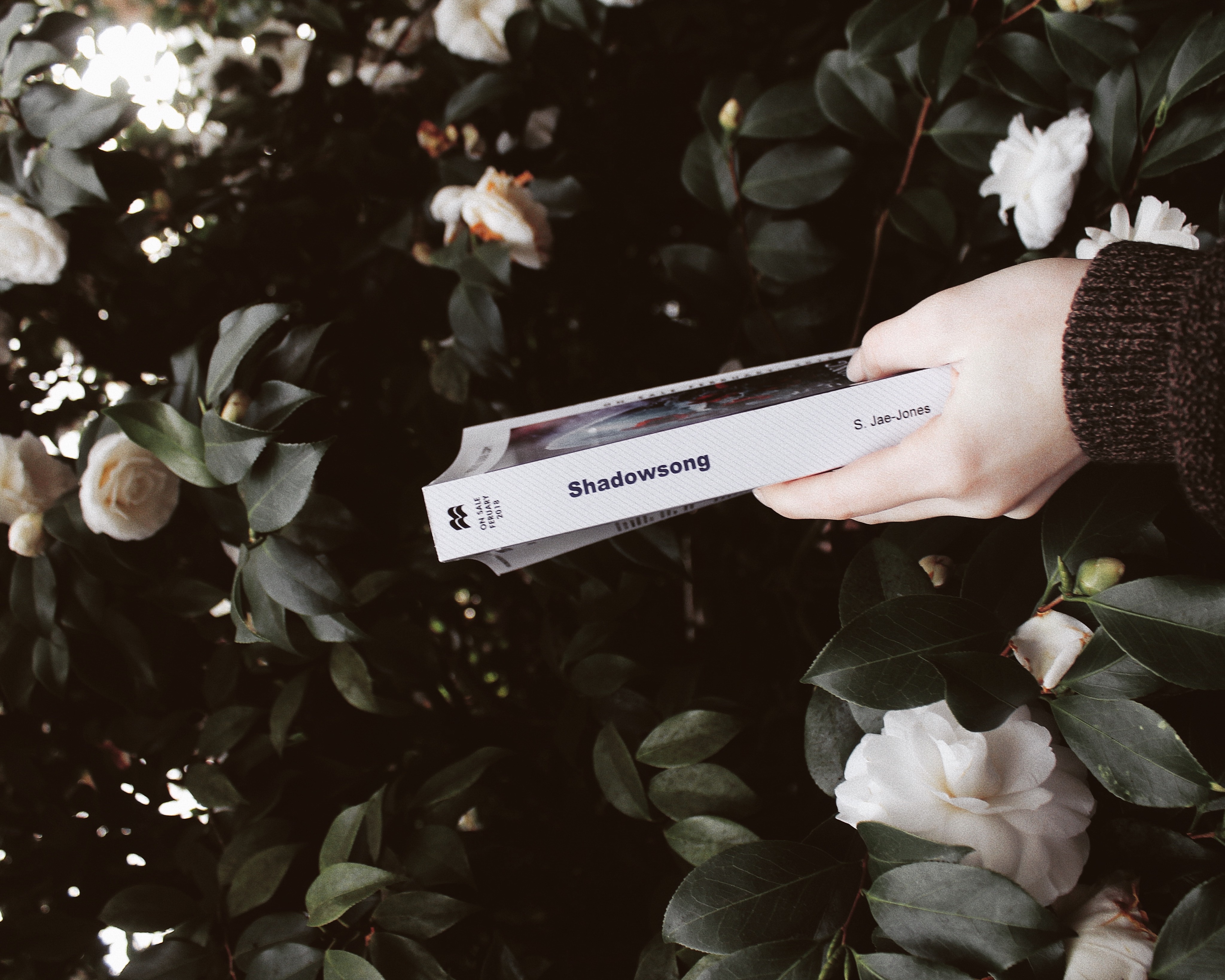
Shadowsong by S. Jae-Jones

*This review does contain spoilers. Please do not read it if you haven’t already read Wintersong or its sequel, Shadowsong. This is also an ARC review—and material in the finished copy is subject to change.

Processed with VSCO with a6 preset

Wintersong by S. Jae-Jones was one of my top three favorite books last year. I was highly anticipating the sequel because of the way in which the first book left us hanging, wondering if Liesl and her Goblin King would ever reunite. In Jones’ lush, austere world of eighteenth-century Bavaria, you find yourself emerged in a story that feels more imbued in folklore than the average genre of fiction. And I LOVE that. The whole time I read Shadowsong I felt the same ambiance as I did in the first novel, even though the first one mostly takes place under the earth and this one traverses between Vienna and our protagonist’s village.

Jones has such a beautiful writing style that brings forth emotions of great heartache and longing for something you might have never experienced, but have heard stories enough that you could almost imagine such an agony. My love for the prose aside, the pace of this story does start out a bit slow.

Unfortunately, I felt that the story never really picked up until the halfway mark or even slightly after that. Perhaps this is because I was anticipating interactions between Liesl and the Goblin King, not Liesl and her siblings. While I enjoyed reading more about Käthe and Josef, I felt like they took up the story and any traces of the main characters from book one were replaced by their tales. This wouldn’t be so bad! If the last book didn’t end with such a cliffhanger about said two characters.

There was definitely a sense of peace and finality at the end of the book, but I was still left longing for more romance between Liesl and Der Erlkönig. I was hoping for a lot more interaction between them. The last moments they share on page made me tear up, but I still wish there were more scenes between the two in this sequel. After all, this is promoted as a YA Romance and I felt the romance aspect severely lacking because there was little to no interaction between the main pairing—just a lot of pining and longing (which is only well-used subtly and in the beginning of a story).

Der Erlkönig didn’t even come across as the same character we fell in love with in Wintersong. He was basically absent most of the book, and although there is a plot-related reasoning for this bizarre behavior, it wasn’t developed enough to make sense until the final pages where the reader is left feeling a bit cheated.

I did, however, particularly enjoy the mention of the Wild Hunt. That has always been a favorite tale of mine, and to have the Goblin King be its head leader me see him as a more antagonistic character, even if he had little control over the matter. It made the story darker than I had thought it could be—which was great.

      “Looming in the shadows was a figure, skin night-black and eyes moon pale. Fingers broken and gnarled like desiccated vines curled around the neck of a violin, the resin cracked and pulled with age. A crown of horns grew from a nest of cobwebs and thistledown, but the face that stared back at me was human. Familiar.”

      Ultimately this book just didn’t sit well with me. The first novel is fantastic, but I feel as though this one was similar to when you’re trying to finish an essay and give up on the conclusion so you just reiterate the first few sentences. I’m really upset by this, but that’s truly how I feel.

My Rating: 3/5
Goodreads link.

The Secret History by Donna Tartt

The Secret History by Donna Tartt

It has been three years since I’ve read The Secret History by Donna Tartt and I realized today that I’d never sat down and actually wrote a decent review for the book that I’ve proclaimed to love so ardently. Perhaps this means that my review will be more organized— since I’ve had such a long period to mull over any final thoughts and feelings. Alas, that probably won’t happen either. My emotions will always cloud my judgment when it comes to Tartt.

So finally, I’d like to introduce you to the book that altered every other reading experience henceforth.

Its 559 pages of madness.

We start off following college student Richard Papen as he procrastinates over transferring to another school— departing his hometown in California all the way to the sleepy east coast. Upon arriving at the elite Hampden College in Vermont, Richard encounters five students who immediately draw his attention through their peculiarity and illusive behaviors. Little does he know, the haughty cult of classics scholars will flip his world entirely until he no longer recognizes himself or the people around him. This is a story of paranoia and betrayal—and how our minds can slowly draw out our worst selves when faced with enough trauma.

And believe me, this book will cause you as much stress as it does with the characters.

One of the most glorious parts of The Secret History is the writing. Tartt is a superb author; her character are incredibly vivid, her prose are fluid, and her plot will have you turning page after page without realizing you’ve stayed up for several hours past midnight. I’ve never encountered another author with a smilier style, and that definitely made reading this book a unique experience, especially because (paired with the style) the plot was something I’ve only seen touched upon in other stories but never saw completely unfurled. All in all, it was a breath of fresh air…if you can call a story about murder that.

A favorite quote of mine was when Tartt described Camilla Macaulay— the only female leading character amongst a group of boys.

“Being the only female in what was basically a boys’ club must have been difficult for her. Miraculously, she didn’t compensate by becoming hard or quarrelsome. She was still a girl, a slight lovely girl who lay in bed and ate chocolates, a girl whose hair smelled like hyacinth and whose scarves fluttered jauntily in the breeze. But strange and marvelous as she was, a wisp of silk in a forest of black wool, she was not the fragile creature one would have her seem.”

I wish someone would describe me the way Tartt does her characters. You might think it seems overdone, as some of my friends who I’ve forced to read this book have mentioned, but I just believe it adds to the atmosphere. However, there were times when I had to find a dictionary just to understand what the hell was going on. I will warn you there.

N O T E : I also find it important to include trigger warnings before recommending this particular book, and I’ve yet to see anyone include one for TSH. So, please be aware of the following: mentions of incest, smoking, suicide, homophobia, and drug abuse.

Before I read this book I had strictly been reading fantasy only. Contemporary novels, or any novels that don’t include magic and folklore, don’t really fancy me. And while there is mention of Greek mythology receptively in this story, its entirely realistic. This is just another reason why I found it so enthralling: Tartt almost makes it seem like a fantasy, because surely these types of situations can’t happen in real life…but that’s definitely not the case, as you will find when reading a few chapters in.

Another way in which Tartt makes it seem like a fantasy is how she crafts her character. The narrator, Richard, has a few friends outside of the main group; and these friends are how one would imagine a college student from that era (arguably the early 70s… *no one is truly certain when this book takes place, at least I don’t think) would act. Whereas Henry, Bunny, Camilla, Charles, and Francis all seem too composed to be real young adults. They act as though they’re from ancient times— regal and mysterious and tragic. I’m probably not making much sense right now, but this is one of those things that you’ll have to understand through reading it.

If I had to choose a favorite character, of course it would be Francis Abernathy. Not only is he one of the most genuine characters of them all, but his melodrama makes him a comedic relief during the more gruesome scenes. Also, the way Tartt describes him makes me flustered; “Angular and elegant, he was precariously thin, with nervous hands and a shrewd albino face and a short, fiery mop of the reddest hair I had ever seen. I thought (erroneously) that he dressed like Alfred Douglas, or the Comte de Montesquiou: beautifully starchy shirts with French cuffs; magnificent neckties; a black greatcoat that billowed behind him as he walked and made him look like a cross between a student prince and Jack the Ripper.”

If you want to read a book that will pull you out of a slump: read this one.

If you want to read a book that will forever change your perception of storytelling: READ THIS ONE.

It might be tricky to dive into, because the author’s writing is nothing I’ve personally encountered before, but once you’re in…good luck putting it down.

SECRET HISTORY PLAYLIST: Spotify link. 

Review: It Ends With Us / Colleen Hoover

Review: It Ends With Us / Colleen Hoover

I received an ARC of It Ends With Us from the publisher, but this in no way swayed my honest opinion about the book.

*This review is semi-spoiler free—meaning I won’t give away major events but I will be mentioning many facts pertaining to well beyond chapter one.

I feel as though I should start off by disclaiming that I’ve never read a book by Colleen Hoover. I’ve heard about her other novels, and how wonderfully painful they are, but contemporary just isn’t my type of genre to read. Often I will try to pick up a contemporary novel, but most of those times I wind up just setting it back down. This time, however, I was captivate from the first page until the very last. I finished It Ends With Us in less than four hours. Honestly, I wasn’t paying attention to anything else around me but this plot and these characters and how terrifyingly relatable their story was.

Processed with VSCO with g3 preset


Lily recently graduated from college and moved to Boston where she began her own business. Her childhood was never easy, and she’d come to conclude that staying in Maine would never allow her to be free from those dark memories. One night while perched atop the roof of an apartment complex that isn’t her own, she meets Ryle—a neurosurgeon with a darker past than her own. They bond, tell each other naked truths, and begin a slowly burning flirtation that inflames to a deadly obsession.

However, Lily can’t seem to stay away from her old letters written about her missing friend, Atlas. Suddenly Lily begins to see a side of Ryle that she’d never noticed before, and it has nothing to do with the reappearance of Atlas…although he certainly doesn’t make things any less complicated.

“As I sit here with one foot on either side of the ledge, looking down from twelve stories above the streets of Boston, I can’t help but think about suicide. Not my own. I like my life enough to want to see it through. I’m more focused on other people, and how they ultimately come to the decision to just end their own loves.”

This book is about person growth and self respect, and it embodied those themes beautifully. A bit on the darker side in regards to the lethal relationships, It Ends With Us is so much more than I’d thought it to be.

Hoover’s writing is something I wasn’t accustomed to, but that didn’t hinder the experience in the slightest. She has such an easy flow to go along with, as well as a certain prolific voice. I finished this book in one sitting and I rarely ever read contemporary.

The plot wasn’t my usual cup of coffee (because there weren’t any mythical creatures, inanimate objects that speak, realms that are hard to pronounce, bloody wars etc), but there was certainly a type eerie peculiarity that I picked up on right away. We aren’t only reading about Lily, we are inside of her mind. When she’s happy, you’re happy. When she’s upset, you’re upset. When she’s in denial about the people most important to her, you’re…well, needless to say I might have thrown this book across the room a few times.

Perhaps it was just my personal experience with foul relationships that made me bias, but I couldn’t love Ryle ever. Not even once. Not even when he was meant to be the tragic lover who was better off as a dream than a reality—because Hoover wrote him to be a synonym for the phrase “ugly truth.” Which is ironic, considering a big motif between Ryle and Lily was there occasional confessions which they called “naked truths.” For starters, when Lily first met Ryle he was kicking the hell out of a metal chair because his anger had gotten the better of him. Their relationship is in line with Gone Girl by Gillian Flynn, just without the psychopathic behavior on our protagonists part. However, the physical and mental abuse is 100% present in both books.

It’s all lilies (no really, there were actual lilies) and sunshine to cover up the scars and the naked truths that were more like screaming matches. All of the signs were there, right from the beginning. After their foreboding first meeting, he takes a photo of her without knowing her for more than an hour and blows it up to frame inside his house. Then he starts grabbing things from her, insisting upon things without asking, and the use of the word “shoving” to describe their sexual encounters sent many trigger warnings through my mind. Of course, this meant I wasn’t surprised when the physical abuse really became a definite thing that could no longer be overlooked by pretty dreams.

Lily is a strong protagonists, even when she might not think so herself. After watching her father abuse her mother, and hearing the horror that came from Atlas’s own background, she was wary of men from the beginning. While she falls in love with Ryle, she does notice his abusive behavior almost immediately after their first time together. And while the readers might think that she should leave him at the first sign of bad intentions, Lily doesn’t do this for two reasons:

1. she is truly in love with Ryle and wants to help him control his anger because she understands that he is compassionate but his compassion can never make up for his mistakes.

2. she wanted to love her father as a daughter should, but she couldn’t do so without wishing him dead. She doesn’t sympathize with her father, but she understands that he was a human and he made some very hideous mistakes.

Her benevolent nature is essentially what keeps her and Ryle together for so long. This doesn’t make her weak, it makes her bold and brave. She gives him chances, but when he messes up she lest him know he was wrong. In the end…well, I won’t say much because of spoilers but I will tell you that Lily makes the right choices.

Not only were these characters so complexly written, but their names were also carefully thought up, and I appreciate that small objective immensely. Lily Blossom Bloom is an obvious metaphor for something small and fragile that will eventually go through change and morph into something bold and beautiful. Atlas, Lily’s childhood friend, although not being in the picture for nine years, was a steady part of Lily’s life. Whenever she needed someone to tell her the harsh reality of her situation, or someone to protect her when she couldn’t see that she needed protection, Atlas was there. Atlas also happens to be the name of the Greek god who held up the universe upon his shoulders—and both men carried a great burden that often times wasn’t theres to withstand.

The meaning behind this title also happens to be a quote in one of the very last pages of the book. Who the “Us” is will have you sobbing your heart out. I didn’t expect that coming, and it was such a bittersweet moment for me because it truly hit home. I don’t cry a lot when reading, but I definitely cried while reading this book.

I’m certainly going to be reading more of Hoover’s books in the future.

Rating: 5 of 5

Read this review on Goodreads.

Book Recommendations / part I

Book Recommendations / part I


The only thing worse than being in a book slump is having the time to read but not knowing which book to pick up. It doesn’t even matter if you own the book and haven’t started, because odds are you probably already have (at least) a genre you want to delve into for the time being, or at least an idea of what you’re currently interested in reading. A quick way to solve this would be to search for the book on Goodreads and check the similar recommendations section, but honestly most of the time those recommendations are far from what I’d perceive as “similar.” So, here’s the next best thing! “If you like this, then you’ll like this.”  All synopses taken from Goodreads. Commentary from yours truly. 


The Raven Boys by Maggie Stiefvater

  • Scholarly boys/ Campus setting
  • Murder
  • Everyone is secretly gay
  • Corrupt and complex characters
  • Philosophy
  • Stags
  • TSH is TRC in the future 100%
  • Angst


The Secret History by Donna Tartt

Under the influence of their charismatic classics professor, a group of clever, eccentric misfits at an elite New England college discover a way of thinking and living that is a world away from the humdrum existence of their contemporaries. But when they go beyond the boundaries of normal morality they slip gradually from obsession to corruption and betrayal, and at last – inexorably – into evil.


The Grisha Trilogy by Leigh Bardugo

  • Russian/ “Ravkan” setting
  • Dark romance
  • Strong heroines
  • Whimsical themes
  • Epic fantasy
  • Alarkling = Koschei x Marya
  • (No, literally, The Darkling was inspired by Koschie the Deathless.)
  • THIS BOOK WAS LITERALLY INSPIRED BY THAT BOOK. SO READ IT.


Deathless by Catherynne M. Valence

Koschei the Deathless is to Russian folklore what devils or wicked witches are to European culture: a menacing, evil figure; the villain of countless stories which have been passed on through story and text for generations. But Koschei has never before been seen through the eyes of Catherynne Valente, whose modernized and transformed take on the legend brings the action to modern times, spanning many of the great developments of Russian history in the twentieth century.

Deathless, however, is no dry, historical tome: it lights up like fire as the young Marya Morevna transforms from a clever child of the revolution, to Koschei’s beautiful bride, to his eventual undoing. Along the way there are Stalinist house elves, magical quests, secrecy and bureaucracy, and games of lust and power. All told, Deathless is a collision of magical history and actual history, of revolution and mythology, of love and death, which will bring Russian myth back to life in a stunning new incarnation.


The Night Circus by Erin Morgenstern

  • Circus setting
  • Eerie plot
  • Romance
  • Fantastic writing
  • Historial/Fantasy


Wonder Show by Hannah Barnaby

Ladies and gentlemen, boys and girls, step inside Mosco’s Traveling Wonder Show, a menagerie of human curiosities and misfits guaranteed to astound and amaze! But perhaps the strangest act of Mosco’s display is Portia Remini, a normal among the freaks, on the run from McGreavy’s Home for Wayward Girls, where Mister watches and waits. He said he would always find Portia, that she could never leave. Free at last, Portia begins a new life on the bally, seeking answers about her father’s disappearance. Will she find him before Mister finds her? It’s a story for the ages, and like everyone who enters the Wonder Show, Portia will never be the same.


A Court of Thorns and Roses by Sarah J Maas

  • Retellings
  • Strong heroines
  • Ferocious romance
  • Hades + Persephone vibes
  • (Essentially TSTQ is both halves of the Nigh Court)
  • Nightmares
  • Complex characters and settings
  • Fantasy


The Star Touched Queen by Roshani Chokshi

Fate and fortune. Power and passion. What does it take to be the queen of a kingdom when you’re only seventeen?

Maya is cursed. With a horoscope that promises a marriage of death and destruction, she has earned only the scorn and fear of her father’s kingdom. Content to follow more scholarly pursuits, her whole world is torn apart when her father, the Raja, arranges a wedding of political convenience to quell outside rebellions. Soon Maya becomes the queen of Akaran and wife of Amar. Neither roles are what she expected: As Akaran’s queen, she finds her voice and power. As Amar’s wife, she finds something else entirely: Compassion. Protection. Desire…

But Akaran has its own secrets—thousands of locked doors, gardens of glass, and a tree that bears memories instead of fruit. Soon, Maya suspects her life is in danger. Yet who, besides her husband, can she trust? With the fate of the human and Otherworldly realms hanging in the balance, Maya must unravel an ancient mystery that spans reincarnated lives to save those she loves the most…including herself.


Gone Girl by Gillian Flynn

  • Psychotic main characters
  • Not quite sure who is the protagonist
  • Everyone has a morbid build-up
  • Melancholy backdrop
  • Thriller
  • Feminism


Girls on Fire by Robin Wasserman

Girls on Fire tells the story of Hannah and Lacey and their obsessive teenage female friendship so passionately violent it bloodies the very sunset its protagonists insist on riding into, together, at any cost. Opening with a suicide whose aftermath brings good girl Hannah together with the town’s bad girl, Lacey, the two bring their combined wills to bear on the community in which they live; unconcerned by the mounting discomfort that their lust for chaos and rebellion causes the inhabitants of their parochial small town, they think they are invulnerable.

But Lacey has a secret, about life before her better half, and it’s a secret that will change everything…


The Wrath and the Dawn by Renee Ahdieh

  • Indian folklore
  • Retellings
  • Romance
  • World-building
  • Corrupt empires


The Architect’s Apprentice by Elif Shafak

In her latest novel, Turkey’s preeminent female writer spins an epic tale spanning nearly a century in the life of the Ottoman Empire. In 1540, twelve-year-old Jahan arrives in Istanbul. As an animal tamer in the sultan’s menagerie, he looks after the exceptionally smart elephant Chota and befriends (and falls for) the sultan’s beautiful daughter, Princess Mihrimah. A palace education leads Jahan to Mimar Sinan, the empire’s chief architect, who takes Jahan under his wing as they construct (with Chota’s help) some of the most magnificent buildings in history. Yet even as they build Sinan’s triumphant masterpieces—the incredible Suleymaniye and Selimiye mosques—dangerous undercurrents begin to emerge, with jealousy erupting among Sinan’s four apprentices.

A memorable story of artistic freedom, creativity, and the clash between science and fundamentalism, Shafak’s intricate novel brims with vibrant characters, intriguing adventure, and the lavish backdrop of the Ottoman court, where love and loyalty are no match for raw power.


Uprooted by Naomi Novik

  • Strong heroines
  • Folklore
  • Nature
  • Romance
  • Villagers vying for a stranger’s affection
  • Mysterious (handsome) stranger
  • Compassionate leads

The Rough-Face Girl by Rafe Martin

This moving adaptation of the classic children’s story Cinderella tells how a disfigured Algonquin girl wins the heart of a mysterious being who lives by the lake near her village.

The powerful Invisible Being is looking for a wife, and all the girls in the village vie for his affections. But only the girl who proves she can see him will be his bride. The two beautiful but spoiled daughters of a poor village man try their best to be chosen, but it is their Rough-Face-Girl sister, scarred on her face and arms from tending fires, who sees the Invisible Being in the wonder of the natural world.

The dramatic illustrations reflect the vibrant earth colors of the native landscape and the wisdom and sensitivity of the protagonist.

Review: Uprooted / Naomi Novik

Review: Uprooted / Naomi Novik

“Our Dragon doesn’t eat the girls he takes,
no matter what stories they tell outside our valley.”

Forget everything you think you know about folklore and enter Novik’s realm of dark fantasy in this stunning debut full of lush and terrifying fiction. Uprooted is easily a unique masterpiece with plots and characters unlike any others in its genre. I started off reading this book as one would begin a thrilling but harrowing task. I’m never one to be put off by the size of a book, however at first glance Uprooted seems like a monstrosity of small fonts and lengthy pages, something that can make any reader feel threatened.

Do not let this fool you, for once I began to invest my time into the chapters, the pace quickened so much so that I devoured two-hundred pages over the course of a few hours (which for me was remarkable)! In a strange way, I felt that the book was almost too good for my brain to keep up with everything…if that even makes sense. I like to thoroughly take in every detail of any story, and Novik is a wordsmith goddesses, so of course I was bit overwhelmed by my own sheer exuberance. There’s enough space between her phrases to leave room to the imagination, a feat that I respect when it comes to how an author writes his/her story. But in my case, I was just so excited to read the book that I wound up thinking about reading the book…instead of actually reading the book…(yikes). Nevertheless, this piece of fiction is exceptionally crafted and brimming with strong protagonists. This is all I want in an epic fantasy, and I have a feeling you will want it too.

“It comes, I suppose,” I said thoughtfully, speaking to the air, “of spending too much time alone indoors, and forgetting that living things don’t always stay where you put them.”

We start off our journey with Agnieszka, a young peasant living in the quant village of Dvernik which borders the deadly, malevolent Wood. Her dearest friend, Kasia, emits strong beauty and bravery―qualities of which the Dragon sees fit enough for a new servant. The Dragon is an immortal wizard who protects the villagers against the dark magic of the Wood, yet each decade he takes the most promising girl to live with and serve him for the next ten years of her life. He des not harm the girls, and each one never returns to their meager lifestyle in the valley once they are put back into the world―instead going off to greater cities pluming wealth and prosperity. Kasia has known since she was a child that she is more than likely to be chosen by the Dragon. Agnieskza has known as well, and the thought of losing her aquatinted-sister is maddening. Until the day of the harvest comes, and the Dragon does not choose Kasia.

The plot was enchanting with all its twists and turns, especially considering the abstract idea of the antagonist―and I only say idea because this antagonist was not a person, rather it was a forest more eerie than the one found in Snow White. The Wood, as it is known amongst the characters, is a giant shadow of land that lurks within reach of the village inhabitance, constantly picking off children and others who wander too close.

It spreads like disease and can corrupt those who’ve never even been to the outer reaches of the valley, simply by plaguing someone and sending them back without seemingly any traces of evil. Novak has created such a compelling image of darkness, and it is all the more ingenious because this wickedness does not reside within a single person. The antagonist is not governed by what most living antagonists are contrived of―no, this antagonist is literally Mother Nature in full fury.

To defeat such a villain, Agnieskza must learn quickly of who she was destined to be, and with the begrudging help of her mentor, the Dragon. The most shocking of all the subplots was undeniably the stories that came from the Wood and it’s origin. You’ll meet characters so wonderfully crafted, and they’ll tear your heart to pieces. This is not your average folktale. It’s so, so much more.

But the best thing by far were the characters and the relationships held between each of them. For starters, Agnieszka is not written as some beautiful damsel with a fate that will make or break the becomings of the universe― she’s simply a peasant girl who cannot go ten minutes without ripping her skirts or getting dirt in her hair. Her bravery, cunningness, compassion, and humorous whit are what makes her character so compelling. I fell in love with her, and that’s not very common for me and the main protagonists because I usually find some flaws that cannot be cast aside to be unnoticed. Raw and so wildly familiar, Agnieszka is all I’ve ever wanted in a strong heroine.

What makes her even better is the relationship she shares with her dearest friend, Kasia. I cannot begin to express how pleased I was that Novik didn’t touch upon two jealous friends who bicker over boys and beauty. I’m so disgusted with the trope of girls unnecessarily loathing one another, and this book was such an overwhelming breath of fresh air that their sisterly friendship actually did bring me to tears on a few occasions. Also, Kasia wasn’t left behind in the grand scheme of the books commencement. I won’t tell you what becomes of her because that would involve spoilers, but it’s pretty freaking awesome. Kasia is a courageously loyal friend, and a sharp sword when needed be.

The Dragon, much like Agnieszka, is not the average brooding male protagonist you might have expected. He’s refined and well-spoken, but also incredibly sarcastic and exasperated with the nonsense he has to put up with. Wizards, especially those who’ve been lingering for more than a century, have grown cold to the ways of endearment. The Dragon cares about the health and safety of his people, and those outside of his borders, but that doesn’t mean he wishes to tether himself to them in fear of being hurt through their inevitable deaths.

What I love most about him is how he treats everyone else around him, even those who we’d consider enemies. He’s not malicious or hot-headed, in fact he’s quite the opposite. The Dragon (and you will find out his true name int he book!) is very wise and very alone. Agnieszka enters his realm of brick towers and barriers and forces them all down in a heartbreakingly, amusing adventure full of bickering, snipping and name calling. I’m a sucker for platonic friendships, but I’m downright obsessed with those friendships that flourish into platonic romances (which then harvest into something even more beautiful as time goes on). So to surmise, Uprooted, although not heavily focusing on romance of any sort, enraptures all I want in a perfectly imperfect OTP (One True Pairing).

This story, although making my heart swell, was nonetheless dark and complicated. I don’t know if I’d truly classify this one as YA because there are moments where violence and explicit content are used as the foremost points of development. Perhaps it’s better as a NA novel? Regardless, I wouldn’t mind the rating at all so long as some of these entities don’t disturb you. I’m not quite certain what thrilled me the most; the romance, the battles, or the Wood. Every aspect of this novel was carefully delivered with an underlying tone of bitter darkness that halfway reminded me of tree rot or moss…not that I’m being nostalgic or anything (I totally am). I’ve studied forestry for a while and the organic diction and prose of this story had me swooning. The setting was delightful, and the writing style was one of the best I’ve ever come across. It kept me engaged from prologue to epilogue.

But for all the emphasis I put on the world-building and characters, one of the best things about this story was truly the aesthetic of wizardry and witches. I didn’t know I’d be reading about witches, specifically ones arranged so whimsically. The spell-language, as the Dragon called it, is lyrical even though my tongue tripped over the strange words more than a few times. The magic is so vividly described that it makes you feel as though you can brew the potions and cast the spells as well. This book presented a look inside the makings of wizards in such a new and darkly romantic angle, and I couldn’t have been more pleased.

Uprooted is brilliant beyond words, an old artwork that had been lost but newly found and restored to life. It was everything I had hoped it would be and MORE. I’m proud to say that Naomi Novik is now one of my favorite authors and I can’t wait to see what else she’ll gift us in the future. I recommend this book to everyone! It deserves all of the stars, the moon, and the planets.

5 of 5 moons. Recommended: everyone.