Warwick, NY

If you’ve been following my blog or Instagram, then you might already know how enraptured I am by autumn— a.k.a the best season of the year. Everything from the sights, the smells, the tastes, even the feel of the cold wind and the scratchy turtle-neck sweaters makes me come to life like a reverse, melancholy effect of a springtime rose. When things decay, I suppose my spirit is energized? Ironic how that works.

One day I’ll write that thousand-paged thesis about why I love the fall as much as I do, but for now I’ll keep this short and practical.

Starting with example number one: apple picking. 

Each year I would go apple-picking with my family, either around upstate New York or out east on Long Island. While the east has its own magical makings, I prefer going north where the natural environment seems to have taken over the towns like a segment from Snow White‘s the dark forest. The last two years have been fairly rough, however. My parents got divorced and I transferred to a new college, miles away from my home. I believe things happen for a reason, and the friends I’ve met within just the first three weeks at my new campus are all wonderful and kind people. So when I mentioned apple picking, they were all as excited to go explore the terrain north of our school as I was.

We went to Masker Orchard in Warwick, NY. Although many of the apples weren’t ripe for picking just yet, there were thousands to choose from. And with a view sitting atop a mountain, looking out over the farms and the houses, it felt surreal to be up there— as if we had been dropped in a different era. It helped that since we went so early in the season there were only a few other guests in attendance, which meant we were able to shoot more freely and with a wider scope!

To make things even better, originally the temperature was in the mid-sixties but a storm passed overhead as we were shooting and the cold draft and grey skies made for a perfect atmospheric photo session. Of course, as soon as it began pouring we headed into town with our bags of apples to eat with the locals.

I can’t wait to go back. With the Renaissance Faire nearby, I’m sure I’ll be headed up there within the next few weeks. //

Music Recommendation: Tiger Mountain Peasant Song by Fleet Foxes.

Dealing With Social Anxiety

Something has been eating at my mind all week and I felt the need to write it down before I pass it along as just another “paranoid thought.” I feel as though we are all always striving to meet new people, and thus make new relationships as we age, because we are all somewhat vulnerable and in need of human contact.

Personally, I feel most comfortable when I’m alone and am not obliged to hug or shake hands with others. I was often reprimanded for my “rude” behavior, when in retrospect my hesitance for physical contact was reflective of how I view myself and where I find my comfort zone. But this still didn’t change the fact that when I was home alone at night, with my brother at my father’s house and my mother with her boyfriend, I felt isolated… and not in the way I usually preferred.

I think its horribly easy to pass off a stranger as someone who is disconnected from the world if they don’t meet your eyes, aren’t willing to have physical contact, and who don’t know how to respond to certain messages. Of course, you could also deem them as being socially awkward and leave it at that. However, my fellow introverts and I have the same notions and perceptions about the world that the rest of the extroverts do. We just aren’t able to communicate these things as well as others because limited opportunities present themselves where we can feel comfortable enough to express what really is going on inside our minds.

But instead of categorizing myself and a million other people as being socially inept, I’m going to tell you about my own story and how I’ve come to deal with being known as the “quiet girl” who somehow managed to garner a massive crowd on onlookers.
So yes, I have social anxiety.

There are a few reasons as to why I hate summer. For starters, it’s too freaking hot, I constantly get sunburns even after applying proper protection, and everything is too bright for me to take my type of photography. Although, the biggest notion I hate about summer is seeing everyone I know come home from college to our small town for the next two or three months. I realize how that sounds. It seems as though I’m angry with the world, that I hate people, and that I made no friends in high school.

I realize these perceptions, because I’ve had people tell them to my face. The reality is this: I enjoyed high school and I think plenty of the students who attended with me are really sweet and creative. But on the other hand, I always feel as though when they look at me, they’re noticing any blemishes I have, what clothes I’m wearing, if I’m not smiling big enough, and that I still can’t hold a proper conversation without misunderstanding many references about parties or alcohol.

While I know that I’m likely being paranoid, I can’t help but think these things upon seeing people I went to school with. It doesn’t help that I’m usually alone— as I prefer to often be— and they’re usually in groups of four or eight. To be fair, I know that I could just go up to them and start a polite conversation about where they’re going and what they’re studying. But the awful thing is, I still see myself in the high school stigma wherein the friend you make in middle school are the ones you will be bound to until graduation. I know this because I dealt with it. I tried to leave a toxic friend group… and ended up having nobody for months.

It was the last few months of senior year— the few months where schoolwork doesn’t seem to count, there are always parties on the weekends, and the people you were friends with were the ones you’d talk to on Facebook for the next decade until they start to get married.

In the beginning of the year I had a group of about six friends, and we were all incredibly close with one another. Everyone was so different yet we had a common ground that built our kinship over the years. And halfway through the first semester, there was a party that all of us attended. As you might be able to imagine, this was the turning point. This was where arguments that had been silently brewing for months exploded in a violent fury, and the group was divided by who was on which side of the cannon fire. I tried to remain neutral, but of course that only acted against me.

It wasn’t until the police were involved when I realized the reason I couldn’t make friends outside of my immediate circle wasn’t just due to my social anxiety, but because I was already labeled as being a part of this “pack.” And when I stepped back and saw how my friends were behaving— constantly thriving on drama, talking badly about others who they barely knew, and picking fights over the smallest of things…. I had to withdraw. I had to escape that, because that wasn’t who I was and I felt disgusted and saddened just knowing it took me that long to figure it out.

So I stopped. I stopped talking to them, sitting with them at lunch, texting, partying, seeing them on weekends. I cut off all connections. And by doing so, I completely isolated myself from everyone in the school.

My mother told me, as I was in tears and having a panic attack that I didn’t know who to go to senior prom with, that I should try talking to other students— ones that were in my favorite art or literature classes. I don’t blame her for suggesting this, but I know that our generations are programmed differently and doing as she asked would be more impossible the she had intended. Making friends so late into the school year was nearly sacrilege— people would wonder why I’m talking to them after four years, and why I wasn’t present with my “group.” They would assume the worst. And I didn’t have the physical or mental strength to go through that again.

I was at my end. Stressed, anxious, depressed… not even the next installment of my favorite series could lift me out of my slump.

But I realized something during those weeks. I’m no different than anyone else, even thought my situation may be. Everyone faces hardships, and this was just something that I caused on my own and something that I had to fix on my own. So instead of seeking friendships, I started to fix the most important one: the one I had with myself.

I read more, blogged more, starting taking better photography and positing it online. I discovered new music (like Florence Welch and Fleet Foxes) and became enraptured with this whole “aesthetic” that I had never experienced before. I decided I wanted that— to be completely within my own imagination and not give a fuck about what anyone else thought if I, for instance, decided to wear chainmail as an accessory. (Not the fancy jewelry type. I’m talking full out LARPing and cosplay chainmail.) And although I didn’t smile more, because that doesn’t mean anything in regards to my emotional being, I felt a million times happier. I was liberated, and free to wander in my creativity that had been sitting silently for me to recognize it.

After reading about these heroines who slew dragons and navigated court politics against overpowered kings, I thought to myself— why the hell can’t that be me? Sure I might not find a dragon anytime in the near future, but I can certainly navigate my way around toxic relationships and not feel sorry for myself while I celebrate my strength.

Nevertheless, I still have social anxiety. Some scars are permanent, after all. However, it has evolved into something that I have control over and am able to push aside when I put my mind to it. I’ve never felt so sure of myself, even when I still have doubts and still feel lost. The knowledge that I will always have tomorrow to fix what I’ve wrought today has helped me grow into the person I am.

When people message me on Instagram or one of my other social medias and say they were hesitant to address me because they were anxious about how I would respond, I sometimes don’t know what to think. So, I tell them the truth. Don’t be wary of me, because we’re no different from each other. Just because I run a blog doesn’t mean that I’m an extrovert with wonderful social skills.

I am who I am.

Introverted, creative, and willing to face anything life throws at me.

Being Picky About What You Read

Being Picky About What You Read

I think its reasonable for readers to be picky about what content they’re obtaining when they look for new books. To be honest, many of the novels that are currently occupying the breathing space in my bedroom (I have to walk around the stacks of books just to find my mattress) are ones that were either sent to me from publishers or authors, or ones that friends loaned to me with the secret intent of never seeing those books again. Luckily I found a donation bin near my old library where I can drop off the ones I know I’ll never get to, but recently I went to that bin and found that it was overflowing with books. There is even a clear sign on the crate that states “please do not leave books outside if bin is full.” But as it turns out, I’m leaving to go to college in less than a week and my cottage sized home is already bursting with luggage and cardboard boxes. So I did what I could— fit as many books as I could cram into the donation bin, called the number on the bin for a quick pick-up, and then drove off with half of the books still in my car.

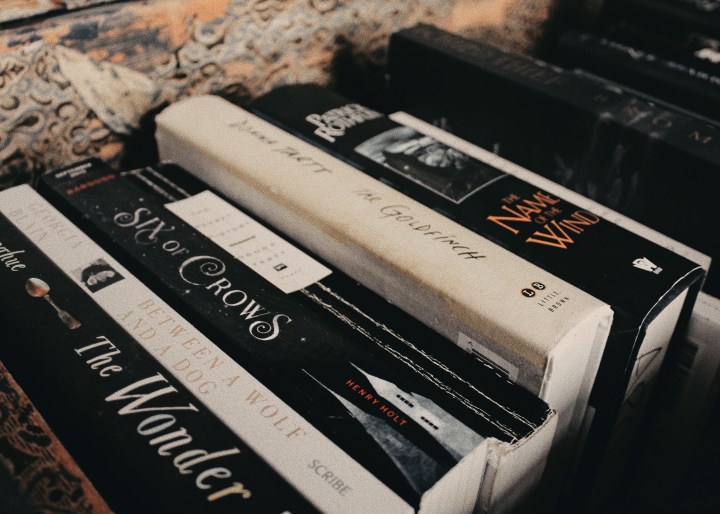
This probably seems so strange and random of me to be mentioning, but it actually brought to mind something that has always been nagging me. I feel as though many of the readers I meet both online and offline always have a preferred genre that they stick to when trying to find new books. I’m not exception to this rule, because I adore fantasy novels over everything else. While half of the books I own aren’t ones that I’ve picked for myself, the half that I did buy on my own time are all ones with warrior heroines on the covers; dragons, knights, castles, magic. You name it, it’s on there. But for me, those are the best types of novels. A love story between two high school students or a science-fiction piece about the apocalypse just doesn’t draw me in as much as a story about a wandering mage or a medieval executioner would. So while I’ve tried to force myself to enjoy genres other than fantasy… it usually never works out. With the exception of one of my favorite novels, The Secret History by Donna Tartt, I often stray from contemporary (for example) because I feel as though I’ve already read those stories because I’m living in that world currently. Perhaps one of the reasons I do adore Tartt’s novel so much is because it was the only contemporary/ thriller to draw me in as much as a high fantasy would.

I find that readers, particularly bloggers, will force themselves to try genres that they know they won’t really enjoy because they want to broaden their scope of stories. And truly, I think that’s wonderful! It makes sense, right? But for me, and I’m sure this applies to others as well, each time I try a certain genre that’s not my preferred cup of coffee, I end up having a bad experience with it because in the back of my head I know there are a thousand more fantasy books I could be reading of which I would love plenty more than the off-chance I pick up a romance novel.

I also feel that it’s important to bring up the diversity issue in regards to book genres. While I’ve probably just exhausted your eyes with my blathering on about how I love fantasy… I also have to recognize that it doesn’t contain as much diversity as other genres, particularly Young Adult contemporary. In recent years, the YA contempt. sections have experienced a massive influx of diverse stories, and I couldn’t be more inspired to see it. It’s something that every book being published needs to include, no matter the content or “historical accuracy” (a weak argument I’ve seen far to many times to even want to delve into on this post). So that being said, I’ve tried my hardest to search for the fantasy novels that include a diverse cast of characters and portray them in correct/ positive ways. Needless to say, it wasn’t on easy feat. But that’s in part due to the fact that there aren’t too many diverse fantasies being published, and for the ones that are, occasionally the synopsis won’t draw me in. Remember what I said about being picky? On one hand it’s a blessing because you’re more likely to enjoy the book your reading, but on the other hand the book you’re reading may have many faults or might take you forever to find.

All that being said, below is a list of my favorite books. And yes, they’re mostly fantasy.


  • The Secret History by Donna Tartt— Under the influence of their charismatic classics professor, a group of clever, eccentric misfits at an elite New England college discover a way of thinking and living that is a world away from the humdrum existence of their contemporaries. But when they go beyond the boundaries of normal morality they slip gradually from obsession to corruption and betrayal, and at last – inexorably – into evil.


  • An Enchantment of Ravens by Margaret Rogerson— Isobel is a prodigy portrait artist with a dangerous set of clients: the sinister fair folk, immortal creatures who cannot bake bread, weave cloth, or put a pen to paper without crumbling to dust. They crave human Craft with a terrible thirst, and Isobel’s paintings are highly prized among them. But when she receives her first royal patron—Rook, the autumn prince—she makes a terrible mistake. She paints mortal sorrow in his eyes – a weakness that could cost him his life. Furious and devastated, Rook spirits her away to the autumnlands to stand trial for her crime. Waylaid by the Wild Hunt’s ghostly hounds, the tainted influence of the Alder King, and hideous monsters risen from barrow mounds, Isobel and Rook depend on one another for survival. Their alliance blossoms into trust, then love, violating the fair folks’ ruthless Good Law. There’s only one way to save both their lives, Isobel must drink from the Green Well, whose water will transform her into a fair one—at the cost of her Craft, for immortality is as stagnant as it is timeless. Isobel has a choice: she can sacrifice her art for a future, or arm herself with paint and canvas against the ancient power of the fairy courts. Because secretly, her Craft represents a threat the fair folk have never faced in all the millennia of their unchanging lives: for the first time, her portraits have the power to make them feel.


  • The Star-Touched Queen by Roshani Chokshi— Maya is cursed. With a horoscope that promises a marriage of death and destruction, she has earned only the scorn and fear of her father’s kingdom. Content to follow more scholarly pursuits, her whole world is torn apart when her father, the Raja, arranges a wedding of political convenience to quell outside rebellions. Soon Maya becomes the queen of Akaran and wife of Amar. Neither roles are what she expected: As Akaran’s queen, she finds her voice and power. As Amar’s wife, she finds something else entirely: Compassion. Protection. Desire…But Akaran has its own secrets—thousands of locked doors, gardens of glass, and a tree that bears memories instead of fruit. Soon, Maya suspects her life is in danger. Yet who, besides her husband, can she trust? With the fate of the human and Otherworldly realms hanging in the balance, Maya must unravel an ancient mystery that spans reincarnated lives to save those she loves the most…including herself.


  • Flame in the Mist by Renée Ahdieh—The only daughter of a prominent samurai, Mariko has always known she’d been raised for one purpose and one purpose only: to marry. Never mind her cunning, which rivals that of her twin brother, Kenshin, or her skills as an accomplished alchemist. Since Mariko was not born a boy, her fate was sealed the moment she drew her first breath. So, at just seventeen years old, Mariko is sent to the imperial palace to meet her betrothed, a man she did not choose, for the very first time. But the journey is cut short when Mariko’s convoy is viciously attacked by the Black Clan, a dangerous group of bandits who’ve been hired to kill Mariko before she reaches the palace. The lone survivor, Mariko narrowly escapes to the woods, where she plots her revenge. Dressed as a peasant boy, she sets out to infiltrate the Black Clan and hunt down those responsible for the target on her back. Once she’s within their ranks, though, Mariko finds for the first time she’s appreciated for her intellect and abilities. She even finds herself falling in love—a love that will force her to question everything she’s ever known about her family, her purpose, and her deepest desires.


  • Wintersong by S. Jae-Jones— All her life, nineteen-year-old Liesl has heard tales of the beautiful, mysterious Goblin King. He is the Lord of Mischief, the Ruler Underground, and the muse around which her music is composed. Yet, as Liesl helps shoulder the burden of running her family’s inn, her dreams of composition and childish fancies about the Goblin King must be set aside in favor of more practical concerns. But when her sister Käthe is taken by the goblins, Liesl journeys to their realm to rescue her sister and return her to the world above. The Goblin King agrees to let Käthe go—for a price. The life of a maiden must be given to the land, in accordance with the old laws. A life for a life, he says. Without sacrifice, nothing good can grow. Without death, there can be no rebirth. In exchange for her sister’s freedom, Liesl offers her hand in marriage to the Goblin King. He accepts. Down in the Underground, Liesl discovers that the Goblin King still inspires her—musically, physically, emotionally. Yet even as her talent blossoms, Liesl’s life is slowly fading away, the price she paid for becoming the Goblin King’s bride. As the two of them grow closer, they must learn just what it is they are each willing to sacrifice: her life, her music, or the end of the world.


  • Shadow and Bone by Leigh Bardugo—Surrounded by enemies, the once-great nation of Ravka has been torn in two by the Shadow Fold, a swath of near impenetrable darkness crawling with monsters who feast on human flesh. Now its fate may rest on the shoulders of one lonely refugee. Alina Starkov has never been good at anything. But when her regiment is attacked on the Fold and her best friend is brutally injured, Alina reveals a dormant power that saves his life—a power that could be the key to setting her war-ravaged country free. Wrenched from everything she knows, Alina is whisked away to the royal court to be trained as a member of the Grisha, the magical elite led by the mysterious Darkling. Yet nothing in this lavish world is what it seems. With darkness looming and an entire kingdom depending on her untamed power, Alina will have to confront the secrets of the Grisha . . . and the secrets of her heart.


  • Scourge by Gail Z. Martin—The city-state of Ravenwood is wealthy, powerful, and corrupt. Merchant Princes and Guild Masters wager fortunes to outmaneuver League rivals for the king’s favor and advantageous trading terms. Lord Mayor Ellor Machison wields assassins, blood witches, and forbidden magic to assure that his powerful patrons get what they want, no matter the cost. Corran, Rigan, and Kell Valmonde are Guild Undertakers, left to run their family’s business when guards murdered their father and monsters killed their mother. Their grave magic enables them to help souls pass to the After and banish vengeful spirits. Rigan’s magic is unusually strong and enables him to hear the confessions of the dead, the secrets that would otherwise be taken to the grave. When the toll exacted by monsters and brutal guards hits close to home and ghosts expose the hidden sins of powerful men, Corran, Rigan and Kell become targets in a deadly game and face a choice: obey the Guild, or fight back and risk everything.


  • The Architect’s Apprentice by Elif Shafak— In her latest novel, Elif Shafak spins an epic tale spanning nearly a century in the life of the Ottoman Empire. In 1540, twelve-year-old Jahan arrives in Istanbul. As an animal tamer in the sultan’s menagerie, he looks after the exceptionally smart elephant Chota and befriends (and falls for) the sultan’s beautiful daughter, Princess Mihrimah. A palace education leads Jahan to Mimar Sinan, the empire’s chief architect, who takes Jahan under his wing as they construct (with Chota’s help) some of the most magnificent buildings in history. Yet even as they build Sinan’s triumphant masterpieces—the incredible Suleymaniye and Selimiye mosques—dangerous undercurrents begin to emerge, with jealousy erupting among Sinan’s four apprentices. A memorable story of artistic freedom, creativity, and the clash between science and fundamentalism, Shafak’s intricate novel brims with vibrant characters, intriguing adventure, and the lavish backdrop of the Ottoman court, where love and loyalty are no match for raw power.


  • Deathless by Catherynne M. Valente— Koschei the Deathless is to Russian folklore what devils or wicked witches are to European culture: a menacing, evil figure; the villain of countless stories which have been passed on through story and text for generations. But Koschei has never before been seen through the eyes of Catherynne Valente, whose modernized and transformed take on the legend brings the action to modern times, spanning many of the great developments of Russian history in the twentieth century. Deathless, however, is no dry, historical tome: it lights up like fire as the young Marya Morevna transforms from a clever child of the revolution, to Koschei’s beautiful bride, to his eventual undoing. Along the way there are Stalinist house elves, magical quests, secrecy and bureaucracy, and games of lust and power. All told, Deathless is a collision of magical history and actual history, of revolution and mythology, of love and death, which will bring Russian myth back to life in a stunning new incarnation.


  • A Darker Shade of Magic by V. E. Schwab—Kell is one of the last Antari—magicians with a rare, coveted ability to travel between parallel Londons; Red, Grey, White, and, once upon a time, Black. Kell was raised in Arnes—Red London—and officially serves the Maresh Empire as an ambassador, traveling between the frequent bloody regime changes in White London and the court of George III in the dullest of Londons, the one without any magic left to see. Unofficially, Kell is a smuggler, servicing people willing to pay for even the smallest glimpses of a world they’ll never see. It’s a defiant hobby with dangerous consequences, which Kell is now seeing firsthand. After an exchange goes awry, Kell escapes to Grey London and runs into Delilah Bard, a cut-purse with lofty aspirations. She first robs him, then saves him from a deadly enemy, and finally forces Kell to spirit her to another world for a proper adventure. Now perilous magic is afoot, and treachery lurks at every turn. To save all of the worlds, they’ll first need to stay alive.


  • The Raven Boys by Maggie Stiefvater—“There are only two reasons a non-seer would see a spirit on St. Mark’s Eve,” Neeve said. “Either you’re his true love . . . or you killed him.” It is freezing in the churchyard, even before the dead arrive. Every year, Blue Sargent stands next to her clairvoyant mother as the soon-to-be dead walk past. Blue herself never sees them—not until this year, when a boy emerges from the dark and speaks directly to her. His name is Gansey, and Blue soon discovers that he is a rich student at Aglionby, the local private school. Blue has a policy of staying away from Aglionby boys. Known as Raven Boys, they can only mean trouble. But Blue is drawn to Gansey, in a way she can’t entirely explain. He has it all—family money, good looks, devoted friends—but he’s looking for much more than that. He is on a quest that has encompassed three other Raven Boys: Adam, the scholarship student who resents all the privilege around him; Ronan, the fierce soul who ranges from anger to despair; and Noah, the taciturn watcher of the four, who notices many things but says very little. For as long as she can remember, Blue has been warned that she will cause her true love to die. She never thought this would be a problem. But now, as her life becomes caught up in the strange and sinister world of the Raven Boys, she’s not so sure anymore.


  • Daughter of Smoke and Bone by Laini Taylor—Around the world, black hand prints are appearing on doorways, scorched there by winged strangers who have crept through a slit in the sky. In a dark and dusty shop, a devil’s supply of human teeth grows dangerously low. And in the tangled lanes of Prague, a young art student is about to be caught up in a brutal otherworldly war. Meet Karou. She fills her sketchbooks with monsters that may or may not be real, she’s prone to disappearing on mysterious “errands”, she speaks many languages – not all of them human – and her bright blue hair actually grows out of her head that color. Who is she? That is the question that haunts her, and she’s about to find out. When beautiful, haunted Akiva fixes fiery eyes on her in an alley in Marrakesh, the result is blood and starlight, secrets unveiled, and a star-crossed love whose roots drink deep of a violent past. But will Karou live to regret learning the truth about herself?


  • The Mists of Avalon by Marion Zimmer Bradley— Here is the magical legend of King Arthur, vividly retold through the eyes and lives of the women who wielded power from behind the throne. A spellbinding novel, an extraordinary literary achievement, THE MISTS OF AVALON will stay with you for a long time to come….


  • Vixen by Rosie Garland— Rosie Garland’s extraordinary tale is a story of superstition and devotion in the time of the Black Death and will bewitch both new readers and fans of her much-loved debut, The Palace of Curiosities. Devon, 1349. In Brauntone, where seagulls screech across the fields and the wind has a mind to change, Father Thomas arrives as the new priest. Determined to impress his congregation, he quells fears of the coming pestilence with promises of protection. For Anne, the priest’s arrival is an opportunity that at sixteen, she feels all too ready for. Convinced a grand fate awaits, she moves in as Thomas’s housekeeper, though hopeful of something more. But his home is a place without love or kindness. So when a strange, mute Maid is discovered, washed up in the marshes, and taken in, Anne is grateful for the company. Their friendship is to give Anne the chance of a happiness she thought she’d never know. But soon the plague strikes Brauntone, spreading panic. And as the villagers’ fear turns to anger, Thomas must sacrifice anything to restore their faith in him.


  • An Ember in the Ashes by Sabaa Tahir— Laia is a slave. Elias is a soldier. Neither is free. Under the Martial Empire, defiance is met with death. Those who do not vow their blood and bodies to the Emperor risk the execution of their loved ones and the destruction of all they hold dear. It is in this brutal world, inspired by ancient Rome, that Laia lives with her grandparents and older brother. The family ekes out an existence in the Empire’s impoverished backstreets. They do not challenge the Empire. They’ve seen what happens to those who do. But when Laia’s brother is arrested for treason, Laia is forced to make a decision. In exchange for help from rebels who promise to rescue her brother, she will risk her life to spy for them from within the Empire’s greatest military academy. There, Laia meets Elias, the school’s finest soldier—and secretly, its most unwilling. Elias wants only to be free of the tyranny he’s being trained to enforce. He and Laia will soon realize that their destinies are intertwined—and that their choices will change the fate of the Empire itself.


  • Heartwood by Freya Robertson— A dying tree, a desperate quest, a love story, a last stand. Chonrad, Lord of Barle, comes to the fortified temple of Heartwood for the Congressus peace talks, which Heartwood’s holy knights have called in an attempt to stave off war in Anguis. But the Arbor, Heartwood’s holy tree, is failing, and because the land and its people are one, it is imperative the nations try to make peace. After the Veriditas, or annual Greening Ceremony, the Congressus takes place. The talks do not go well and tempers are rising when an army of warriors emerges from the river. After a fierce battle, the Heartwood knights discover that the water warriors have stolen the Arbor’s heart. For the first time in history, its leaves begin to fall… The knights divide into seven groups and begin an epic quest to retrieve the Arbor, and save the land.


  • The Tiger’s Daughter by K. Arsenault Rivera—The Hokkaran empire has conquered every land within their bold reach―but failed to notice a lurking darkness festering within the people. Now, their border walls begin to crumble, and villages fall to demons swarming out of the forests. Away on the silver steppes, the remaining tribes of nomadic Qorin retreat and protect their own, having bartered a treaty with the empire, exchanging inheritance through the dynasties. It is up to two young warriors, raised together across borders since their prophesied birth, to save the world from the encroaching demons. This is the story of an infamous Qorin warrior, Barsalayaa Shefali, a spoiled divine warrior empress, O-Shizuka, and a power that can reach through time and space to save a land from a truly insidious evil.


  • Elfland by Fred Warrington—Rosie Fox is a daughter of the Aetherials, an ancient race from the Spiral—the innermost realm of the Otherworld—who lives secretly among us. Yet she and her kind are bereft of their origins, because on Earth, in a beautiful village named Cloudcroft, the Great Gates between worlds stand sealed. Her parents, Auberon and Jessica, are the warm heart of Cloudcroft and of Rosie’s loving family. But on the hill lives the mysterious, aloof Lawrence Wilder, Gatekeeper to the inner realms of Elfland. Tortured by private demons, he is beset by trouble on all sides: his wife has vanished and his sons Jon and Sam are bitter and damaged. Lawrence is duty bound to throw open the Gates every seven years for the Night of the Summer Stars, a ritual granting young Aetherials their heritage, their elders vital reconnection to their source. Lawrence, however, is haunted by fears of an ever-growing menace within the Spiral. When he stubbornly bars the Gates, he defies tradition and enrages the Aetherial community. What will become of them, deprived of the realm from which flows their essential life force? Is Lawrence protecting them—or betraying them? Growing up amid this turmoil, Rosie and her brothers, along with Sam and Jon Wilder, are heedless of the peril lurking beyond the Gates. They know only that their elders have denied them their birthright, harboring dark secrets in a conspiracy of silence. When Sam is imprisoned for an all-too-human crime, age-old wounds sunder the two families…yet Rosie is drawn into his web, even as she fears the passions awoken in her by the dangerous Wilder clan. Torn between duty and desire, between worlds, Rosie unwittingly precipitates a tragedy that compels her to journey into the Otherworld, where unknown terrors await. Accompanied by the one man most perilous to her life, she must learn hard lessons about life and love in order to understand her Aetherial nature…and her role in the terrifying conflict to come.


  • The Bone Witch by Rin Chupeco— “The beast raged; it punctured the air with its spite. But the girl was fiercer.” Tea is different from the other witches in her family. Her gift for necromancy makes her a bone witch, who are feared and ostracized in the kingdom. For theirs is a powerful, elemental magic that can reach beyond the boundaries of the living—and of the human. Great power comes at a price, forcing Tea to leave her homeland to train under the guidance of an older, wiser bone witch. There, Tea puts all of her energy into becoming an asha, learning to control her elemental magic and those beasts who will submit by no other force. And Tea must be strong—stronger than she even believes possible. Because war is brewing in the eight kingdoms, war that will threaten the sovereignty of her homeland…and threaten the very survival of those she loves.


  • The Song of Achilles by Madeline Miller—Greece in the age of heroes. Patroclus, an awkward young prince, has been exiled to the court of King Peleus and his perfect son Achilles. Despite their difference, Achilles befriends the shamed prince, and as they grow into young men skilled in the arts of war and medicine, their bond blossoms into something deeper – despite the displeasure of Achilles’ mother Thetis, a cruel sea goddess. But when word comes that Helen of Sparta has been kidnapped, Achilles must go to war in distant Troy and fulfill his destiny. Torn between love and fear for his friend, Patroclus goes with him, little knowing that the years that follow will test everything they hold dear.


  • The Name of the Wind by Patrick Rothfuss—Told in Kvothe’s own voice, this is the tale of the magically gifted young man who grows to be the most notorious wizard his world has ever seen. The intimate narrative of his childhood in a troupe of traveling players, his years spent as a near-feral orphan in a crime-ridden city, his daringly brazen yet successful bid to enter a legendary school of magic, and his life as a fugitive after the murder of a king form a gripping coming-of-age story unrivaled in recent literature. A high-action story written with a poet’s hand, The Name of the Wind is a masterpiece that will transport readers into the body and mind of a wizard.

Jeannette Walls: The Glass Castle Q+A

glass castle beachJust this previous week I was lucky enough to see a screening of the book adaption The Glass Castle thanks to Lionsgate. The book is written by Jeannette Walls and the movie was directed by Destin Daniel Cretton. The story follows four siblings as they are raised on the run, constantly moving from home and adapting to their new environments. Their parents are wild, carefree, and reckless, but they’ve also taught their children a way to experience the world that no other kids in their predicament ever could understand. That nostalgia is what ignites a moment of reflection for Jeannette as she is on her way to a fancy event in New York City and looks out her taxicab to see her mother picking through a dumpster. The Walls parents are found squatting in an abandoned building on the Lower East Side, having traveled half way across the country to the city so they can be near their children who’ve only ever wanted to distance themselves from their dangerous childhood.

The movie was a brilliant adaption of the book, staying true to every plot and characteristic while also keeping the more morbid and troublesome to read scenes slightly less dark. If anything, the movie was a tad lighter and more peaceful than the chaotic wilderness of the book, but both the novel and the film ended on a similar note with the same intended message.

Brie Larson was phenomenal and played the part of Jeannette as though she had taken in a part of her soul. You could really see it in the actor’s eyes how deeply connected she became with her character, especially because the book is a biography and the author was revealed to often be on the set of the shoot. It was magical to watch unfurl, and there were numerous times where I had to hold back tears.

During a Q&A interview with the Jeannette Walls, Naomi Watts, and Brie Larson, the women of the Glass Castle movie spoke about their time on set, getting to adapt to their characters, and learning from the story the importance of empowering yourself. The whole atmosphere of the event was saturated in deep conversations about inner strength. Walls is a remarkable speaker as well! Occasionally I’ve notice some authors who aren’t the strongest public speakers, but Jeannette could be on TED with how well she communicated with us all.

A member of the press asked “The tension between self-preservation and care for others is a theme throughout the entire film, and I would love to hear your experiences dealing with this both as an individual and when in the film.” Jeannette then tells us all that this is something she has wrestled with for most of her life because she is a survivor. She then explains that while many people have asked her how she could forgive her parents for all that they have caused her, she believes the only person she needed to forgive was herself.

Jeannette explained that “we who pull ourselves up by the bootstraps and have to make some tough choices to get by are a bit selfish. And that was one of the transformative things about watching this movie— seeing Brie Larson making these tough choices. I loved her and was rooting for her in a way that I never loved or rooted for myself. It was kind of magnificent.”

The Glass Castle is now in theaters everywhere and you can watch the trailer by clicking right here. I highly recommend bringing your tissues! It’ll be an emotional ride.

Review: Half a King by Joe Abercrombie

hak 3“And Yarvi realized that Death does not bow to each person who passes her, does not sweep out her arm respectfully to show the way, speaks no profound words, unlocks no bolts. The key upon her chest is never needed, for the Last Door stands always open. She herds the dead through impatiently, needles of rank or fame or quality. She has an ever-lengthening queue to get through. A blind procession, inexhaustible.”

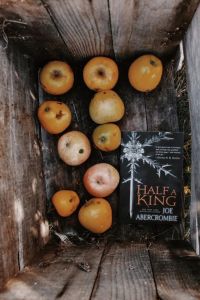
Prince Yarvi of the Gettlands is thrust into the role of King upon his father’s sudden death, but even after a lifetime of preparations the young boy is still not ready to take on his throne. He doesn’t believe himself capable of such power, and neither do the other royals and soldiers around him. It is due to this distrust that Yarvi finds himself awash on a new shore in a strange new land that he’d only heard of through stories of his kingdom’s enemies. So who finds him first as he crawls from the cold waves? His enemy king, of course. Pretending to be a mere baker’s son, Yarvi is then brought into slavery to be sold in one of the high markets of Grom-gil-Gorm’s territory. As he ventures from a throne, to a cell, to a ship where he is charged with the job of an oarsmen, Yarvi begins to plot his vengeance for those who betrayed him and cast him out of his home, and he’ll have to rely upon his enemies if he wants to survive first in order to get back his crown.

Processed with VSCO with p5 presetOur hero of the story is roughly around the age of sixteen if I recall correctly, and he definitely acts like it. Although I’m infatuated with tales of warriors and knights and vikigns etcetera, I was always a bit skeptical about how quick to take on a challenge some of those figures were. In Yarvi’s case, he truly wants to be king but he knows he’s not ready yet— spiritually or physically. For starters, Yarvi was born with half a hand, hence the title. This setback is only a setback if he allows it, and unsurprisingly he does. He was always frowned upon for being a cripple, and he is self-conscious of the fact. Even when he was being displayed in a line up of slaves to be bought, he hid his hand so that his buyer wouldn’t think twice.

To make matters worse, he had to help row a ship with only seven fingers, and he was described as being scrawny and lanky in the prior chapters. There were times when I became frustrated with his inner monologue and the depressing thoughts that accompanied it, but then I remembered that unlike other stereotypical hero’s, Yarvi acts just how I imagine anyone else in his position in real life would. He is hesitant about everything, passionate about the things he desires, and switches moods constantly.

Along his journey as a slave, Yarvi befriends his fellow oarsmen and the other captives aboard the ship. I was pleased to read that there are many mentions of women captains and warrior queens, but I felt that all the secondary characters lacked any true depth. Taking into consideration that this is meant to be a story about one boys development into a man, I found it troubling how little was spent on the progression of characteristics and rather most of the plot centered around battle tactics and the main protagonists constantly on the run.

Processed with VSCO with p5 presetYet even the battles felt short, as did most of the book, which I wouldn’t mind if it didn’t take me so long to force myself to read. Abercrombie has a fluid style of writing, and I really enjoyed his prose and context of language, but it was still a challenge to finish this story if only for the lack of connection I felt towards any of the characters, including the main one.

Would I classify this as a story about vikings? I’m sure under certain dictions it would qualify as such because of the mention of Vasterland and the enemy kings, but personally I read this just as I would have read any other story set in medieval fantasy realms. It didn’t stand out at all, and it felt dull nearly every other chapter. Perhaps you’ll have a better time with this one than I did if you decide to read it, but I can’t say I loved this story without coming up with explanations as to why I also found issues with it. I’m told the second book in this series is even better, but I’m still uncertain whether or not I will be reading that one.

Overall, I found this book to be enjoyable. It was a fun read, but it dragged a bit at the end and I still don’t feel as connected to these characters as I would have preferred. There was so much potential, but the delivery was weak. Oh well. On to more books!

My Rating: 3/5 stars.

Read this review on GoodReads.

3. 27. 17


Atmospheric Books

How we rate a book has a lot to do with not only the characters and the plot, but the setting as well. We might not realize it, but a vast amount of our emotions are placed in the background scenes and subconscious environments. To be fair, most books arguably have their own original settings wherein no two books will ever take place in the same fantasy kingdom or high school, however there are a few books that surpass all others in regards to being wholesomely atmospheric. Books that not only include an environment, but make that environment vital to the storyline. I adore books of the such, because they are the ones that I feel as though I can really submerge myself in and escape reality.

These books emphasize the whimsical aspect behind many genres, not only fantasy, because they seem so surreal yet they were designed to bring forth our own personal encounters and nostalgia in order to raise our emotional awareness. These atmospheric books do wonder for our minds, so I’ve compiled a list of my favorite ones!

Don’t just read books— fall into them.

Uprooted by Naomi Novik

“There was a song in this forest, too, but it was a savage song, whispering of madness and tearing and rage.”
The Night Circus by Erin Morgenster


“The circus arrives without warning. No announcements precede it. It is simply there, when yesterday it was not. Within the black-and-white striped canvas tents is an utterly unique experience full of breathtaking amazements. It is called Le Cirque des Rêves, and it is only open at night.”

The Star Touched Queen by Roshani Chokshi
“The Night Bazaar had ensnared me. I could smell its perfume on my skin—of stories and secrets, flashing teeth and slow smiles.”

The Half Drowned King by Linnea Hartsuyker

“She rushed across the fields and into the woods, where some shadowed grove would still shelter winter’s snow. She found a cache of not yet melted snow in the roots of an oak, and there she sat, numbing her hand, while the sun set.”
The Secret History by Donna Tartt

“White Sky. Trees fading at the skyline, the mountains gone. My hands dangled from the cuffs of my jacket as if they weren’t my own. I never got used to the way the horizon there could just erase itself and leave you marooned, adrift, in an incomplete dreamscape that was like a sketch for the world you knew -the outline of a single tree standing in for a grove, lamp-posts and chimneys floating up out of context before the surrounding canvas was filled in-an amnesia-land, a kind of skewed Heaven where the old landmarks were recognizable but spaced too far apart, and disarranged, and made terrible by the emptiness around them.”

A Darker Shade of Magic by V. E. Schwab

“It was a palace of vaulting glass and shimmering tapestry and, woven through it all like light, magic. The air was alive with it. Not the secret, seductive magic of the stone, but a loud, bright, encompassing thing. Kell had told Lila that magic was like an extra sense, layered on top of sight and smell and taste, and now she understood. It was everywhere. In everything. And it was intoxicating. She could not tell if the energy was coming from the hundreds of bodies in the room, or from the room itself, which certainly reflected it. Amplified it like sound in an echoing chamber. And it was strangely—impossibly—familiar. Beneath the magic, or perhaps because of it, the space itself was alive with color and light. She’d never set foot inside St. James, but it couldn’t possibly have compared to the splendor of this. Nothing in her London could. Her world felt truly grey by comparison, bleak and empty in a way that made Lila want to kiss the stone for freeing her from it, for bringing her here, to this glittering jewel of a place. Everywhere she looked, she saw wealth. Her fingers itched, and she resisted the urge to start picking pockets, reminding herself that the cargo in her own was too precious to risk being caught.”

The Name of the Wind by Patrick Rothfuss

“The Waystone Inn lay in silence, and it was a silence of three parts.

The most obvious part was a hollow, echoing quiet, made by things that were lacking. If there had been a wind it would have sighed trough the trees, set the inn’s sign creaking on its hooks, and brushed the silence down the road like trailing autumn leaves. If there had been a crowd, even a handful of men inside the inn, they would have filled the silence with coversation and laughter, the clatter and clamour one expects from a drinking house during the dark hours of the night. If there had been music…but no, of curse there was no music. In fact there were none of these things, and so the silence remained.”

The Scorpio Races by Maggie Stiefvater

“As the sun shines low and red across the water, I wade into the ocean. The water is still high and brown and murky with the memory of the storm, so if there’s something below it, I won’t know it. But that’s part of this, the not knowing. The surrender to the possibilities beneath the surface. It wasn’t the ocean that killed my father, in the end. The water is so cold that my feet go numb almost at once. I stretch my arms out to either side of me and close my eyes. I listen to the sound of water hitting water. The raucous cries of the terns and the guillemots in the rocks of the shore, the piercing, hoarse questions of the gulls above me. I smell seaweed and fish and the dusky scent of the nesting birds onshore. Salt coats my lips, crusts my eyelashes. I feel the cold press against my body. The sand shifts and sucks out from under my feet in the tide. I’m perfectly still. The sun is red behind my eyelids. The ocean will not shift me and the cold will not take me.”

Deathless by Catherynne M. Valente

“Marya watched from the upper floor as once again the birds gathered in the great oak tree, sniping and snapping for the last autumn nuts, stolen from squirrels and hidden in bark-cracks, which every winged creature knows are the most bitter of all nuts, like old sorrows sitting heavy on the tongue.”

In the Woods by Tana French

“…the solitude was intoxicating. On my first night there I lay on my back on the sticky carpet for hours, in the murky orange pool of city glow coming through the window, smelling heady curry spices spiraling across the corridor and listening to two guys outside yelling at each other in Russian and someone practicing stormy flamboyant violin somewhere, and slowly realizing that there was not a single person in the world who could see me or ask me what I was doing or tell me to do anything else, and I felt as if at any moment the bedsit might detach itself from the buildings like a luminous soap bubble and drift off into the night, bobbing gently above the rooftops and the river and the stars.”


Wintersong by S. Jae Jones

Read this review on GoodReads.
My Rating: 5/5

“She was never a hothouse flower. She is a sturdy oak tree. If her leaves have fallen, then she will bloom again come spring. She was not ready to die when she gave her life to me. But she did anyway, because she loved, and loved deeply.”

I went into this book with high expectations….and those expectations we’re blown away entirely with the magnitude of this story. It was phenomenal. This book truly resonated with me. It’s rustic, atmospheric quality compared with it’s whimsical plot and even more estranged characters made for an epic fantasy like none other I’ve read in a long time. Fans of Uprooted by Naomi Novik will appreciate the eerie personification that nature plays in this tale. What felt like a folkloric retelling but was actually an original, genuine piece of literature, Wintersong follows a young girl as she rediscovers her childhood self through love, responsibility, and sacrifice… all while doing so beneath silt and soil of the Earth.

Nineteen-year-old Innkeeper’s daughter Liesl has grown up in a sleepy village on the boarders between woodlands and Bavaria. While her younger sister is being groomed for marriage, and her brother preparing for an upcoming apprenticeship with a renowned composer, Elisabeth is constantly fussing over the wellbeing and success of her siblings. The only time she allots for herself is to revel in her passion— composing music of her own dark, melancholy nature. As a child, Liesl would roam deep into the Goblin Grove and play for the Goblin King—luring him out from beneath the earth to sing and dance and revel with her. But as time passes, Liesl’s fiery nature fades into the recesses of her soul. She focuses on everyone else around her but herself. It isn’t until her sister, Käthe, is stolen by the Goblin King to be his bride that our protagonist is drawn from her grey stupor and thrown back into the world of spellbinding fantasy. But Elisabeth has known all this time that no fantasy comes without a price, and her childhood adventures with Der Elkönig, The Goblin King, won’t compare to the game she is about to partake in. Elusive, powerful, and ferocious, Wintersong is a book that forces you to read it in two sittings or less.
Jones’s writing style reminds me of early British literature, not because it was hard to follow, but because of how smoothly it all flowed— as if being read like a song rather than a novel. Very fitting, indeed, for a book with a large element of music! Taking place in nineteenth century Bavaria, a lot of the terminology was derived from Germanic languages, which I thought made the setting seem more potent. Don’t worry though, it’s not overused and I found the occasional non-English quotes to be easily understood even though I can only speak English (but am learning a few other languages at the moment. *Props to my bilingual friends! You’re all incredibly talented). Most often the terms Der Elkönig (The Goblin King) and Mein Herr (My King) are used, because we never truly find out the main male protagonist/antagonist’s name until quite late into the story (if at all).

One of the most endearing things about this tale is how Jones offers the heroine’s character development in light of her younger self. She portrays not a protagonist who was once a meek, quant little thing with barely a kindle to a bonfire— rather, Elisabeth was always a bonfire of her own making, and her development resided in remembering how to live carefree and brave like she was as a child; playing her violin for the Goblin King deep in the woods. Jones created a main character who goes through two types of character development: the one where the heroine experiences new things that morph her journey for the better, and the second where the heroine revisits old strengths and embraces what was always within her, molding it into armor. That being said, I found Elisabeth to be a very intriguing and insightful narrator. I was definitely a fan of reading this story through her perspective. (But personally, I’d die to read some of these scenes via Der Elkönig’s perspective!)

There are many aspects that I’m still curious about, but of course we will most likely find those answers in the sequel! For starters, although most of this novel was spent Underground, back in the mortal realm Josef, Elisabeth’s younger brother, is transforming into a famous musician…with a very endearing young man to help compose alongside him. Käthe, their sister, is a peculiar character that I’m still curious about and hope to read more of, because she was vital to our heroine’s adventure so I desire to see her sister’s own journeys in the sequel. And of course, there’s the huge spoiler that shall not be revealed that will invoke plenty of stress and tears once you’ve read the tale to it’s bitter end. I would very much like to see the answers to THAT plot twist. (Side note: painful ending + long wait = sobbing, theorizing, and fanfiction!)

Wintersong will be a book that I always remember. It’s unique in it’s design, and highly imaginative. The way the story made me feel while reading it is an emotion indescribable, but a powerful one nonetheless. I can only hope that at least one other person experiences this tale the way I did—because now I’m craving a walk into the woods whereupon I’ll sadly attempt to play an instrument to lure out my own King of the Goblins. So do yourself a favor and read this book. I will forever recommend it.

Processed with VSCO with a6 preset

And because I enjoyed this tale so wonderfully, here’s a little soundtrack I’ve composed that made reading it slightly more magical!

SoundCloud link.

Tracklist

no.1  Winter Breath by Adrian Von Ziegler
no.2  Vow by Julianna Barwick
no.3  A Winters Tale by Jeremy Soule
no.4  Winter Rain by Hanan Gobran
no.5  Winter (full) by Antonio Vivaldi
no.6  Arrival of the Birds by The Cinematic Orchestra
no.7  Saturn by Sleeping at Last
no.8  Love by Daughter
no.9 Willow Tree March by The Paper Kites


Caraval by Stephanie Garber

Caraval by Stephanie Garber

“Whatever you’ve heard about Caraval, it doesn’t compare to the reality. It’s more than just a game or performance. It’s the closest you’ll ever find yourself magic in this world.”

I was given an ARC of Caraval in return for an honest review. That doesn’t persuade my true opinion of the book. This is a spoiler free review which can also be viewed HERE.

Scarlett Dragna and her younger sister Donetella, often called Tella, live in a mock nineteenth century backdrop where a traveling circus goes from villages to cities, beckoning folk to engage in a live-performing fantasy bazaar. Their father, a man of wealth and stature, is abusive towards his daughters— and regularly goes after one sister for the actions of the other, figuring to physically harm one would be to drastically render the other tormented and obedient. After years of sending letters to the Master of Caraval, Scarlett hopes to one day be invited to partake in the show, if only the ring leader would correspond. But before she can give up her dreams of playing the game and settle down to marry her fiancé, she and her sister find themselves hostages… taken, ironically, straight to the entrance of Caraval. What occurs next cannot be understood rationally, for Scarlett must perform in this illusionary realm in order to win and save her sister, who’d been missing since their arrival.

If you loved The Night Circus by Erin Morgenstern, this book will more than likely please you. Personally, I felt that Night Circus was stronger in a few regards, but that doesn’t lessen the beauty of Caraval. This book shares a similar atmosphere with Morgenstern’s because, notably, it takes place in a traveling circus where reality is blurred and what once seemed exhilarating is actually horrific. Stephanie Garber did a wonderful show of exploring the depths of this whimsical story, creating a lush imagery of colors and ribbons of prose. Her writing style is easy to follow, which made the transition into the book smooth and the pace fast. I believe there were certain dialogue scenes that we could have gone without, but other than that this book can be devoured in less than a week if you put your mind to it.

I did have some issues with the story, nevertheless.

Our heroine, Scarlett, is thrown into the game after having to swim miles to shore to save her life with a complete stranger who’d been, not a few hours prior, kissing her sister in their father’s cellar…which, of course, they’d been caught and punished for. Scarlett didn’t feel much like a heroine, rather she was merely the main character and narrator of the book. I understand that wielding a sword and having magical powers doesn’t make a character strong, but even where cleverness and bravery are in mind, she lacks those traits as well. She definitely showed to have a semblance of cunning and courageousness, but it was often after someone had to help her or before she did something completely reckless and uncalled for. And thus, we have our main male figure— Julian.

Julian is a player in the game, and has a secretive history with Caraval that cannot be explained until the final pages of the story. He is sarcastic and witty, aiding Scarlett in her quest to win the game and save her sister. But I felt that his character wasn’t fully developed because most of the time he was spoken about through his supposed romance with the heroine. Even then, I felt that their relationship was rushed and a bit forced. There wasn’t much of a build-up because our main character was more concerned with surviving, as she should have been! And then suddenly these two are “in love” with one another. Don’t get me wrong, I enjoyed both of their developments, but I still feel that they could have gone the whole time as friends and nothing would have been misplaced or changed in the grand scheme.

If love must be a focal point in this story, it’s not about the sisters and their flirtations with the other players of Caraval, it’s in regard to the sisters alone. The tale is spun through a cycle of sisterly love, starting with Scarlett’s need to see Tella safe and freed from the game. I love how their kinship was handled and I wish there had been more time devoted to the two of them together.

Overall, I enjoyed this book. It was a great elixir for a reading slump and certainly a unique story. I know that many of my friends fell in love with this book, but unfortunately I just didn’t experience the same story as they did. I feel that it has room for improvements, and I’m curious to see if those will be addressed in the sequel (and yes, there WILL be a second installment).

My rating: 3.5/5

Autumn/ Halloween TBR: Part I

Autumn/ Halloween TBR: Part I

In a field of dead wheat stalks, lapped at by frigid wind like raw meat to a starved crow, the trees reach taller than my limbs, the blood red moon hangs low above my fingertips; fog and murk and decay roil through the petrified grasses, through the fallen leaves that crunch against boots on a lonely Friday morning walk to school, through the veins of a heavy hearted wanderer carrying a bag of books against her boney shoulders. This is my autumn, but allow me to share my books with you…

Here are some books I’ve been intending to read around this melancholy time of year— I find them either eerie enough to compliment a Halloween TBR or dark and chilling enough for an autumn night where I’d stay up reading. I have also added some books that I have already ready, but they should certainly be on your TBR. Enjoy! Let me know if you have any recommendations as well!


Autumn/Halloween TBR: Part I

Paper Tigers, Damien Angelica Walters:

In this haunting and hypnotizing novel, a young woman loses everything—half of her body, her fiancé, and possibly her unborn child—to a terrible apartment fire. While recovering from the trauma, she discovers a photo album inhabited by a predatory ghost who promises to make her whole again, all while slowly consuming her from the inside out.

Little Sister Death, William Gay:

David Binder is a young, successful writer living in Chicago and suffering from writer’s block. He stares at the blank page, and the blank page stares back—until inspiration strikes in the form of a ghost story that captivated him as a child.

With his pregnant wife and young daughter in tow, he sets out to explore the myth of Virginia Beale, Faery Queen of the Haunted Dell. But as his investigation takes him deeper and deeper into the legacy of blood and violence that casts its shadow over the old Beale farm, Binder finds himself obsessed with a force that’s as wicked as it is seductive.

The Barrens, Joyce Carol Oates:

In this gripping psychological thriller, Joyce Carol Oates, New York Times best-selling author and one of the most versatile and original voices in contemporary American fiction, delivers a startling, complex tale of a serial killer and the people that his ghastly crimes touchand transform. People like Matt McBride. Matt was barely out of junior high when the mutilated body of the first victima popular, pretty teenagerwas uncovered in the desolate New Jersey Pine Barrens. Although he had hardly known the girl, Matt has long felt guilty at not having been able somehow to prevent the atrocity. Now another attractive young woman has disappeared, and Matt knew this victim, too. Just possibly he knew her more intimately than he is prepared to admit.

By degrees Matt becomes obsessed with a guilt he can neither comprehend nor assuage. His seemingly happy marriage begins to deteriorate, while his increasingly erratic behavior heightens police suspicions. It also draws official attention away from an artista man of limited talent but of fierce, demented visionwho signs his work Name Unknown. Under the spell of the missing woman, Matt follows a path that leads him out of the maze of tortured memory to a confrontation with not only the baleful Name Unknown but also his own long-unacknowledged self. The outcome is shattering. With “murder as an art and the serial killer as an artist,” National Book Awardwinner Joyce Carol Oates shows “how a murderer’s savage creations … transform a man’s life.”

(Read/ Rating: 5 of 5) The Secret History, Donna Tartt:

Processed with VSCO with c7 preset

Under the influence of their charismatic classics professor, a group of clever, eccentric misfits at an elite New England college discover a way of thinking and living that is a world away from the humdrum existence of their contemporaries. But when they go beyond the boundaries of normal morality they slip gradually from obsession to corruption and betrayal, and at last – inexorably – into evil.

Slasher Girls & Monster Boys, Leigh Bardugo, Marie Lu, Jay Kristoff:

A host of the smartest young adult authors come together in this collection of scary stories and psychological thrillers curated by Between the Devil and the Deep Blue Sea’s April Genevieve Tucholke.

Each story draws from a classic tale or two—sometimes of the horror genre, sometimes not—to inspire something new and fresh and terrifying. There are no superficial scares here; these are stories that will make you think even as they keep you on the edge of your seat. From bloody horror to supernatural creatures to unsettling, all-too-possible realism, this collection has something for any reader looking for a thrill.

Heart Shaped Box, Joe Hill:

Aging, self-absorbed rock star Judas Coyne has a thing for the macabre — his collection includes sketches from infamous serial killer John Wayne Gacy, a trepanned skull from the 16th century, a used hangman’s noose, Aleister Crowley’s childhood chessboard, etc. — so when his assistant tells him about a ghost for sale on an online auction site, he immediately puts in a bid and purchases it.

The black, heart-shaped box that Coyne receives in the mail not only contains the suit of a dead man but also his vengeance-obsessed spirit. The ghost, it turns out, is the stepfather of a young groupie who committed suicide after the 54-year-old Coyne callously used her up and threw her away. Now, determined to kill Coyne and anyone who aids him, the merciless ghost of Craddock McDermott begins his assault on the rocker’s sanity.

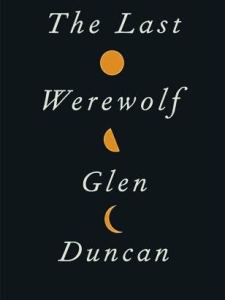
The Last Werewolf, Glen Duncan:

“Then she opened her mouth to scream–and recognised me. It was what I’d been waiting for. She froze. She looked into my eyes. She said, “It’s you.”
Processed with VSCO with c7 preset

Meet Jake. A bit on the elderly side (he turns 201 in March), but you’d never suspect it. Nonstop sex and exercise will do that for you–and a diet with lots of animal protein. Jake is a werewolf, and after the unfortunate and violent death of his one contemporary, he is now the last of his species. Although he is physically healthy, Jake is deeply distraught and lonely.
Jake’s depression has carried him to the point where he is actually contemplating suicide–even if it means terminating a legend thousands of years old. It would seem to be easy enough for him to end everything. But for very different reasons there are two dangerous groups pursuing him who will stop at nothing to keep him alive.

The Heretic’s Daughter, Kathleen Kent:

Martha Carrier was one of the first women to be accused, tried and hanged as a witch in Salem, Massachusetts. Like her mother, young Sarah Carrier is bright and willful, openly challenging the small, brutal world in which they live. Often at odds with one another, mother and daughter are forced to stand together against the escalating hysteria of the trials and the superstitious tyranny that led to the torture and imprisonment of more than 200 people accused of witchcraft. This is the story of Martha’s courageous defiance and ultimate death, as told by the daughter who survived.

(Read/ Rating: 5 of 5) The Night Circus, Erin Morgenstern:

The circus arrives without warning. No announcements precede it, no paper notices plastered on lampposts and billboards. It is simply there, when yesterday it was not.

Within these nocturnal black-and-white striped tents awaits an utterly unique, a feast for the senses, where one can get lost in a maze of clouds, meander through a lush garden made of ice, stare in wonderment as the tattooed contortionist folds herself into a small glass box, and become deliciously tipsy from the scents of caramel and cinnamon that waft through the air.

Welcome to Le Cirque des Rêves.

Beyond the smoke and mirrors, however, a fierce competition is under way–a contest between two young illusionists, Celia and Marco, who have been trained since childhood to compete in a “game” to which they have been irrevocably bound by their mercurial masters. Unbeknownst to the players, this is a game in which only one can be left standing, and the circus is but the stage for a remarkable battle of imagination and will.

As the circus travels around the world, the feats of magic gain fantastical new heights with every stop. The game is well under way and the lives of all those involved–the eccentric circus owner, the elusive contortionist, the mystical fortune-teller, and a pair of red-headed twins born backstage among them–are swept up in a wake of spells and charms.

But when Celia discovers that Marco is her adversary, they begin to think of the game not as a competition but as a wonderful collaboration. With no knowledge of how the game must end, they innocently tumble headfirst into love. A deep, passionate, and magical love that makes the lights flicker and the room grow warm whenever they so much as brush hands.

Their masters still pull the strings, however, and this unforeseen occurrence forces them to intervene with dangerous consequences, leaving the lives of everyone from the performers to the patrons hanging in the balance.

Both playful and seductive, The Night Circus, Erin Morgenstern’s spell-casting debut, is a mesmerizing love story for the ages.

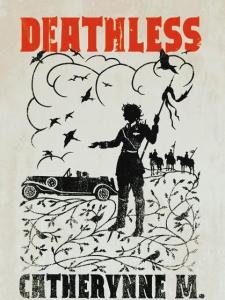
(Read/ Rating 5 of 5) Deathless, Catherynne M. Valente:

Koschei the Deathless is to Russian folklore what devils or wicked witches are to European culture: a menacing, evil figure; the villain of countless stories which have been passed on through story and text for generations. But Koschei has never before been seen through the eyes of Catherynne Valente, whose modernized and transformed take on the legend brings the action to modern times, spanning many of the great developments of Russian history in the twentieth century.
Processed with VSCO with c7 preset

Deathless, however, is no dry, historical tome: it lights up like fire as the young Marya Morevna transforms from a clever child of the revolution, to Koschei’s beautiful bride, to his eventual undoing. Along the way there are Stalinist house elves, magical quests, secrecy and bureaucracy, and games of lust and power. All told, Deathless is a collision of magical history and actual history, of revolution and mythology, of love and death, which will bring Russian myth back to life in a stunning new incarnation.

We Have Always Lived in the Castle, Shirley Jackson:

Merricat Blackwood lives on the family estate with her sister Constance and her Uncle Julian. Not long ago there were seven Blackwoods—until a fatal dose of arsenic found its way into the sugar bowl one terrible night. Acquitted of the murders, Constance has returned home, where Merricat protects her from the curiosity and hostility of the villagers. Their days pass in happy isolation until cousin Charles appears. Only Merricat can see the danger, and she must act swiftly to keep Constance from his grasp.

Anna Dressed in Blood, Kendare Blake:

Cas Lowood has inherited an unusual vocation: He kills the dead.

So did his father before him, until he was gruesomely murdered by a ghost he sought to kill. Now, armed with his father’s mysterious and deadly athame, Cas travels the country with his kitchen-witch mother and their spirit-sniffing cat. They follow legends and local lore, destroy the murderous dead, and keep pesky things like the future and friends at bay.

Searching for a ghost the locals call Anna Dressed in Blood, Cas expects the usual: track, hunt, kill. What he finds instead is a girl entangled in curses and rage, a ghost like he’s never faced before. She still wears the dress she wore on the day of her brutal murder in 1958: once white, now stained red and dripping with blood. Since her death, Anna has killed any and every person who has dared to step into the deserted Victorian she used to call home.

Yet she spares Cas’s life.

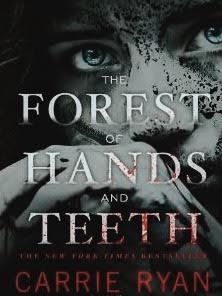
The Forest of Hands and Teeth, Carrie Ryan:

In Mary’s world there are simple truths. The Sisterhood always knows best. The Guardians will protect and serve. The Unconsecrated will never relent. And you must always mind the fence that surrounds the village; the fence that protects the village from the Forest of Hands and Teeth. But, slowly, Mary’s truths are failing her.
Processed with VSCO with c8 preset

She’s learning things she never wanted to know about the Sisterhood and its secrets, and the Guardians and their power, and about the Unconsecrated and their relentlessness. When the fence is breached and her world is thrown into chaos, she must choose between her village and her future—between the one she loves and the one who loves her. And she must face the truth about the Forest of Hands and Teeth. Could there be life outside a world surrounded by so much death?