House of Earth & Blood by Sarah J. Maas

As promised, here is my somewhat late but still relevant review of Sarah J. Mass’ first adult novel, House of Earth and Blood (Book #1 of ‘Crescent City’). I intended to write this and have it posted long before the publication date since I was gifted with an ARC, but I think it’s taken me this long because I’ve been trying to dissect my feelings regarding the book. I guess it won’t be what many people are expecting, and maybe it’ll be exactly what some are expecting, but that is the beauty of a predominantly YA author branching out to the adult genre (as recently seen with Leigh Bardugo’s Ninth House). But maybe you haven’t yet decided to read this novel, regardless of whether or not you’re already a Maas fan, so here is a little synopsis that might reveal more than just the cover slip. 

The story follows Bryce Quinlan, an oddities antique dealer by day and wild partier by night. Her close knit group of friends indulge in the finest things their town has to offer, but after one evening of excessive drinking and drug use, Bryce’s life comes to a chilling pause when the people she loves are brutally murdered by an unknown demon. The only evidence left to go by are the last texts and voice messages exchanged  between the friends, leaving Bryce ashamed and isolated. When the investigation takes a drastic turn, Bryce slowly emerges from her catatonic state to seek revenge and get answers. 

Enslaved to the Archangels he once tried to overthrow, fallen angel Hunt Athalar is assigned to aid in the investigation with Bryce, while also keeping tabs on her and reporting back to his masters. In return, Hunt will be granted early freedom from his enslavement. As they dig deeper, awful secrets are revealed that threaten to harm everyone they care for, including the unacknowledged feelings Hunt and Bryce begin to develop for one another. With every newfound clue that is unfurled, the paranoia grows as the investigation becomes more and more unbearable with the tragic reality just slightly out of reach for fear of betrayal and denial. The ending will leaved you more shocked than the beginning slaughter scenes. 

While I truly enjoyed this book, I also think it’s very important to note that there should be a trigger warning for mentions of drug abuse and suicide. These are not uncommon to the plot, and are often brought up frequently, so everyone please tread carefully! Frankly, a lot of people might suspect that Maas will use this chance to further develop the explicit sexual scenes she often writes (and that I  very much enjoy), but I found that the sex scenes were few and far between in comparison to the mentions of drugs and self harm. That, to me, is likely why this is rated as an adult novel, not necessarily due to the romance. 

I have mixed feelings about this story because I was prepared to be blown away, and it fell a bit short for me. There were aspects that I really wanted to know more about, and characters who I was very drawn to (like Aidas, the Prince of the Chasm), but they were only prominent on a few pages in this very large book. And because this book is quite large, I though that perhaps there would be many smaller plots within the grand scheme of events, but unfortunately it was the same plot drawn out over many chapters without much action ever happening. I suppose it was set up that way for suspense, but I found myself getting bored here and there, which has never happened to me before with a Maas book. 

Another thing I noticed and still don’t know how I feel about is the fact that many of these characters greatly resemble other Maas characters from her prior stories. I could draw so many parallels between the books, but this one read a bit too close for comfort. On one hand, I love the characters in her other stories, but I also wasn’t prepared to read about them years into the future out of context. The story, while unique in plot, bore very similar settings and characteristics to the author’s other works, so much so that it almost came off paradoxical. 

I suppose that sounds cynical on my part, especially because I still enjoyed this story. I guess what I’m really saying is that while I liked it, it definitely didn’t rise to the occasion as I had hoped it might. There is mention of an Autumn King throughout, and I won’t say more for fear of spoilers, but I’m greatly intrigued by him and what his affiliation with Bryce might lead to in the second book. Other than that, the writing style is very much the same from other Maas books, and this one certainly begins with a hook. However, you might just have to push through in the initial half of the book to get to the more tantalizing stuff in the later half. 

My Rating: 4 of 5 stars
Goodreads Review Link. 
Review: Ninth House by Leigh Bardugo

Review: Ninth House by Leigh Bardugo


It has been such a long time since I’ve last reviewed anything and I find it to be quite fitting that my year-long hiatus is broken by none other than Leigh Bardugo. One of the first books that truly got me into reading was Shadow and Bone, otherwise known as book one in Bardugo’s young adult fantasy The Grisha Trilogy (now being turned into a Netflix series…I feel as though we’ve come full circle). That being said, I must warn everyone now that Ninth House is very much NOT a young adult novel, nor should anyone feel that they must read this book simply because they enjoyed anything Grisha related. It is full of triggering content that is not geared towards young readers—things like (multiple) sexual assault, overdose, and homicide. However, that’s not to say that this book is only a graphic depiction of trauma. In fact, I found this to be an inspiring story for those who are victims and have felt silenced or ignored. This is not the first time that the author has written about abuse, particularly abuse against women, but I found this to be the most prolific in regards to discussing the aftermath of it all. 

I think that Bardugo handles these situations well, and I also believe that it is important to not shove these things under the rug and pretend it doesn’t happen…even in a fantasy novel where ghouls exist. The contrast between the horrors of the ‘other’ realm and the horrors of the modern world were vague, which is thought-provoking since I found the most traumatic experiences occurred in the scenarios where magic had little to no influence—something that speaks to the overall theme of the book as a story of survivors (even for the ones who didn’t necessarily survive, i.e. the “Greys”). 

The novel begins with Galaxy “Alex” Stern, a wayward Los Angeles native who awakens in a hospital room and is seemingly given a second chance at life far unlike any she’s ever known. She attends Yale and discovers nine secret societies all of which are part of the occult, dabbling in dark magic that often requires the sacrifice of a towns person for the benefit of performing rituals and conducting dangerous research. Half of the campus is unaware of the obscurities concerning the eight houses of the viel, but Alex is taken into what is considered the overseer of the occults—the Lethe house (also, the title, the ninth house). There, she is tasked with cleaning up the dirty work and keeping the bodies from appearing all over campus. However, Alex also has a particular affinity for seeing ghosts, known as Greys, that originally attracted the dean to her hospital bedside in the first place, much to Lethe’s leader Daniel “Darlington” Arlington’s annoyance. 

Darlington is one of those characters who appears a certain way upon introduction and becomes something completely else by the end of the story. I personally love him and find myself craving the second book because I’m so curious to see what is going to happen in regards to the aftermath of his actions in Ninth House. Without spoiling the book, I will say that there is a certain scene which unfolds at a Halloween party hosted by the Manuscript House where a massive amount of symbolism and foreshadowing (in my opinion) is revealed (also, the Manuscript party is described very whimsically and I think if I had to choose which society to join it would be there)…and this is probably when I realized I really love Darlington, particularly his bizarre relationship with Alex. 

I made a mental note not to bring up Donna Tartt’s “The Secret History” in this review…but seeing as that is my favorite book, I really can’t resist. Much like Tartt’s ‘dark academia’ aesthetic, Bardugo also portrays the forlorn and incredibly troubling atmosphere of a campus cult driven by idealism and nefarious behavior. However, unlike “The Secret History”, this book tackles the social division between class and race on a far more raw level. Alex is biracial and there are many scenes where she expresses her concern over appearing either too much or too little of one ethnicity, similar to her struggle between trying to fit into Yale while simultaneously resenting the overt privilege on display. 

One of the few issues I experienced with this book was the sluggish beginning, which I’ve noticed a few other reviewers also mention. At first, I was hooked because of the rich style of Bardugo’s writing. But then it became apparent that not much was occurring in the first portion of the story, and there was plenty of name dropping and information dumping that did little to help build the setting—rather, it confused me and I felt as though I needed to write down the names and backstories of certain people in order to follow the rest of the plot. But don’t worry! The story does eventually pick up, right around the time when the first corpse is revealed. From then on out, I was turning the pages at rapid speed. Another thing that was likely meant to add to the mystery of the plot, but actually confused me a little more, was the time jumps between chapters. The book fluctuates between seasons and goes back in time on several chapters. 

On a more mundane note, I found this to be a really nice transition for Bardugo’s style. As I’ve mentioned before, this is definitely an adult fantasy story…yet I found a lot of quirky and intriguing hints of previous Bardugo tales hidden within this text and it warmed my heart. (Another side note: the author definitely has a knack for never using a characters ‘true’ name and I think that’s wonderful.) Her writing style has always been unique, but I think Ninth House truly sets Bardugo apart from other authors. All in all, I can’t wait to read her next novel! 

And like all of my positive book reviews, I hope to create a spotify playlist for this story within the week! I’ll post a link once it’s live. 

Sky in the Deep

Adirenne YoungBREATHE FIRE— I’ve always had an infatuation with Norse mythology and the Vikings, and I’ve always wondered why no one had written about them through the lens of a YA novel. When I first heard about Sky in the Deep by Adrienne Young, I was like “FINALLY. Someone is finally doing it!” Knowing what I do about reading a new author for the first time, I tried not to get my hopes up too high because I’ve been let down in the past. But Young really delivered with her tale, and I’m so pleased to tell you guys that this book has become near and dear to me. It definitely deserves 5/5 stars and I likely won’t ever stop recommending it. So, let me tell you a little about it!
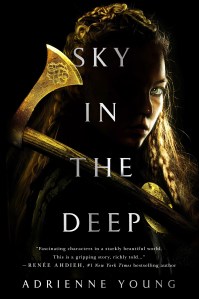
“I stood at the entrance of the ritual house in the falling snow, holding basket piled high with yarrow. The huge archway was a detailed carving of the mountain, the trees etched into it in slanted patterns and the face of Thora, mouth full of fire.”

Sky in the Deep follows seventeen year old Eelyn, a viking warrior from the Aska tribe set on the coast of the snowy Fjord, who lives by the code “vegr yfir fjor” or “honor above life.” Her clansmen have an ancient rivalry with the Riki clan, who worship the goddess Thora above the Aska god Sigr. She lives to fight, and fights to survive. That is the ways of her people, and that is all she knows. Five years after the death of her beloved brother Iri, a brother who she’d seen fall in battle, she is revisited by his ghost fighting alongside their rival clan. But when she notices how corporal he appears, and how he has seemingly aged with time, she cannot fathom the truth. It is no longer a possibility that Iri is an apparition sent by her god—and her heart refuses to accept the harrowing truth of his deception.

Every five years, the Riki and the Aska converge in the mountains or alongside the coast to fight to the death. It is the way of their worlds, and a tradition that had been kept since the age of their gods. But when Eelyn tries to find her brother amongst broken bodies and swinging axes, she is nearly killed by Fiske—Riki’s new, adoptive brother. Iri pulls them apart before they tear murder one another, but Eelyn is then taken prisoner and sworn to secrecy about her brother’s lineage.

Eelyn must face her brother’s betrayal and live amongst his people, the Riki, and work as their servant if she hopes to survive the winter to then venture back home to her father. When the Riki village is suddenly raided, she must put her life in the hands of the man who nearly took it—Fiske. Her brother’s friend, and her captor, try to figure out how to unite the clans to defeat a deadlier enemy. But some rivalries run too deep, with too much blood spilled, and old rivals will never be truly at rest until their god’s thirst for blood and war is satisfied.

The setting takes place in a vague, Nordic country where one scene goes from thickly iced over lakes to snow-capped mountains where trees tower over the nestled villages. Young’s descriptions of the meeting halls and forests are gorgeous. I loved her writing style, because it easily hooked me from the first page and didn’t leave room for errors. In other words, anything I guessed that would occur actually didn’t occur, even with my close reading. It was a well thought out and characterized story, especially in regards to character development. A major theme throughout was the idea of giving in and changing. When to change, whether or not to change, and who to change for—which ultimately leads to the protagonist’s self-discovery and newfound outlook on life. The best part about this book is definitely following along as Eelyn struggles to find herself in two different worlds. Fiske fights the same inner battle, as does Iri, and all three of them go through this change differently and with contrasting perspectives. It was all very intriguing and stimulating to read.

I also really enjoyed how Young didn’t focus heavily on romance in this story. While there is romance, it isn’t a main aspect to the plot. There are no affairs, love triangles, or unrequited lover tropes involved whatsoever—none of these warriors have time for that. SKY is a story about self identity and coming of age, and Eelyn was a wonderful protagonist whose main concerns rested with her father, her tribe, and understanding how two groups of people can come to live in peace.

Overall, this was an amazing book. I highly recommend it if you’re a fan of the T.V. series Vikings (on History), or if you haven’t seen that show but loved the book…watch it!! I’m biased because Vikings is my favorite television series, and some of the characters in the book reminded me of characters from the show. Also, the soundtrack to the show is a wonderful companion if you want to listen to music while reading.


I have to give a massive thank you to St. Martin’s Press for granting me an early copy of this book and setting up a Q&A with the author, Adrienne Young! Below are the questions Young responded to for the Sky in the Deep Blog Tour.

  1. What inspired SKY IN THE DEEP? How did the idea and Eelyn come to you? DO you have any favorite Viking stories?

The sibling betrayal was definitely the first inspiration for this story. I was driving in the pouring rain on this country road and the first scene just hit me—Eelyn seeing her brother on the battlefield after thinking that he was dead for five years. I pulled over on the side of the road and scribbled a million notes on an old envelope. I was immediately hooked to the idea and I wanted to know what had happened. I started writing that first chapter and I just never stopped.

2. What type of research did you do for your character and world-building? What languages did you study to implement the languages of that the Aska and the Riki speak? What was the strangest thing you had to research for this book?

I did a ton of research for this story. I actually really love to research things so it was a lot of fun. A lot of it was stuff like clothing, landscape, weapons, food, etc. But I did a lot of research into Norse mythology as well to build a foundation for this world. The language used is Old Norse, but it’s a dead language so studying it was really difficult. There is a lot of controversy about it among scholars and there’s no real way to fully understand it, so I just did my best based on my own investigation. I’m definitely not an expert! The weirdest thing I had to research was how to tear out someone’s eyeball. Yuck.

3. What was your writing process like for SKY IN THE DEEP?

Complete and utter obsession. When I draft, I get really buried in the world and I don’t really come up for air until I get to the end. I write as much as I can and list my intake of other influencers that could mess with my mindset. I don’t watch TV or movies or listen o music thats not on my playlist, and I kind of don’t have a social life until it’s done.

4. What was your hardest scene to write? What was the easiest?

I really didn’t struggle to get this story on the page the way I have with other books, so I really don’t know what the hardest scene to write was. But the easiest was the first chapter. I wrote it so fast and it just clicked in so perfectly.

5. Which of your characters are you the most like? Who was your favorite to write?

Eelyn! We have so much in common and she really inspires me. But I think Halvard was the most fun to write. I really, really love him.

6. Do you have a soundtrack for SKY IN THE DEEP? Can you share a couple of songs? What would Eelyn’s favorite song be?

Yes! Music plays a HUGE role in my writing process and I have a playlist for every project. The ones I probably listen to the most while drafting SKY are To the Hills by Laurel, Bare by Wildes, and Rise Up— Reprise by Foxes. But a link to the whole playlist is on my site!

Listen to Young’s playlist here.

7. What books have inspired you to write? What books are you looking froward to reading this year?

The ones that inspired me to write are nothing like my books. One of the most influential ones for me was A Tree Grows in Brooklyn, because the human element is so beautiful and the author explores so many things in that took that really took my breath away. I wanted to write stories that went deep like that, but I love fantasy so I try to write it within that realm.

8. Any advice on querying? Or writing advice for aspiring writers?

Querying—do not just sign with any agent who will take you. Make a dream agent list of qualified agents who have good reputations and make consistent sales. Query them. If they don’t bite, then write another book that they might want. Believe me when I say it is worth waiting or the right agent!

9. Any details about the company novel?

I cant say anything about the companion novel yet! But I’m hoping that we can start talking about it soon because I am really excited about it!


And because I loved this book so much…I made my very own playlist for it! You can follow THIS link to listen on SoundCloud. Most songs are by Wardruna, who I’ll be seeing this spring in concert (aahhh)!Sky in the Deep_cover image

Runaljod // Wardruna
Pertho // Wardruna
Snake Pit Poetry // Einar Selvik
Sacrifice for the Crops // Trevor Moris
Skaldens Song Til Tore Hund // Ivar Bjørnson
Heimta Thurs // Warduna
Resan // Forndom
Burizas // Draugurinn
Dance with the Trees // Adrian Von Zieglers
Viking Boaters Dancing in Scotland // Adrei Krylov


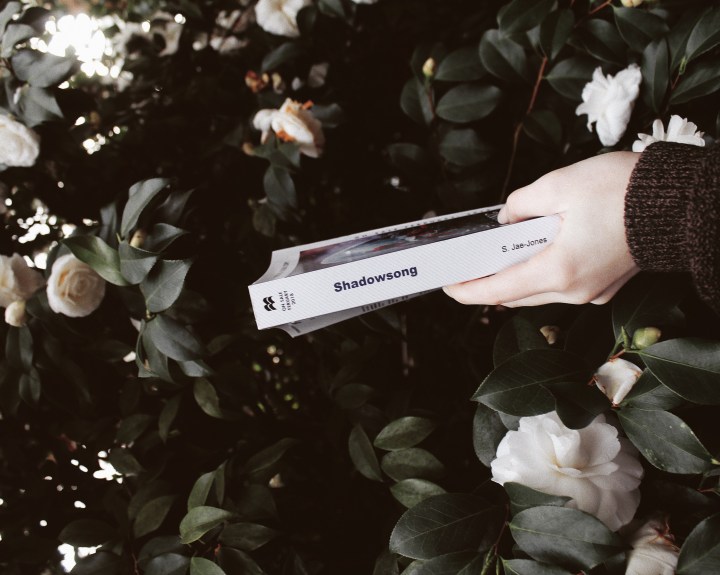
Shadowsong by S. Jae-Jones

*This review does contain spoilers. Please do not read it if you haven’t already read Wintersong or its sequel, Shadowsong. This is also an ARC review—and material in the finished copy is subject to change.

Processed with VSCO with a6 preset

Wintersong by S. Jae-Jones was one of my top three favorite books last year. I was highly anticipating the sequel because of the way in which the first book left us hanging, wondering if Liesl and her Goblin King would ever reunite. In Jones’ lush, austere world of eighteenth-century Bavaria, you find yourself emerged in a story that feels more imbued in folklore than the average genre of fiction. And I LOVE that. The whole time I read Shadowsong I felt the same ambiance as I did in the first novel, even though the first one mostly takes place under the earth and this one traverses between Vienna and our protagonist’s village.

Jones has such a beautiful writing style that brings forth emotions of great heartache and longing for something you might have never experienced, but have heard stories enough that you could almost imagine such an agony. My love for the prose aside, the pace of this story does start out a bit slow.

Unfortunately, I felt that the story never really picked up until the halfway mark or even slightly after that. Perhaps this is because I was anticipating interactions between Liesl and the Goblin King, not Liesl and her siblings. While I enjoyed reading more about Käthe and Josef, I felt like they took up the story and any traces of the main characters from book one were replaced by their tales. This wouldn’t be so bad! If the last book didn’t end with such a cliffhanger about said two characters.

There was definitely a sense of peace and finality at the end of the book, but I was still left longing for more romance between Liesl and Der Erlkönig. I was hoping for a lot more interaction between them. The last moments they share on page made me tear up, but I still wish there were more scenes between the two in this sequel. After all, this is promoted as a YA Romance and I felt the romance aspect severely lacking because there was little to no interaction between the main pairing—just a lot of pining and longing (which is only well-used subtly and in the beginning of a story).

Der Erlkönig didn’t even come across as the same character we fell in love with in Wintersong. He was basically absent most of the book, and although there is a plot-related reasoning for this bizarre behavior, it wasn’t developed enough to make sense until the final pages where the reader is left feeling a bit cheated.

I did, however, particularly enjoy the mention of the Wild Hunt. That has always been a favorite tale of mine, and to have the Goblin King be its head leader me see him as a more antagonistic character, even if he had little control over the matter. It made the story darker than I had thought it could be—which was great.

      “Looming in the shadows was a figure, skin night-black and eyes moon pale. Fingers broken and gnarled like desiccated vines curled around the neck of a violin, the resin cracked and pulled with age. A crown of horns grew from a nest of cobwebs and thistledown, but the face that stared back at me was human. Familiar.”

      Ultimately this book just didn’t sit well with me. The first novel is fantastic, but I feel as though this one was similar to when you’re trying to finish an essay and give up on the conclusion so you just reiterate the first few sentences. I’m really upset by this, but that’s truly how I feel.

My Rating: 3/5
Goodreads link.

Circe by Madeline Miller

I always enjoyed the Odyssey, but it was never a favorite tale of mine. Circe, for those who might not be familiar with the story, was a minor character who’s notorious moment of fame was when she turned Odyssey’s men into pigs. Yes, that actually happened—and yes, she made me enjoy the tale considerably more than had she never been written into it.

With that out of the way, I should begin this review by saying that while I have a decent knowledge of Greek mythology, this story would have been a bit of a struggle to understand had I not known specific myths. For many people, I feel that Circe is going to be one of those books that you’ll need to do some background research to truly understand what is happening. Miller provides enough resources that one can just surmise what is going on without having to recall some middle school lecture about the Odyssey, but there are still going to be holes left unfilled. Even for me, it was a bit confusing at times.

But don’t let this discourage you!

I was already a fan of Miller because of her other novel, The Song of Achilles, so Circe had some big shoes to fill. I’ll just say right now that I didn’t love this story as much as the other novel. For me, it didn’t have the same fast-paced and adventurous ambiance of TSoA, nor did it have the same emotional pull. Circe is a slower read. The romance is essentially nonexistent, which I liked, but the emotional angst wasn’t delivered to the extent that I thought it would be. What I mean to say is; I didn’t really care much for most of these characters. Not like I did with TSoA. However, they are both completely different tales, so its hard to base one book off of the other.

That being said, heres a rundown on the plot.

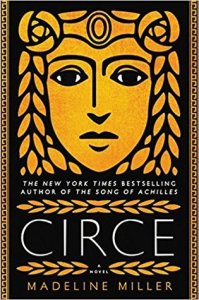
circe coverCirce is the firstborn daughter of Helios, god of the sun. Her father is a mighty Titan, and her mother a vicious water nymph. Growing up, Circe was an outcast because she appeared more mortal than immortal, and neither of her parents were pleased with her existence but they put up with her regardless. Years later, her mother gave birth to twins—Pasiphaë and Perses. They treated their elder sister with as much contempt as their parents. Circe, being used to the torment, went along with it for centuries. Later, another brother was born into the family named Aeëtes. Circe felt an overwhelming sense of adoration for her little brother and became immensely protective of him. He, in turn, became the only one who spoke to her as an equal.
Circe continued with life, walking in the shadows of her predecessors, until one fateful evening where Prometheus was held on trial for gifting mankind the creation of fire. The Titans unleashed their wrath upon him, and Circe, not knowing what else to do, waited until everyone left to come forth and speak with the cursed god. He told her of his love for mortals, and how their kind treats one another different than how the gods treat themselves. Thus, Circe starts to seek comfort with mortals.

A young sailor by the name of Glaucos enraptures her, and they soon fall in love. Circe finally discovers her powers and is able to transform her lover into a serpentine immortal, to which causes him great fame because everyone believes he was favored by the gods—not that she had been powerful enough to perform the impossible. But when Glaucos starts to fall for another, Circe goes before her father and claims that she was the one who transformed him. Of course, no one believes her. In her frustration, she transforms Glaucos’ new lover into a monster, and is banished to an isolated island to live out her days alone as punishment.

It is on this island that mortals came from the sea in hopes to find shelter. And Circe, having grown desperate, entertains each crew of men that arrive on her island until their true intentions cause her to take matters into her own hands. After attempting to rape her, Circe transforms the men into pigs. She repeats this for each ship that seeks refuge until Odysseus makes an appearances and pleads for her to change them back.
From there, Circe begins to understand life and its often cruel meanings.

I think what I enjoyed the most in this book was the character development. Circe goes from being a small girl who never stood up for herself to an angry woman who transformed people into creatures until she finally blossoms into a wise witch who’s whit and knowledge of mortal and immortal behaviors causes her to become a compelling force.

She is the type of character that you’ll find yourself rooting for. An underdog of sorts. And while she might not ever be the most powerful character in the tale, her presence is one to be noticed and that is why I ended up liking her so much. She doesn’t need blades or even her spells, she just has to rely on her patience and cunning. (There are a few moment between her and Athena that will really demonstrate this.)

Plot aside, Miller has such a beautiful writing structure that she could have given me a story about the adventures of a worm and it wouldn’t have been so awful. Its lyrical and flows smoothly—two things I love in a book. The pace might be a bit dragging at times, but it eventually picks up when you least expect it. Overall, you’ll be happy you kept going.

So if you’re looking for a romantic book, or one about bloodshed and battles, this probably isn’t for you. But if you’re interested in a story with amazing character development that explores the many strengths of a women who has been tested by literally everything she’s ever had to deal with…congrats. Heres your next read.

My rating: 4/5
Goodreads

The Bird & the Sword

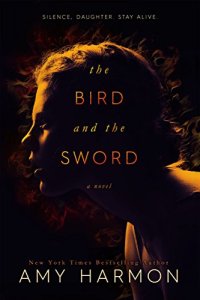
I stumbled upon a few gorgeous pieces by PhantomRin on Tumblr (tagged below) and I was so drawn to them that I had to search for the book they came from. The Bird and the Sword by Amy Harmon is a story about a young mute girl named Lark who becomes part of a terrible prophecy. Before the king murders her mother, the Lady Meshara proclaims, “…you will lose your soul and your sun to the sky.” Following these last words, she sets the curse in place and takes away her daughter’s voice— for they are both witches who practice in “telling”; a type of magic honed by words only. Lark then lives alone with her corrupt father who is constantly vying for the king’s throne, leading a lonely life until she is noticed by the newly crowned prince, Tirus, who had been present upon her mother’s beheading.

bird sword coverThe world-building in this book was interesting. There are four main embodiments to being a witch: spinner, teller, changer, and healer. The spinners can weave gold out of anything, the changers can shape shift, the tellers (who are naturally the most gifted) can hex anyone/thing with their words or thoughts, and the healers are…well, healers.

The political dynamic is intriguing as well, because we start the book with the king slaughtering the protagonist’s mother in front of a whole assembly of royals and guards. So you’d assume that he would be more involved in the book, but only a mere chapter later it is reveled that he died and his son, Tirus, who is the love interest, became king. However, don’t let this discourage you. Without spoiling, I can say this slight confusion of the king’s sudden death gets resolved in the end during a bizarre plot-twist.

Lark is a very gentle character. I’d call her soft-spoken if she actually spoke in the novel, but you do get to see her communicating with other characters via her mind and telepathy powers. I think that when we read these types of novels we always expect the main character to be a sword wielding bad bitch with a lust for vengeance (which isn’t necessarily a bad trope in my honest opinion), but in this scenario Lark’s power comes from her ability to cause things to happen with her words alone. The irony isn’t missed.

Titus, on the other hand, is also a soft character, if you could call a warrior king soft. He is cursed with transforming into a bird every night, and over time these transformations become more and more potent until one night he barely changes back into a man. His brother, Kjell, forces Lark to help him in whatever way she can even though she swears that she isn’t a healer.

Kjell, like many others, fear the witches and is an adamant believer in killing their kind for being “more” than the rest of the world for having such abilities. (Seriously, the amount of irony in this book is comical.) There were plenty of moments I wanted to tell the characters that “they’re not doing it right” but I feel that way about most books so I’ll let this one slide.

The writing had a nice flow to it, and was a bit lyrical and dreamy. I liked how fast-paced it made the story. So much so that I started it around Monday evening and finished it early Tuesday morning. This one is definitely a short read, and a great one to help get you out of a reading slump.

I didn’t enjoy the ending as much because I felt like it was rushed and there were many elements that could have been further explained or explored. It tied everything up nicely and there isn’t a cliffhanger, but moments that you would have waited for since the prologue were covered in little over a few pages. Also, there were very few characters and, thus, very few perspectives to view this story from. Usually this wouldn’t bother me but because both main characters were like-minded it seemed as though the whole story was dimmed in comparison to what it could have really been.

This was 3.5/5 stars for me.

photo 1 | photo 2 | photo 3

The Secret History by Donna Tartt

The Secret History by Donna Tartt

It has been three years since I’ve read The Secret History by Donna Tartt and I realized today that I’d never sat down and actually wrote a decent review for the book that I’ve proclaimed to love so ardently. Perhaps this means that my review will be more organized— since I’ve had such a long period to mull over any final thoughts and feelings. Alas, that probably won’t happen either. My emotions will always cloud my judgment when it comes to Tartt.

So finally, I’d like to introduce you to the book that altered every other reading experience henceforth.

Its 559 pages of madness.

We start off following college student Richard Papen as he procrastinates over transferring to another school— departing his hometown in California all the way to the sleepy east coast. Upon arriving at the elite Hampden College in Vermont, Richard encounters five students who immediately draw his attention through their peculiarity and illusive behaviors. Little does he know, the haughty cult of classics scholars will flip his world entirely until he no longer recognizes himself or the people around him. This is a story of paranoia and betrayal—and how our minds can slowly draw out our worst selves when faced with enough trauma.

And believe me, this book will cause you as much stress as it does with the characters.

One of the most glorious parts of The Secret History is the writing. Tartt is a superb author; her character are incredibly vivid, her prose are fluid, and her plot will have you turning page after page without realizing you’ve stayed up for several hours past midnight. I’ve never encountered another author with a smilier style, and that definitely made reading this book a unique experience, especially because (paired with the style) the plot was something I’ve only seen touched upon in other stories but never saw completely unfurled. All in all, it was a breath of fresh air…if you can call a story about murder that.

A favorite quote of mine was when Tartt described Camilla Macaulay— the only female leading character amongst a group of boys.

“Being the only female in what was basically a boys’ club must have been difficult for her. Miraculously, she didn’t compensate by becoming hard or quarrelsome. She was still a girl, a slight lovely girl who lay in bed and ate chocolates, a girl whose hair smelled like hyacinth and whose scarves fluttered jauntily in the breeze. But strange and marvelous as she was, a wisp of silk in a forest of black wool, she was not the fragile creature one would have her seem.”

I wish someone would describe me the way Tartt does her characters. You might think it seems overdone, as some of my friends who I’ve forced to read this book have mentioned, but I just believe it adds to the atmosphere. However, there were times when I had to find a dictionary just to understand what the hell was going on. I will warn you there.

N O T E : I also find it important to include trigger warnings before recommending this particular book, and I’ve yet to see anyone include one for TSH. So, please be aware of the following: mentions of incest, smoking, suicide, homophobia, and drug abuse.

Before I read this book I had strictly been reading fantasy only. Contemporary novels, or any novels that don’t include magic and folklore, don’t really fancy me. And while there is mention of Greek mythology receptively in this story, its entirely realistic. This is just another reason why I found it so enthralling: Tartt almost makes it seem like a fantasy, because surely these types of situations can’t happen in real life…but that’s definitely not the case, as you will find when reading a few chapters in.

Another way in which Tartt makes it seem like a fantasy is how she crafts her character. The narrator, Richard, has a few friends outside of the main group; and these friends are how one would imagine a college student from that era (arguably the early 70s… *no one is truly certain when this book takes place, at least I don’t think) would act. Whereas Henry, Bunny, Camilla, Charles, and Francis all seem too composed to be real young adults. They act as though they’re from ancient times— regal and mysterious and tragic. I’m probably not making much sense right now, but this is one of those things that you’ll have to understand through reading it.

If I had to choose a favorite character, of course it would be Francis Abernathy. Not only is he one of the most genuine characters of them all, but his melodrama makes him a comedic relief during the more gruesome scenes. Also, the way Tartt describes him makes me flustered; “Angular and elegant, he was precariously thin, with nervous hands and a shrewd albino face and a short, fiery mop of the reddest hair I had ever seen. I thought (erroneously) that he dressed like Alfred Douglas, or the Comte de Montesquiou: beautifully starchy shirts with French cuffs; magnificent neckties; a black greatcoat that billowed behind him as he walked and made him look like a cross between a student prince and Jack the Ripper.”

If you want to read a book that will pull you out of a slump: read this one.

If you want to read a book that will forever change your perception of storytelling: READ THIS ONE.

It might be tricky to dive into, because the author’s writing is nothing I’ve personally encountered before, but once you’re in…good luck putting it down.

SECRET HISTORY PLAYLIST: Spotify link. 

An Enchantment of Ravens by Margaret Rogerson

An Enchantment of Ravens by Margaret Rogerson


This book is a spring banquet of ripe grapefruit wine, a summer morning beneath swaying willow trees, an autumnal bonfire deep in the woods, and a wintry dusk backset to the wind.

….At least it made me feel that way. Rogerson killed the imagery game.

I’ve been waiting for a very long time for a book like this to come out. I’ve always been obsessed with faeries and elvish folklore, and while I’ve read just about every book related to those mythologies nothing ever seemed quite right. Sure, all of the characters had pointy ears, magical powers, and lived somewhat near the forest, but that’s about where the similarities cut off. I wanted a story where the Fae were humanoid with tree roots for limbs and flowers for lips, where they worshipped nature instead of just lived in it— something closer to the rendition of Celtic folklore including the Wild Hunt, changelings, and caverns beneath the earth. And I’m so happy to say that An Enchantment of Ravens was that book for me.

Our narrator is a young portrait artist named Isobel who lives in a village called Whimsy where it is eternally summer. Her Craft— a form of human creativity that cannot be done by Fair Folk without risk of harm—is legendary for someone her age, and various Fair Ones come to visit her parlor to be painted, if only for a small price. All masters of Craft receive enchantments as a form of payment, but if worded wrong these wishes can go awry. Isobel always wishes for practical things and words them right, much to the delight of her regular client and wish-granter Gadfly. But upon one of his usual visits, Gadfly tells Isobel that she should expect the Autumn Prince soon. And while she gets to know Rook more intimately than any of her other clients, she accidentally paints mortal sorrow into his eyes. For this, the price is grave, and now Rook must take Isobel to his home, the Autumnlands, to stand trial for what she has done. However, they might never make it there with what lurks between her world and his kingdom.

The writing, the plot, the characters, the romance….everything in this book is a treat. At first I thought that it might be a bit fast-paced because it’s just a tad smaller in length to some of my more recent reads, but that’s definitely not the case. It was well thought out from the start to the finish with no “filler” scenes or rushed pivotal moments. I took my time reading this book and it really helped me delve into the setting so much so that I felt a deep connection with the main characters by the commencement of the final page.

As I’ve mentioned before, one of the deal-breaking moments for me was the rendition of the Fae. The Fair Folk in this book cannot lie, are harmed by iron, have humanoid skins they wear as a disguise to hide their more monstrous forms underneath, live in places made of all things natural, and (my favorite) don’t have emotions. Supposedly.

One thing that always stood out to me amongst these other faerie novels was that the authors were quick to include emotion of some sort amongst their kind, wherein the original tales depicted the Fae as cruel, often vindictive and evil characters that didn’t feel human emotion and rather loved to toil with it for their own reprieve. That being said, the only romance featured in this book is saved for the main characters—which I thought was a wonderful decision as opposed to the usual minor “ships” that are often sidelined and then forced to fulfill plot devices. Also, it made the story seem more like a fairytale which was entirely the vibe I got from it (a morbid, eerily beautiful fairytale at that).

“He was no more able to understand the sorrow of a human’s death than a fox might mourn the killing of a mouse.”

Not to be dramatic, but I think I’ve found my favorite YA male protagonist as well. I had gone into this book believing that the Autumn Prince would be brooding with a side of dark humor (you know the type, I’m sure) but you can imagine my utter surprise when I find that Rook is, in fact, quite the opposite. He is good-natured, apologizes whenever he thinks he’s upset someone even when he hasn’t, doesn’t understand human emotion and finds it terrifying, and has a deep love for autumn. There were many hysterical moments between Rook and Isobel but I won’t mention them here because they’re something you should experience on your own. However, I will say that when someone bows or curtsies to a Fair One, that Fae must return the gesture immediately.

His character development is prominent throughout the story, as is Isobel’s, but I won’t mention more for fear of spoiling you. Rest assured, there were many things I picked up on that had changed from the beginning to the end, and they changed for the better. I also adore the way in which his physical descriptor was written: “…against his golden-brown complexion, which put me in mind of late-afternoon sunlight dappling fallen leaves.” And I think it’s important to note that he has ADHD, something my brother suffers from, and I found it refreshing to see this trait with a main character for a change. Did I mention that he can also transform into a dark horse and a raven?

I’ve already re-read this story three times and each time brings about stronger emotions for me. This is one of those books that you’ll want to revisit frequently because it plays with your heart in ways no other stories have (at least that’s the case for me)! The ending was wild, and while everything was answered and little to no ties were left untangled, I still want more. As of now I believe this is a stand-alone, but if there were ever a sequel in it’s future there would be plenty of things to write further more from where this book ended. If not that, then you can expect I’ll be dabbling in my fair share of Fanfiction. Enough said: READ THIS BOOK.

My Rating: 5/5
Goodreads Link: X

And because I’m so enraptured with this tale, I did a little makeup look inspired by the Autumnlands! It’s nothing overly magnificent because I just recently discovered my love for makeup, but it’s certainly something else. Who knows, I’d still wear this to class.

Eyeshadow: Modern Renaissance by Anastasia Beverly Hills
Liquid Eyeliner: Kat Von D
Elf Ears: Geekling Creations on Etsy

Processed with VSCO with c7 preset


Review: Half a King by Joe Abercrombie

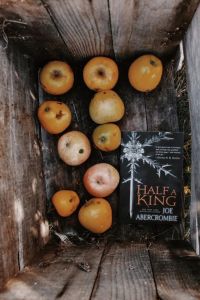
hak 3“And Yarvi realized that Death does not bow to each person who passes her, does not sweep out her arm respectfully to show the way, speaks no profound words, unlocks no bolts. The key upon her chest is never needed, for the Last Door stands always open. She herds the dead through impatiently, needles of rank or fame or quality. She has an ever-lengthening queue to get through. A blind procession, inexhaustible.”
Prince Yarvi of the Gettlands is thrust into the role of King upon his father’s sudden death, but even after a lifetime of preparations the young boy is still not ready to take on his throne. He doesn’t believe himself capable of such power, and neither do the other royals and soldiers around him. It is due to this distrust that Yarvi finds himself awash on a new shore in a strange new land that he’d only heard of through stories of his kingdom’s enemies. So who finds him first as he crawls from the cold waves? His enemy king, of course. Pretending to be a mere baker’s son, Yarvi is then brought into slavery to be sold in one of the high markets of Grom-gil-Gorm’s territory. As he ventures from a throne, to a cell, to a ship where he is charged with the job of an oarsmen, Yarvi begins to plot his vengeance for those who betrayed him and cast him out of his home, and he’ll have to rely upon his enemies if he wants to survive first in order to get back his crown.

Processed with VSCO with p5 presetOur hero of the story is roughly around the age of sixteen if I recall correctly, and he definitely acts like it. Although I’m infatuated with tales of warriors and knights and vikigns etcetera, I was always a bit skeptical about how quick to take on a challenge some of those figures were. In Yarvi’s case, he truly wants to be king but he knows he’s not ready yet— spiritually or physically. For starters, Yarvi was born with half a hand, hence the title. This setback is only a setback if he allows it, and unsurprisingly he does. He was always frowned upon for being a cripple, and he is self-conscious of the fact. Even when he was being displayed in a line up of slaves to be bought, he hid his hand so that his buyer wouldn’t think twice.
To make matters worse, he had to help row a ship with only seven fingers, and he was described as being scrawny and lanky in the prior chapters. There were times when I became frustrated with his inner monologue and the depressing thoughts that accompanied it, but then I remembered that unlike other stereotypical hero’s, Yarvi acts just how I imagine anyone else in his position in real life would. He is hesitant about everything, passionate about the things he desires, and switches moods constantly.

Along his journey as a slave, Yarvi befriends his fellow oarsmen and the other captives aboard the ship. I was pleased to read that there are many mentions of women captains and warrior queens, but I felt that all the secondary characters lacked any true depth. Taking into consideration that this is meant to be a story about one boys development into a man, I found it troubling how little was spent on the progression of characteristics and rather most of the plot centered around battle tactics and the main protagonists constantly on the run.

Processed with VSCO with p5 presetYet even the battles felt short, as did most of the book, which I wouldn’t mind if it didn’t take me so long to force myself to read. Abercrombie has a fluid style of writing, and I really enjoyed his prose and context of language, but it was still a challenge to finish this story if only for the lack of connection I felt towards any of the characters, including the main one.

Would I classify this as a story about vikings? I’m sure under certain dictions it would qualify as such because of the mention of Vasterland and the enemy kings, but personally I read this just as I would have read any other story set in medieval fantasy realms. It didn’t stand out at all, and it felt dull nearly every other chapter. Perhaps you’ll have a better time with this one than I did if you decide to read it, but I can’t say I loved this story without coming up with explanations as to why I also found issues with it. I’m told the second book in this series is even better, but I’m still uncertain whether or not I will be reading that one.

Overall, I found this book to be enjoyable. It was a fun read, but it dragged a bit at the end and I still don’t feel as connected to these characters as I would have preferred. There was so much potential, but the delivery was weak. Oh well. On to more books!

My Rating: 3/5 stars.

Read this review on GoodReads.

Wintersong by S. Jae Jones

Read this review on GoodReads.
My Rating: 5/5

“She was never a hothouse flower. She is a sturdy oak tree. If her leaves have fallen, then she will bloom again come spring. She was not ready to die when she gave her life to me. But she did anyway, because she loved, and loved deeply.”

I went into this book with high expectations….and those expectations we’re blown away entirely with the magnitude of this story. It was phenomenal. This book truly resonated with me. It’s rustic, atmospheric quality compared with it’s whimsical plot and even more estranged characters made for an epic fantasy like none other I’ve read in a long time. Fans of Uprooted by Naomi Novik will appreciate the eerie personification that nature plays in this tale. What felt like a folkloric retelling but was actually an original, genuine piece of literature, Wintersong follows a young girl as she rediscovers her childhood self through love, responsibility, and sacrifice… all while doing so beneath silt and soil of the Earth.

Nineteen-year-old Innkeeper’s daughter Liesl has grown up in a sleepy village on the boarders between woodlands and Bavaria. While her younger sister is being groomed for marriage, and her brother preparing for an upcoming apprenticeship with a renowned composer, Elisabeth is constantly fussing over the wellbeing and success of her siblings. The only time she allots for herself is to revel in her passion— composing music of her own dark, melancholy nature. As a child, Liesl would roam deep into the Goblin Grove and play for the Goblin King—luring him out from beneath the earth to sing and dance and revel with her. But as time passes, Liesl’s fiery nature fades into the recesses of her soul. She focuses on everyone else around her but herself. It isn’t until her sister, Käthe, is stolen by the Goblin King to be his bride that our protagonist is drawn from her grey stupor and thrown back into the world of spellbinding fantasy. But Elisabeth has known all this time that no fantasy comes without a price, and her childhood adventures with Der Elkönig, The Goblin King, won’t compare to the game she is about to partake in. Elusive, powerful, and ferocious, Wintersong is a book that forces you to read it in two sittings or less.
Jones’s writing style reminds me of early British literature, not because it was hard to follow, but because of how smoothly it all flowed— as if being read like a song rather than a novel. Very fitting, indeed, for a book with a large element of music! Taking place in nineteenth century Bavaria, a lot of the terminology was derived from Germanic languages, which I thought made the setting seem more potent. Don’t worry though, it’s not overused and I found the occasional non-English quotes to be easily understood even though I can only speak English (but am learning a few other languages at the moment. *Props to my bilingual friends! You’re all incredibly talented). Most often the terms Der Elkönig (The Goblin King) and Mein Herr (My King) are used, because we never truly find out the main male protagonist/antagonist’s name until quite late into the story (if at all).

One of the most endearing things about this tale is how Jones offers the heroine’s character development in light of her younger self. She portrays not a protagonist who was once a meek, quant little thing with barely a kindle to a bonfire— rather, Elisabeth was always a bonfire of her own making, and her development resided in remembering how to live carefree and brave like she was as a child; playing her violin for the Goblin King deep in the woods. Jones created a main character who goes through two types of character development: the one where the heroine experiences new things that morph her journey for the better, and the second where the heroine revisits old strengths and embraces what was always within her, molding it into armor. That being said, I found Elisabeth to be a very intriguing and insightful narrator. I was definitely a fan of reading this story through her perspective. (But personally, I’d die to read some of these scenes via Der Elkönig’s perspective!)

There are many aspects that I’m still curious about, but of course we will most likely find those answers in the sequel! For starters, although most of this novel was spent Underground, back in the mortal realm Josef, Elisabeth’s younger brother, is transforming into a famous musician…with a very endearing young man to help compose alongside him. Käthe, their sister, is a peculiar character that I’m still curious about and hope to read more of, because she was vital to our heroine’s adventure so I desire to see her sister’s own journeys in the sequel. And of course, there’s the huge spoiler that shall not be revealed that will invoke plenty of stress and tears once you’ve read the tale to it’s bitter end. I would very much like to see the answers to THAT plot twist. (Side note: painful ending + long wait = sobbing, theorizing, and fanfiction!)

Wintersong will be a book that I always remember. It’s unique in it’s design, and highly imaginative. The way the story made me feel while reading it is an emotion indescribable, but a powerful one nonetheless. I can only hope that at least one other person experiences this tale the way I did—because now I’m craving a walk into the woods whereupon I’ll sadly attempt to play an instrument to lure out my own King of the Goblins. So do yourself a favor and read this book. I will forever recommend it.

Processed with VSCO with a6 preset

And because I enjoyed this tale so wonderfully, here’s a little soundtrack I’ve composed that made reading it slightly more magical!

SoundCloud link.

Tracklist

no.1  Winter Breath by Adrian Von Ziegler
no.2  Vow by Julianna Barwick
no.3  A Winters Tale by Jeremy Soule
no.4  Winter Rain by Hanan Gobran
no.5  Winter (full) by Antonio Vivaldi
no.6  Arrival of the Birds by The Cinematic Orchestra
no.7  Saturn by Sleeping at Last
no.8  Love by Daughter
no.9 Willow Tree March by The Paper Kites