Thoughts on Film Adaptations

Let’s talk about on screen adaptations. Whenever the rights of a popular novel are bought by production companies, fans are filled with equal parts glee and dread. I’ve seen and felt both, especially the latter. I often wonder what the author really feels, and if money weren’t an issue would they still want to have their novel come to life on the big screen? There are so many horror stories of the rights to a book series being bought only to then later be completely flipped inside out with little to no homage to the original material. Alternatively, there are so many series that I would absolutely adore to see on film, even though I know other fans might not share that sentiment. 

So what then truly makes a great book to film adaptation? It sounds like there’s one key element to make everyone happy—and that is to stay true to the plot as best as can be. When creating motion pictures out of written word, there is plenty of room for error but also for a wonderful rendition of the text. I’m a very visual person who tends to make up images in my head like that of a movie trailer when I get really invested in a story, so naturally I have been eager for some sagas to be retold cinematically. Yet even the most popular ones, like Game of Thrones, Big Little Lies, Twilight, and Harry Potter amongst hundreds more, have all faced backlash from critics because of how the film production strays from the text. It is rare that production teams who change the plot are praised for doing so, although on occasion it does occur if the changes remain true to the overall theme and motives of the characters. 

One of my favorite things about film adaptions is the music and fashion that comes along with it. People often don’t think of these two subjects at first, but I’ve found overtime that the atmosphere when shooting cinema can easily make or break a scene. From the minute details like lightning or the filters used when rolling to the bigger notions such as action and intent, every detail has to be weighed against the original script to honor the author and the fanbase that already exists. When creating these movies, production teams are lucky that they will already have a guaranteed large audience. Vice versa, authors will also get a new wave of readers based on the marketing of the film leading up to the premiere. 

There are few books that I love which have recently been bought by production companies for future adaptations, and while I am excited I cannot ignore the lurking dread. However, there are some film renditions of series that most people loathed and which I found to be quite appealing. Overall, it truly depends on how much the studio wants to do right by the original content. 

Novels for Tree Huggers

Lately I’ve been getting into the nature genre. That must sound strange to read, but there’s no other way to accurately state it. Saying I’ve always been a lover of nature isn’t as profound as claiming that I could easily see myself living out the rest of my days in the middle of a forest surrounded by mountains and creeks. Growing up, I used to spend all of my summers in the Catskills mountain range of New York. This might be part of the reason why I now have such a deeply rooted passion for exploring new terrain. Of all the national parks in this country, my favorites to visit are Olympic, Grand Teton, Joshua Tree, Zion, and the Redwoods. Driving for weeks can be exhausting, and there is certainly a lot of driving needed to visit all of these places. Whenever I’m not behind the wheel, I usually try to read something that will get me in the mood for our next hike. Here are some of my new (and classic) favorite nature-genre novels…

Wild: From Lost to Found on the Pacific Crest Trail by Cheryl Strayed: At twenty-two, Cheryl Strayed thought she had lost everything. In the wake of her mother’s death, her family scattered and her own marriage was soon destroyed. Four years later, with nothing more to lose, she made the most impulsive decision of her life. With no experience or training, driven only by blind will, she would hike more than a thousand miles of the Pacific Crest Trail from the Mojave Desert through California and Oregon to Washington State — and she would do it alone. Told with suspense and style, sparkling with warmth and humor, Wild powerfully captures the terrors and pleasures of one young woman forging ahead against all odds on a journey that maddened, strengthened, and ultimately healed her.

The Overstory by Richard Powers: The Overstory is a sweeping, impassioned work of activism and resistance that is also a stunning evocation of – and paean to – the natural world. From the roots to the crown and back to the seeds, Richard Powers’s twelfth novel unfolds in concentric rings of interlocking fables that range from antebellum New York to the late twentieth-century Timber Wars of the Pacific Northwest and beyond. There is a world alongside ours—vast, slow, interconnected, resourceful, magnificently inventive, and almost invisible to us. This is the story of a handful of people who learn how to see that world and who are drawn up into its unfolding catastrophe.

The Nature Fix by Florence Williams: From forest trails in Korea, to islands in Finland, to eucalyptus groves in California, Florence Williams investigates the science behind nature’s positive effects on the brain. Delving into brand-new research, she uncovers the powers of the natural world to improve health, promote reflection and innovation, and strengthen our relationships. As our modern lives shift dramatically indoors, these ideas—and the answers they yield—are more urgent than ever.

The Hidden Life of Trees by Peter Wohlleben: Wohlleben shares his deep love of woods and forests and explains the amazing processes of life, death, and regeneration he has observed in the woodland and the amazing scientific processes behind the wonders of which we are blissfully unaware. Much like human families, tree parents live together with their children, communicate with them, and support them as they grow, sharing nutrients with those who are sick or struggling and creating an ecosystem that mitigates the impact of extremes of heat and cold for the whole group. As a result of such interactions, trees in a family or community are protected and can live to be very old. In contrast, solitary trees, like street kids, have a tough time of it and in most cases die much earlier than those in a group. Drawing on groundbreaking new discoveries, Wohlleben presents the science behind the secret and previously unknown life of trees and their communication abilities; he describes how these discoveries have informed his own practices in the forest around him. As he says, a happy forest is a healthy forest, and he believes that eco-friendly practices not only are economically sustainable but also benefit the health of our planet and the mental and physical health of all who live on Earth.

Wintering: The Power of Rest and Retreat in Difficult Times by Katherine May:  Sometimes you slip through the cracks: unforeseen circumstances like an abrupt illness, the death of a loved one, a break up, or a job loss can derail a life. These periods of dislocation can be lonely and unexpected. For May, her husband fell ill, her son stopped attending school, and her own medical issues led her to leave a demanding job. Wintering explores how she not only endured this painful time, but embraced the singular opportunities it offered. A moving personal narrative shot through with lessons from literature, mythology, and the natural world, May’s story offers instruction on the transformative power of rest and retreat. Illumination emerges from many sources: solstice celebrations and dormice hibernation, C.S. Lewis and Sylvia Plath, swimming in icy waters and sailing arctic seas. Ultimately Wintering invites us to change how we relate to our own fallow times. May models an active acceptance of sadness and finds nourishment in deep retreat, joy in the hushed beauty of winter, and encouragement in understanding life as cyclical, not linear. A secular mystic, May forms a guiding philosophy for transforming the hardships that arise before the ushering in of a new season. 

Women Who Run With the Wolves by Clarissa Pinkola Estés

Women Who Run With the Wolves is not necessarily about lycanthropy. I was browsing my local book store one day when I noticed a new staff recommendation had made its way to the top shelf, displaying a stocky paperback that appeared more like some fragment of a graduate thesis than a fiction novel about wolves (as I had expected). I’ve come to realize this is one of those books that is meant to change your perspective on life, perhaps more than the usual story would. Clarissa Pinkola Estés has a magical voice that takes you on a wild journey through different myths about women throughout history. While twinning together these folk tales with her own shared experiences, Estés creates an ideology for all women to follow—that we are instinctively wild creatures, and that there is a deep power within all of us like some type of inner goddess.

At first, I worried that this might read a bit fanatical. It took me some months to really get into the stories, but when I did eventually start I simply could not stop. It feels like partaking in an otherworldly ritual when reading this essay. As a Jungian analyst and cantadora storyteller, the author is well equips with extensive theories and knowledge on how women can harness an inner strength through a psychological bond with notions of archaic femininity. In particular, the Wild Woman archetype is thoroughly analyzed and discussed in this novel, making it easier to understand where many of these myths originated.

Several fictional stories I love share a similar aesthetic with this one, and it became apparent that this book is like the backstory for all of the others to come. Although the first half might seem repetitive, it is certainly worth the try in reading it. Some of the writing sounded a bit too primitive, albeit I still greatly enjoyed this novel and will continue to recommend it to others who might want something a bit invigorating to add to their library. 

If You Like, Then You’ll Like: Book Edition

It’s time for another “if you like this, then you’ll probably enjoy this” article. Truth be told, I find most of the books I desire to read by looking up similar stories to some of my favorites. Not all of the time are they accurately depicted as being similar, although I find it interesting that people pair together certain novels based on unique vibes they share. I often do this with films as well, or even music when I try to encapsulate the feeling of a story beyond the page. For this post, I tried to stick to one well known novel and pair it with one or more lesser known stories that I feel can be considered written for the same audience. There will be some throwbacks in here, as well as a mix of genres. 

First, this one is for fans of Leigh Bardugo. The Shadow and Bone trilogy, as well as the Six of Crows duology, have both re-entered the spotlight (if they’d ever left) due to the premier of the 2021 Netflix series Shadow and Bone. While I love all of Bardugo’s work, the trilogy will always hold a special place in my heart because of how impactful it was when I first read it years ago. For that reason, I’m going to suggest that if you enjoyed those books, you might want to check out Deathless by Catherynne M Valente and The Bear and the Nightingale by  Katherine Arden. Perhaps the most obvious connection between all of these stories are the Slavic (particularly Russian) folklore influence they embody. They are fantasy novels, although Deathless is an incredibly strange and somewhat hard to read story at first. I loved it, although I still cannot say with confidence that I understand 100% of what occurred in that novel. 

Moving on to all of those Elven and Fae lovers, of course there is Sarah J Maas and Holly Black. I often find that it is challenging to suggest new reads to people who follow these authors because typically everyone has already read the books I recommend because we all couldn’t get enough of the former. I would say that Uprooted by Naomi Novik, An Enchantment of Ravens by Margaret Rogerson, The Bridge Kingdom by Danielle L. Jensen, and The Unseelie Prince by Kathryn Ann Kindsley are all similar in woodland fantasy appeal. 

For fans of dark academia and Donna Tartt, I’ve already written an extensive post on some of the best D.A. novels I’ve had the pleasure of finding, and you can read that here.

Last, for fans of A Darker Shade of Magic by V. E. Schwab, I’d recommend The Name of the Wind by Patrick Rothfuss and oddly enough Things in Jars by Jess Kidd. Both of these recommendations have less to do with plot and are more closely related to Schwab’s novels through the atmosphere of the story. They evoke a sense of adventure through a strange and unique writing style. The characters are all ambitious and a bit wicked, which I think is a wonderful combination for a narrator because it keeps the plot entertaining. 

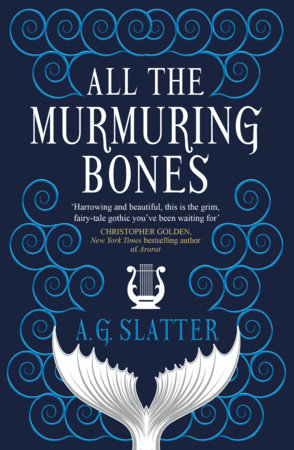
All The Murmuring Bones by A.G Slatter

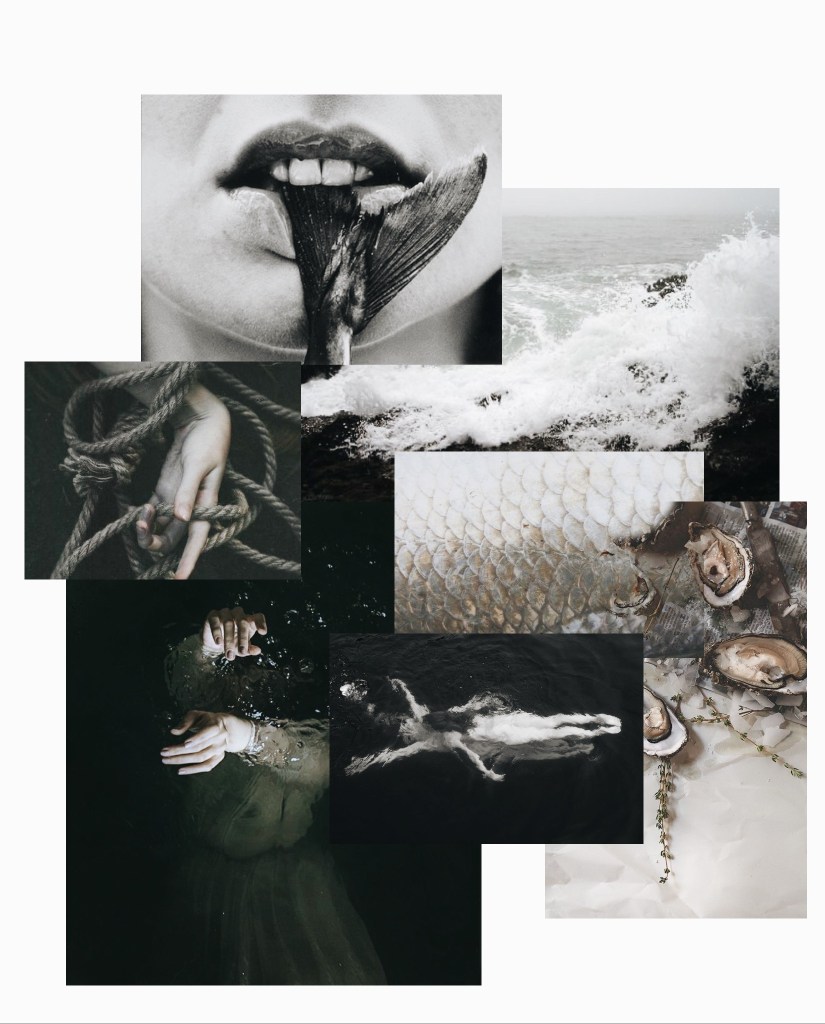
I’ve recently finished reading All the Murmuring Bones by A. G. Slatter and this book is so incredibly whimsical. It begins as any old folk horror would—with a sacrifice. Centuries prior, Miren O’Malley’s family proposed a deal with the mer creatures for the family’s business vessels to have eternal safe voyages, and in return one child of the bloodline would be offered to the sea each generation. As time goes on, not all of the O’Malleys are able to uphold their share of the bargain, which results in deterioration of shipments, fortune, and victorian aristocracy status. Miren’s grandmother is determined to restore the family glory, even if it means sacrificing Miren’s freedom to do so. 

I believe that everyone judges a book based on their own methods of reading. For me, I enjoy anything that has ethereal writing or that is chock full or prose. Some find this to be patronizing or pretentious, but I think that the more poetic a story is, the easier it is for a reader to be fully immersed in the tale. Ironically enough, it took me some time to get into this one. At first, despite all of the beautiful writing, this story lags a bit. There is simply so much information to be stored away for future reference, and so many characters to remember, that it becomes a little overwhelming. I stuck it out for a few more chapters and the end result is that I think I might have a new novel to shelf in my favorites pile. The main character Miren can be quite morally ambiguous, even for the narrator, which to some might sound unreliable but for me it made her all the more interesting. I love characters with grit, and she certainly did things that were survival based that we often don’t see with other protagonists for fear of them becoming antagonists. 

One of the best things about this novel is the way it reads as an old fishermen folklore. I forget how I was introduced to the plot, but I didn’t realize it was essentially a Victorian gothic until I began the prologue. This has all of the check marks for a wonderfully eerie story that mixes all of the nefarious ambiance of the sea with an interesting and heart-pounding plot twist. 

Things in Jars by Jess Kidd

Back when I once was a bookseller, my store acquired plenty of ARCs (advanced readers copies), and over time I developed quite the collection. One such ARC had been collecting dust on my shelves until about a month ago when I had an odd yearning for seafaring fiction. Things in Jars by Jess Kidd turned out to be just what I was looking for and so much more. In fact, I think I can safely say this book has become one of my top five favorite novels. 

In the mildewy back alleyways of Victorian London, detective Birdie Devine can see ghosts…amongst other nefarious oddities. She solves mysteries like any good detective, although her uncanny abilities put her in strange paths—solving the disappearance of Christabel Berwick being one such adventure. Christabel, the secret daughter of Sir Edmund Athelstan Berwick, is a peculiar child with occult gifts and mer-like characteristics that draw perhaps too much attention from curiosity collectors. As Birdie sets forth on this case, she unearths memories from her past she had hoped to keep long buried. 

While the characters in this novel are wonderfully unique, and the plot is reminiscent of folk horror stories, the writing is easily the best part. A bit confusing to get acquainted with at first, eventually the lyrical sentences and vivid imagery coalesce into an ethereal writing style that provides such a sharp, uncanny painting of each chapter. This style of writing can either make or break a book, but in my own bias I’ve decided that I simply adore it. It is just as chilling and metaphorical as the plot, effortlessly melding together the content and the way in which it is delivered to us readers. What I consider beguiling some might find a bit baffling, although we all read one story a million different ways. 

Here are some excerpts from the earlier chapters, just to get a taste…

“The cook snores fruity, unpeeled, and well soaked under warm sheets, as solid and brandy scented as plum pudding.”

“Breathe in—but not too deeply. 

…Follow the fulsome fumes from the tanners and the reek from the brewery, butterscotch rotten, drifting across Seven Dials. Keep on past the mothballs at the cheap tailor’s and turn left at the singed silk of the maddened hatter. Just beyond you’ll detect the unwashed crotch of the overworked prostitute and the Christian sweat of the charwoman. On every inhale a shifting scale of onions and scalded milk, chrysanthemums and spiced apple, broiled meat and wet straw, and the sudden stench of the Thames as the wind changes direction and blows up the knotted backstreets.” 

“…autumn warmth, fuller-bodied and lovelier than summer heat, with the mellow dying of the season in it.”

Processed with VSCO with a6 preset

a24 films as books

a24 films as books

I tend to relate many of my novel reviews to films, which speaks to my highly visual mind. Even while reading, we are always imagining the scenes based off of what crumbs we are given, be it a small, often vague depictions, or a vivid account of the picturesque. After finishing a book, I will often piece together images in my head of what a film trailer for that story might appear like. This further extends to playlists, costumes, people I would think best fit the characteristic descriptions, and so forth. It is why so many readers grow wary or suspicious when film adaptations of certain novels are announced. The room for error once a written piece is offered up to producers becomes overwhelming, because the treasure of reading rather than watching is that we all conjure up different stories from the same book. The groundwork is laid bare, but we are the ones that pull it apart and reimagine the authors narrative through our own. This is why I tend to enjoy art house films a bit more than the usual kind, particularly movies from studio a24. There is something wonderful to be found in the strange and sometimes macabre scenes of films like Midsommar, The Green Knight, and The Witch. These movies are fairytale like, derived from archaic folklore and set up to feel as though the viewers are turning the pages of a moth-riddled storybook. It is because of this that I’ve decided to list some books that I think fans of these films might enjoy. These recommendations are by no means reflective of the films I paired them with, but I personally found similar aesthetics between both the cinematic and literary atmosphere they embody. 

All synopses from Goodreads.

The Green Knight, dir. David Lowery (2021)

The Name of the Wind by Patrick Rothfuss— Told in Kvothe’s own voice, this is the tale of the magically gifted young man who grows to be the most notorious wizard his world has ever seen.  The intimate narrative of his childhood in a troupe of traveling players, his years spent as a near-feral orphan in a crime-ridden city, his daringly brazen yet successful bid to enter a legendary school of magic, and his life as a fugitive after the murder of a king form a gripping coming-of-age story unrivaled in recent literature.  A high-action story written with a poet’s hand, The Name of the Wind is a masterpiece that will transport readers into the body and mind of a wizard. 

In the Night Wood by Dale Bailey—American Charles Hayden came to England to forget the past. Failed father, failed husband, and failed scholar, Charles hopes to put his life back together with a biography of Caedmon Hollow, the long-dead author of a legendary Victorian children’s book, In the Night Wood. But soon after settling into Hollow’s remote Yorkshire home, Charles learns that the past isn’t dead. In the neighboring village, Charles meets a woman he might have loved, a child who could have been his own lost daughter, and the ghost of a self he thought he’d put behind him. And in the primeval forest surrounding Caedmon Hollow’s ancestral home, an ancient power is stirring. The horned figure of a long-forgotten king haunts Charles Hayden’s dreams. And every morning the fringe of darkling trees presses closer. Soon enough, Charles will venture into the night wood. Soon enough he’ll learn that the darkness under the trees is but a shadow of the darkness that waits inside us all.

Between Two Fires by Christopher Buehlman— The year is 1348. Thomas, a disgraced knight, has found a young girl alone in a dead Norman village. An orphan of the Black Death, and an almost unnerving picture of innocence, she tells Thomas that plague is only part of a larger cataclysm—that the fallen angels under Lucifer are rising in a second war on heaven, and that the world of men has fallen behind the lines of conflict. Is it delirium or is it faith? She believes she has seen the angels of God. She believes the righteous dead speak to her in dreams. And now she has convinced the faithless Thomas to shepherd her across a depraved landscape to Avignon. There, she tells Thomas, she will fulfill her mission: to confront the evil that has devastated the earth, and to restore to this betrayed, murderous knight the nobility and hope of salvation he long abandoned. As hell unleashes its wrath, and as the true nature of the girl is revealed, Thomas will find himself on a macabre battleground of angels and demons, saints, and the risen dead, and in the midst of a desperate struggle for nothing less than the soul of man.

Midsommar, Ari Aster (2019)

Uprooted by Naomi Novik— Agnieszka loves her valley home, her quiet village, the forests and the bright shining river. But the corrupted Wood stands on the border, full of malevolent power, and its shadow lies over her life. Her people rely on the cold, driven wizard known only as the Dragon to keep its powers at bay. But he demands a terrible price for his help: one young woman handed over to serve him for ten years, a fate almost as terrible as falling to the Wood. The next choosing is fast approaching, and Agnieszka is afraid. She knows—everyone knows—that the Dragon will take Kasia: beautiful, graceful, brave Kasia, all the things Agnieszka isn’t, and her dearest friend in the world. And there is no way to save her. But Agnieszka fears the wrong things. For when the Dragon comes, it is not Kasia he will choose.


Winterset Hollow by Jonathan Edward Durham— Everyone has wanted their favorite book to be real, if only for a moment. Everyone has wished to meet their favorite characters, if only for a day. But be careful in that wish, for even a history laid in ink can be repaid in flesh and blood, and reality is far deadlier than fiction . . . especially on Addington Isle.Winterset Hollow follows a group of friends to the place that inspired their favorite book-a timeless tale about a tribe of animals preparing for their yearly end-of-summer festival. But after a series of shocking discoveries, they find that much of what the world believes to be fiction is actually fact, and that the truth behind their beloved story is darker and more dangerous than they ever imagined. It’s Barley Day . . . and you’re invited to the hunt.

Perfume by Patrick Süskind— In the slums of eighteenth-century France, the infant Jean-Baptiste Grenouille is born with one sublime gift—an absolute sense of smell. As a boy, he lives to decipher the odors of Paris, and apprentices himself to a prominent perfumer who teaches him the ancient art of mixing precious oils and herbs. But Grenouille’s genius is such that he is not satisfied to stop there, and he becomes obsessed with capturing the smells of objects such as brass doorknobs and fresh-cut wood. Then one day he catches a hint of a scent that will drive him on an ever-more-terrifying quest to create the “ultimate perfume”—the scent of a beautiful young virgin. Told with dazzling narrative brilliance, Perfume is a hauntingly powerful tale of murder and sensual depravity. 

The Witch, Robert Eggers (2015)

Pine by Francine Toon— They are driving home from the search party when they see her. The trees are coarse and tall in the winter light, standing like men. Lauren and her father Niall live alone in the Highlands, in a small village surrounded by pine forest. When a woman stumbles out onto the road one Halloween night, Niall drives her back to their house in his pickup. In the morning, she’s gone. In a community where daughters rebel, men quietly rage, and drinking is a means of forgetting, mysteries like these are not out of the ordinary. The trapper found hanging with the dead animals for two weeks. Locked doors and stone circles. The disappearance of Lauren’s mother a decade ago. Lauren looks for answers in her tarot cards, hoping she might one day be able to read her father’s turbulent mind. Neighbours know more than they let on, but when local teenager Ann-Marie goes missing it’s no longer clear who she can trust. In spare, haunting prose, Francine Toon creates an unshakeable atmosphere of desolation and dread. In a place that feels like the end of the world, she unites the gloom of the modern gothic with the pulse of a thriller. It is the perfect novel for our haunted times. 

Deathless by Catherynne M. Valente— Koschei the Deathless is to Russian folklore what devils or wicked witches are to European culture: a menacing, evil figure; the villain of countless stories which have been passed on through story and text for generations. But Koschei has never before been seen through the eyes of Catherynne Valente, whose modernized and transformed take on the legend brings the action to modern times, spanning many of the great developments of Russian history in the twentieth century. Deathless, however, is no dry, historical tome: it lights up like fire as the young Marya Morevna transforms from a clever child of the revolution, to Koschei’s beautiful bride, to his eventual undoing. Along the way there are Stalinist house elves, magical quests, secrecy and bureaucracy, and games of lust and power. All told, Deathless is a collision of magical history and actual history, of revolution and mythology, of love and death, which will bring Russian myth back to life in a stunning new incarnation. 

The Heretic’s Daughter by Kathleen Kent— Martha Carrier was one of the first women to be accused, tried and hanged as a witch in Salem, Massachusetts. Like her mother, young Sarah Carrier is bright and willful, openly challenging the small, brutal world in which they live. Often at odds with one another, mother and daughter are forced to stand together against the escalating hysteria of the trials and the superstitious tyranny that led to the torture and imprisonment of more than 200 people accused of witchcraft. This is the story of Martha’s courageous defiance and ultimate death, as told by the daughter who survived. Kathleen Kent is a tenth generation descendant of Martha Carrier. She paints a haunting portrait, not just of Puritan New England, but also of one family’s deep and abiding love in the face of fear and persecution.

Lighthouse, Robert Eggers (2019)

All the Murmuring Bones by A. G. Slatter— Long ago Miren O’Malley’s family prospered due to a deal struck with the Mer: safety for their ships in return for a child of each generation. But for many years the family have been unable to keep their side of the bargain and have fallen into decline. Miren’s grandmother is determined to restore their glory, even at the price of Miren’s freedom. A spellbinding tale of dark family secrets, magic and witches, and creatures of myth and the sea; of strong women and the men who seek to control them. 

The Fisherman by John Langan— In upstate New York, in the woods around Woodstock, Dutchman’s Creek flows out of the Ashokan Reservoir. Steep-banked, fast-moving, it offers the promise of fine fishing, and of something more, a possibility too fantastic to be true. When Abe and Dan, two widowers who have found solace in each other’s company and a shared passion for fishing, hear rumors of the Creek, and what might be found there, the remedy to both their losses, they dismiss it as just another fish story. Soon, though, the men find themselves drawn into a tale as deep and old as the Reservoir. It’s a tale of dark pacts, of long-buried secrets, and of a mysterious figure known as Der Fisher: the Fisherman. It will bring Abe and Dan face to face with all that they have lost, and with the price they must pay to regain it.

Things in Jars by Jess Kidd— Bridie Devine, female detective extraordinaire, is confronted with the most baffling puzzle yet: the kidnapping of Christabel Berwick, secret daughter of Sir Edmund Athelstan Berwick, and a peculiar child whose reputed supernatural powers have captured the unwanted attention of collectors trading curiosities in this age of discovery. Winding her way through the labyrinthine, sooty streets of Victorian London, Bridie won’t rest until she finds the young girl, even if it means unearthing a past that she’d rather keep buried. Luckily, her search is aided by an enchanting cast of characters, including a seven-foot tall housemaid; a melancholic, tattoo-covered ghost; and an avuncular apothecary. But secrets abound in this foggy underworld where spectacle is king and nothing is quite what it seems. Blending darkness and light, history and folklore, Things in Jars is a spellbinding Gothic mystery that collapses the boundary between fact and fairy tale to stunning effect and explores what it means to be human in inhumane times.
Wild: From Lost to Found on the Pacific Crest Trail

Eight years ago, I sat in a dark theater expecting to watch a film about a woman going on a hike. I don’t particularly remember when I stared crying—perhaps it was the final scene where Reese Witherspoon took a few fawn-like steps across a vacant bridge overlooking swaths of bluish grey sky and towering pines interwoven with thick fog as El Cóndor Pasa by Simon & Garfunkel echoed in the distance. Maybe it was earlier on, when I started noticing that this was no mere movie about a long walk. I felt as though I had gone on the journey with Cheryl, so much so that once the fluorescent lights cascaded against us voyeurs, I was struck with a deep longing. Immediately after, I picked up the memoir by Cheryl Strayed. 

Wild: From Lost to Found on the Pacific Crest Trail is a story about redemption and the healing power of nature. After losing her mother, her marriage, and any last lingering hope for a better future, Cheryl spent the early half of her twenties drowning in grief and making poor life decisions. Four years later, something changed. Blinded by her own sorrows, and with nothing more to lose, she decided to hike the Pacific Crest Trail, which runs from the Mojave Desert up the coast to Washington state, with no training and no travel companions—a desperate last reach upwards to haul herself out of the dark water. 

This was both cathartic and suspenseful, brimming with potent imagery of the west coast and all of the dangers hiding beneath its grandeur beauty. Untrained and lost in more ways than one, the protagonist not only faces lethal creatures and possible stumbles off the side of a cliff, she walks the path of a lonely woman on a trail championed mostly by men. As depicted in both the novel and the film, there is a slight anxiety mentioned of what occurs when a woman is alone in the middle of the nowhere, yet Cheryl finds that the people on this trail are similar to her in that they are hiking to heal, or to experience the euphoria of completing such a strenuous plight. It is a heartwarming notion that evokes a sense of community found amongst fellow wanderers, and it provided Cheryl with the push she needed to start breaking down her guarded heart. Nature does that, it seems. The laborious efforts that go into conquering the PCT can bring a person to breaking point, and it is then that nature begins to heal. Some people might find it crazy to want to push one’s body and mind to such extremes, although there is a massive payoff that does not get enough attention. Being alone, submersed between mountains, streams, and desserts, with nothing but your own inner turmoil to conquer and the trail ahead, people find that reaching the end of the hike is gratifying in more than just a show of physical strength—it’s a mental strength too. You can cry and scream as much as you want on the trail, so long as you leave it behind, pick yourself up, and carry on. That is the essence of this memoir, and that is why this book has become so dear to me as a novice hiker myself (side note: I’ll be heading back to Washington state next week to hike Mount Storm King, so maybe I should drop the novice title).

The final shot of the film reflects the last passage of the novel. Overlapping the song, flitting like birds between the canopy, Witherspoon’s voice recites the last words:

What if all those things I did were the things that got me here? What if I was never redeemed? What if I already was?

It took me years to be the woman my mother raised. It took me 4 years, 7 months and 3 days to do it, without her. After I lost myself in the wilderness of my grief, I found my own way out of the woods. And I didn’t even know where I was going until I got there, on the last day of my hike. Thank you, I thought over and over again, for everything the trail had taught me and everything I couldn’t yet know.

How in 4 years, I’d cross this very bridge. I’ll marry a man in a spot almost visible from where I was standing. Now in 9 years, that man and I would have a son named Carver and a year later, a daughter named after my mother, Bobbi. I knew only that I didn’t need to reach with my bare hands anymore. That seeing the fish beneath the surface of the water would be enough…that it was everything. My life, like all lives, mysterious, irrevocable, sacred, so very close, so very present, so very belonging to me. 

How wild it was, to let it be?

Dark Academia Book Recommendations

There has always been a distinction between book genres, but in recent years there has been a deep interest in sub-genres as a means of deeper research into novel recommendations. The style of looking up what next to read has become so complex that people are no longer simply searching for horror bestsellers or the occasional “bodice ripper.” Instead, the search for sub-genre key terms has evolved in a way that is expanding the depth of literary finds. One of my favorite sub-genres in particular is dark academia—which can perhaps be defined as a combination of horror or physiological thriller with an urban twist, typically taking place in an academic setting. Think of films like Dead Poets Society (1989) or the more hedonistic The Riot Club (2014) to better imagine the atmosphere of this sub-genre.

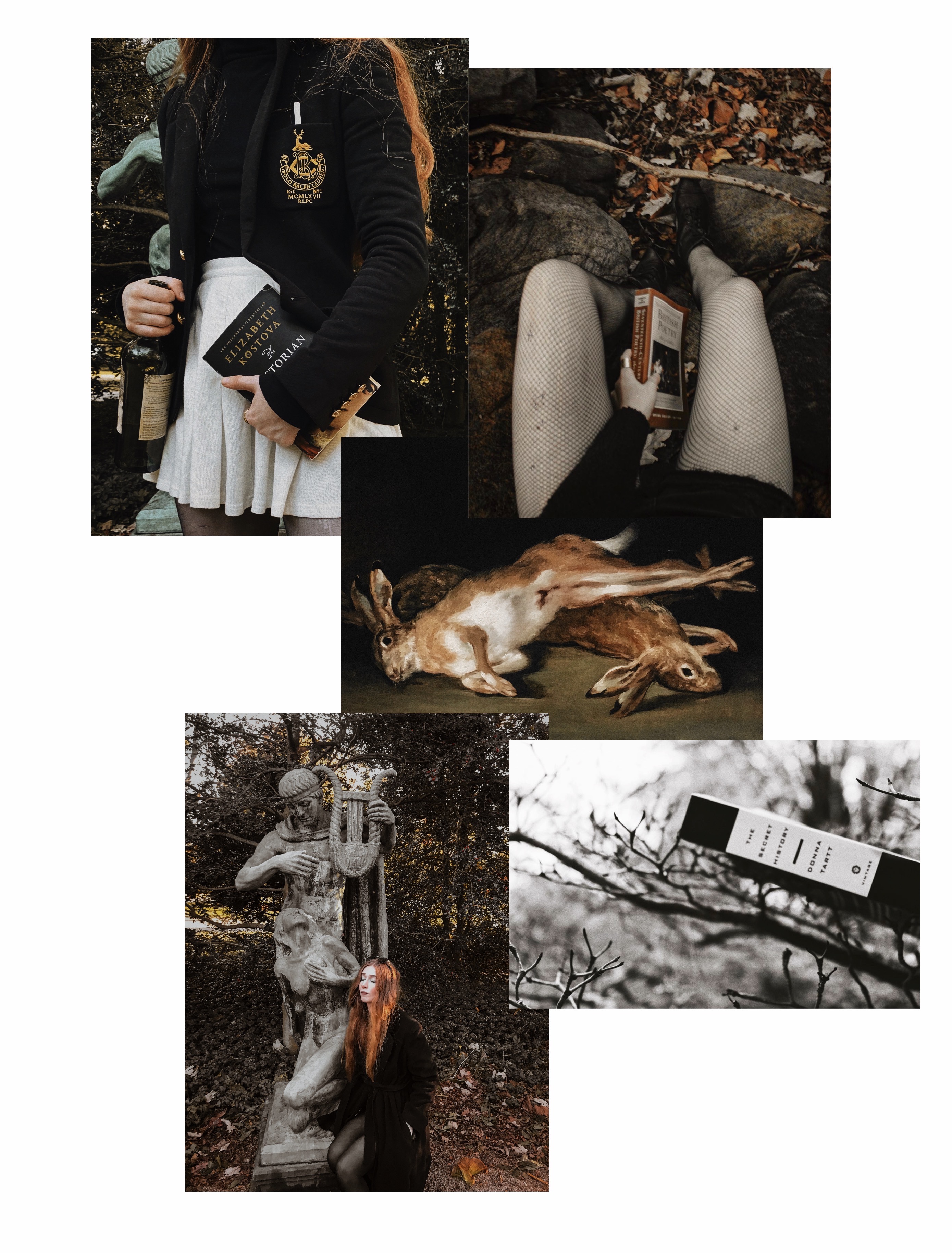
Academia has always been incorporated in fictional storytelling and can be found anywhere from gothic literature of the late 19th century to the more recent Harry Potter franchise, although it has become wildly popular this past year 2020-21. It might be that there is such an irrevocable longing for campus life in the midst of a pandemic that the sub-genre has taken on a new meaning beyond merely being subjectively interesting to read. In fact, it has become so loved that sub-genres of the sub-genre have begun to appear on apps like TikTok and various other blogs, such as light academia or classical academia (not to be confused with dark academia). Overall, the ambiance of the academic background has drawn us all in. I’m no stranger to this, as one of my favorite books is The Secret History by Donna Tartt (1996). Arguably the mother of dark academia, Tartt has a knack for creating such potent characters that are either so awful you wish you actually hated them, or so illusive you wish you could be like them. If you search for any dark academia recommendations, you will be sure to find this book on the list. I’ve linked my review to it here, but if you are looking to further you dark academia collection, below is a sample of recommendations that embody a similar vibe.

All synopses taken from Goodreads.

If We Were Villains by M.L. Rio— Oliver Marks has just served ten years in jail – for a murder he may or may not have committed. On the day he’s released, he’s greeted by the man who put him in prison. Detective Colborne is retiring, but before he does, he wants to know what really happened a decade ago. As one of seven young actors studying Shakespeare at an elite arts college, Oliver and his friends play the same roles onstage and off: hero, villain, tyrant, temptress, ingenue, extra. But when the casting changes, and the secondary characters usurp the stars, the plays spill dangerously over into life, and one of them is found dead. The rest face their greatest acting challenge yet: convincing the police, and themselves, that they are blameless.

A Little Life by Hanya Yanagihara— When four classmates from a small Massachusetts college move to New York to make their way, they’re broke, adrift, and buoyed only by their friendship and ambition. There is kind, handsome Willem, an aspiring actor; JB, a quick-witted, sometimes cruel Brooklyn-born painter seeking entry to the art world; Malcolm, a frustrated architect at a prominent firm; and withdrawn, brilliant, enigmatic Jude, who serves as their center of gravity.  Over the decades, their relationships deepen and darken, tinged by addiction, success, and pride. Yet their greatest challenge, each comes to realize, is Jude himself, by midlife a terrifyingly talented litigator yet an increasingly broken man, his mind and body scarred by an unspeakable childhood, and haunted by what he fears is a degree of trauma that he’ll not only be unable to overcome—but that will define his life forever.

Ninth House by Leigh Bardugo— Galaxy “Alex” Stern is the most unlikely member of Yale’s freshman class. Raised in the Los Angeles hinterlands by a hippie mom, Alex dropped out of school early and into a world of shady drug dealer boyfriends, dead-end jobs, and much, much worse. By age twenty, in fact, she is the sole survivor of a horrific, unsolved multiple homicide. Some might say she’s thrown her life away. But at her hospital bed, Alex is offered a second chance: to attend one of the world’s most elite universities on a full ride. What’s the catch, and why her? Still searching for answers to this herself, Alex arrives in New Haven tasked by her mysterious benefactors with monitoring the activities of Yale’s secret societies. These eight windowless “tombs” are well-known to be haunts of the future rich and powerful, from high-ranking politicos to Wall Street and Hollywood’s biggest players. But their occult activities are revealed to be more sinister and more extraordinary than any paranoid imagination might conceive. (My review can be found here.)

Black Chalks by Christopher J. Yates— It was only ever meant to be a game played by six best friends in their first year at Oxford University; a game of consequences, silly forfeits, and childish dares. But then the game changed: The stakes grew higher and the dares more personal and more humiliating, finally evolving into a vicious struggle with unpredictable and tragic results. Now, fourteen years later, the remaining players must meet again for the final round. Who knows better than your best friends what would break you?

The Maidens by Alex Michaelides— Edward Fosca is a murderer. Of this Mariana is certain. But Fosca is untouchable. A handsome and charismatic Greek Tragedy professor at Cambridge University, Fosca is adored by staff and students alike—particularly by the members of a secret society of female students known as The Maidens. Mariana Andros is a brilliant but troubled group therapist who becomes fixated on The Maidens when one member, a friend of Mariana’s niece Zoe, is found murdered in Cambridge.  Mariana, who was once herself a student at the university, quickly suspects that behind the idyllic beauty of the spires and turrets, and beneath the ancient traditions, lies something sinister. And she becomes convinced that, despite his alibi, Edward Fosca is guilty of the murder. But why would the professor target one of his students? And why does he keep returning to the rites of Persephone, the maiden, and her journey to the underworld? When another body is found, Mariana’s obsession with proving Fosca’s guilt spirals out of control, threatening to destroy her credibility as well as her closest relationships. But Mariana is determined to stop this killer, even if it costs her everything—including her own life. 

The Atlas Six by Olivie Blake— The Alexandrian Society, caretakers of lost knowledge from the greatest civilizations of antiquity, are the foremost secret society of magical academicians in the world. Those who earn a place among the Alexandrians will secure a life of wealth, power, and prestige beyond their wildest dreams, and each decade, only the six most uniquely talented magicians are selected to be considered for initiation. Enter the latest round of six: Libby Rhodes and Nico de Varona, unwilling halves of an unfathomable whole, who exert uncanny control over every element of physicality. Reina Mori, a naturalist, who can intuit the language of life itself. Parisa Kamali, a telepath who can traverse the depths of the subconscious, navigating worlds inside the human mind. Callum Nova, an empath easily mistaken for a manipulative illusionist, who can influence the intimate workings of a person’s inner self. Finally, there is Tristan Caine, who can see through illusions to a new structure of reality—an ability so rare that neither he nor his peers can fully grasp its implications. When the candidates are recruited by the mysterious Atlas Blakely, they are told they will have one year to qualify for initiation, during which time they will be permitted preliminary access to the Society’s archives and judged based on their contributions to various subjects of impossibility: time and space, luck and thought, life and death. Five, they are told, will be initiated. One will be eliminated. The six potential initiates will fight to survive the next year of their lives, and if they can prove themselves to be the best among their rivals, most of them will. 

The Historian by Elizabeth Kostova— To you, perceptive reader, I bequeath my history….Late one night, exploring her father’s library, a young woman finds an ancient book and a cache of yellowing letters. The letters are all addressed to “My dear and unfortunate successor,” and they plunge her into a world she never dreamed of, a labyrinth where the secrets of her father’s past and her mother’s mysterious fate connect to an inconceivable evil hidden in the depths of history. The letters provide links to one of the darkest powers that humanity has ever known and to a centuries-long quest to find the source of that darkness and wipe it out. It is a quest for the truth about Vlad the Impaler, the medieval ruler whose barbarous reign formed the basis of the legend of Dracula. Generations of historians have risked their reputations, their sanity, and even their lives to learn the truth about Vlad the Impaler and Dracula. Now one young woman must decide whether to take up this quest herself–to follow her father in a hunt that nearly brought him to ruin years ago, when he was a vibrant young scholar and her mother was still alive. What does the legend of Vlad the Impaler have to do with the modern world? Is it possible that the Dracula of myth truly existed and that he has lived on, century after century, pursuing his own unknowable ends? The answers to these questions cross time and borders, as first the father and then the daughter search for clues, from dusty Ivy League libraries to Istanbul, Budapest, and the depths of Eastern Europe. In city after city, in monasteries and archives, in letters and in secret conversations, the horrible truth emerges about Vlad the Impaler’s dark reign and about a time-defying pact that may have kept his awful work alive down through the ages.

Bunny by Mona Awad— Samantha Heather Mackey couldn’t be more of an outsider in her small, highly selective MFA program at New England’s Warren University. A scholarship student who prefers the company of her dark imagination to that of most people, she is utterly repelled by the rest of her fiction writing cohort–a clique of unbearably twee rich girls who call each other “Bunny,” and seem to move and speak as one. But everything changes when Samantha receives an invitation to the Bunnies’ fabled “Smut Salon,” and finds herself inexplicably drawn to their front door–ditching her only friend, Ava, in the process. As Samantha plunges deeper and deeper into the Bunnies’ sinister yet saccharine world, beginning to take part in the ritualistic off-campus “Workshop” where they conjure their monstrous creations, the edges of reality begin to blur. Soon, her friendships with Ava and the Bunnies will be brought into deadly collision. The spellbinding new novel from one of our most fearless chroniclers of the female experience, Bunny is a down-the-rabbit-hole tale of loneliness and belonging, friendship and desire, and the fantastic and terrible power of the imagination.

Serpent & Dove by Shelby Mahurin

I’ve had a copy of Serpent and Dove in my possession for a while now, but I became so distracted by my hectic life that the book fell towards the back of my large TBR pile. It wasn’t until a friend recommended the book to me with the preface of “witches in baroque France” that I finally realize I needed to read it. I can say, I definitely wasn’t disappointed. 

The book fluctuates between the two narrators, Lou and Reid. Louise le Blanc is a runaway witch, squatting in an abandoned theater attic with her two other mischievous companions. Reid Diggory is a Chasseur, akin to the police force of the Church, whose sole intention is to capture witches and weed out all sources of magic in Cesarine. After a slight mishap in a poorly designed thieving adventure, Lou finds herself quite literally intertwined with the man chasing her down—Captain Diggory. Unable to escape with her life unless she abides by the Archbishop’s rules, Lou is forced to marry Reid, much to his own disdain, and the two are thrust into an unfortunately chaotic marriage. However, Reid still does not know who his wife truly is, nor does Lou know her husband beyond rumors and accusations. 

If you’re looking for a book to help get you out of a reading slump, or simply one that won’t take forever to become invested in, THIS is the book for you. The introductory chapters are fast paced and packed with action. Shelby Mahurin is a wonderful writer, and the story flowed effortlessly without any choppy bits or strange wording. The imagery of baroque France flashes between warm patisseries, cobblestone streets, mansions with unfurling grassy yards, dusty theater storage rooms, and a cathedral transformed into a dormitory for Chasseurs. Oh, and the witches who dwell beyond the woods. Can’t forget that. 

While the main characters rush to piece together their lives and the livelihood of their people, a secret keeps them distant and wary enough that their newfound love hangs in a balance. I found myself dreading certain scenes that I knew would have to occur, and I really enjoyed the honesty and raw depiction of grief. It made me feel closer to Lou in particular, especially towards the end. I will also add that if there was one thing that threw me off a bit, it might have been the amount of secrets that were eventually exposed. After starting the book, you’ll realize that there has to be a reckoning of some sort during the finale. However, there were even more secrets that were revealed than I had even considered to be present in the first place. It almost felt like “you get a tragic backstory!” and “you get a tragic backstory!” over and over. Especially since the little plot twist was used on more than one character, yet with the same concept in mind. (I won’t say more on that for fear of being a spoiler.)

As a debut novel, I think Mahurin did an exceedingly well job. As I mentioned before, I really enjoyed this story! I hope to read the sequel soon. 

My Rating: 3.5 of 5 stars.
Goodreads Review Link.