Wild: From Lost to Found on the Pacific Crest Trail

Eight years ago, I sat in a dark theater expecting to watch a film about a woman going on a hike. I don’t particularly remember when I stared crying—perhaps it was the final scene where Reese Witherspoon took a few fawn-like steps across a vacant bridge overlooking swaths of bluish grey sky and towering pines interwoven with thick fog as El Cóndor Pasa by Simon & Garfunkel echoed in the distance. Maybe it was earlier on, when I started noticing that this was no mere movie about a long walk. I felt as though I had gone on the journey with Cheryl, so much so that once the fluorescent lights cascaded against us voyeurs, I was struck with a deep longing. Immediately after, I picked up the memoir by Cheryl Strayed. 

Wild: From Lost to Found on the Pacific Crest Trail is a story about redemption and the healing power of nature. After losing her mother, her marriage, and any last lingering hope for a better future, Cheryl spent the early half of her twenties drowning in grief and making poor life decisions. Four years later, something changed. Blinded by her own sorrows, and with nothing more to lose, she decided to hike the Pacific Crest Trail, which runs from the Mojave Desert up the coast to Washington state, with no training and no travel companions—a desperate last reach upwards to haul herself out of the dark water. 

This was both cathartic and suspenseful, brimming with potent imagery of the west coast and all of the dangers hiding beneath its grandeur beauty. Untrained and lost in more ways than one, the protagonist not only faces lethal creatures and possible stumbles off the side of a cliff, she walks the path of a lonely woman on a trail championed mostly by men. As depicted in both the novel and the film, there is a slight anxiety mentioned of what occurs when a woman is alone in the middle of the nowhere, yet Cheryl finds that the people on this trail are similar to her in that they are hiking to heal, or to experience the euphoria of completing such a strenuous plight. It is a heartwarming notion that evokes a sense of community found amongst fellow wanderers, and it provided Cheryl with the push she needed to start breaking down her guarded heart. Nature does that, it seems. The laborious efforts that go into conquering the PCT can bring a person to breaking point, and it is then that nature begins to heal. Some people might find it crazy to want to push one’s body and mind to such extremes, although there is a massive payoff that does not get enough attention. Being alone, submersed between mountains, streams, and desserts, with nothing but your own inner turmoil to conquer and the trail ahead, people find that reaching the end of the hike is gratifying in more than just a show of physical strength—it’s a mental strength too. You can cry and scream as much as you want on the trail, so long as you leave it behind, pick yourself up, and carry on. That is the essence of this memoir, and that is why this book has become so dear to me as a novice hiker myself (side note: I’ll be heading back to Washington state next week to hike Mount Storm King, so maybe I should drop the novice title).

The final shot of the film reflects the last passage of the novel. Overlapping the song, flitting like birds between the canopy, Witherspoon’s voice recites the last words:

What if all those things I did were the things that got me here? What if I was never redeemed? What if I already was?

It took me years to be the woman my mother raised. It took me 4 years, 7 months and 3 days to do it, without her. After I lost myself in the wilderness of my grief, I found my own way out of the woods. And I didn’t even know where I was going until I got there, on the last day of my hike. Thank you, I thought over and over again, for everything the trail had taught me and everything I couldn’t yet know.

How in 4 years, I’d cross this very bridge. I’ll marry a man in a spot almost visible from where I was standing. Now in 9 years, that man and I would have a son named Carver and a year later, a daughter named after my mother, Bobbi. I knew only that I didn’t need to reach with my bare hands anymore. That seeing the fish beneath the surface of the water would be enough…that it was everything. My life, like all lives, mysterious, irrevocable, sacred, so very close, so very present, so very belonging to me. 

How wild it was, to let it be?

Dark Academia Book Recommendations

There has always been a distinction between book genres, but in recent years there has been a deep interest in sub-genres as a means of deeper research into novel recommendations. The style of looking up what next to read has become so complex that people are no longer simply searching for horror bestsellers or the occasional “bodice ripper.” Instead, the search for sub-genre key terms has evolved in a way that is expanding the depth of literary finds. One of my favorite sub-genres in particular is dark academia—which can perhaps be defined as a combination of horror or physiological thriller with an urban twist, typically taking place in an academic setting. Think of films like Dead Poets Society (1989) or the more hedonistic The Riot Club (2014) to better imagine the atmosphere of this sub-genre.

Academia has always been incorporated in fictional storytelling and can be found anywhere from gothic literature of the late 19th century to the more recent Harry Potter franchise, although it has become wildly popular this past year 2020-21. It might be that there is such an irrevocable longing for campus life in the midst of a pandemic that the sub-genre has taken on a new meaning beyond merely being subjectively interesting to read. In fact, it has become so loved that sub-genres of the sub-genre have begun to appear on apps like TikTok and various other blogs, such as light academia or classical academia (not to be confused with dark academia). Overall, the ambiance of the academic background has drawn us all in. I’m no stranger to this, as one of my favorite books is The Secret History by Donna Tartt (1996). Arguably the mother of dark academia, Tartt has a knack for creating such potent characters that are either so awful you wish you actually hated them, or so illusive you wish you could be like them. If you search for any dark academia recommendations, you will be sure to find this book on the list. I’ve linked my review to it here, but if you are looking to further you dark academia collection, below is a sample of recommendations that embody a similar vibe.

All synopses taken from Goodreads.

If We Were Villains by M.L. Rio— Oliver Marks has just served ten years in jail – for a murder he may or may not have committed. On the day he’s released, he’s greeted by the man who put him in prison. Detective Colborne is retiring, but before he does, he wants to know what really happened a decade ago. As one of seven young actors studying Shakespeare at an elite arts college, Oliver and his friends play the same roles onstage and off: hero, villain, tyrant, temptress, ingenue, extra. But when the casting changes, and the secondary characters usurp the stars, the plays spill dangerously over into life, and one of them is found dead. The rest face their greatest acting challenge yet: convincing the police, and themselves, that they are blameless.

A Little Life by Hanya Yanagihara— When four classmates from a small Massachusetts college move to New York to make their way, they’re broke, adrift, and buoyed only by their friendship and ambition. There is kind, handsome Willem, an aspiring actor; JB, a quick-witted, sometimes cruel Brooklyn-born painter seeking entry to the art world; Malcolm, a frustrated architect at a prominent firm; and withdrawn, brilliant, enigmatic Jude, who serves as their center of gravity.  Over the decades, their relationships deepen and darken, tinged by addiction, success, and pride. Yet their greatest challenge, each comes to realize, is Jude himself, by midlife a terrifyingly talented litigator yet an increasingly broken man, his mind and body scarred by an unspeakable childhood, and haunted by what he fears is a degree of trauma that he’ll not only be unable to overcome—but that will define his life forever.

Ninth House by Leigh Bardugo— Galaxy “Alex” Stern is the most unlikely member of Yale’s freshman class. Raised in the Los Angeles hinterlands by a hippie mom, Alex dropped out of school early and into a world of shady drug dealer boyfriends, dead-end jobs, and much, much worse. By age twenty, in fact, she is the sole survivor of a horrific, unsolved multiple homicide. Some might say she’s thrown her life away. But at her hospital bed, Alex is offered a second chance: to attend one of the world’s most elite universities on a full ride. What’s the catch, and why her? Still searching for answers to this herself, Alex arrives in New Haven tasked by her mysterious benefactors with monitoring the activities of Yale’s secret societies. These eight windowless “tombs” are well-known to be haunts of the future rich and powerful, from high-ranking politicos to Wall Street and Hollywood’s biggest players. But their occult activities are revealed to be more sinister and more extraordinary than any paranoid imagination might conceive. (My review can be found here.)

Black Chalks by Christopher J. Yates— It was only ever meant to be a game played by six best friends in their first year at Oxford University; a game of consequences, silly forfeits, and childish dares. But then the game changed: The stakes grew higher and the dares more personal and more humiliating, finally evolving into a vicious struggle with unpredictable and tragic results. Now, fourteen years later, the remaining players must meet again for the final round. Who knows better than your best friends what would break you?

The Maidens by Alex Michaelides— Edward Fosca is a murderer. Of this Mariana is certain. But Fosca is untouchable. A handsome and charismatic Greek Tragedy professor at Cambridge University, Fosca is adored by staff and students alike—particularly by the members of a secret society of female students known as The Maidens. Mariana Andros is a brilliant but troubled group therapist who becomes fixated on The Maidens when one member, a friend of Mariana’s niece Zoe, is found murdered in Cambridge.  Mariana, who was once herself a student at the university, quickly suspects that behind the idyllic beauty of the spires and turrets, and beneath the ancient traditions, lies something sinister. And she becomes convinced that, despite his alibi, Edward Fosca is guilty of the murder. But why would the professor target one of his students? And why does he keep returning to the rites of Persephone, the maiden, and her journey to the underworld? When another body is found, Mariana’s obsession with proving Fosca’s guilt spirals out of control, threatening to destroy her credibility as well as her closest relationships. But Mariana is determined to stop this killer, even if it costs her everything—including her own life. 

The Atlas Six by Olivie Blake— The Alexandrian Society, caretakers of lost knowledge from the greatest civilizations of antiquity, are the foremost secret society of magical academicians in the world. Those who earn a place among the Alexandrians will secure a life of wealth, power, and prestige beyond their wildest dreams, and each decade, only the six most uniquely talented magicians are selected to be considered for initiation. Enter the latest round of six: Libby Rhodes and Nico de Varona, unwilling halves of an unfathomable whole, who exert uncanny control over every element of physicality. Reina Mori, a naturalist, who can intuit the language of life itself. Parisa Kamali, a telepath who can traverse the depths of the subconscious, navigating worlds inside the human mind. Callum Nova, an empath easily mistaken for a manipulative illusionist, who can influence the intimate workings of a person’s inner self. Finally, there is Tristan Caine, who can see through illusions to a new structure of reality—an ability so rare that neither he nor his peers can fully grasp its implications. When the candidates are recruited by the mysterious Atlas Blakely, they are told they will have one year to qualify for initiation, during which time they will be permitted preliminary access to the Society’s archives and judged based on their contributions to various subjects of impossibility: time and space, luck and thought, life and death. Five, they are told, will be initiated. One will be eliminated. The six potential initiates will fight to survive the next year of their lives, and if they can prove themselves to be the best among their rivals, most of them will. 

The Historian by Elizabeth Kostova— To you, perceptive reader, I bequeath my history….Late one night, exploring her father’s library, a young woman finds an ancient book and a cache of yellowing letters. The letters are all addressed to “My dear and unfortunate successor,” and they plunge her into a world she never dreamed of, a labyrinth where the secrets of her father’s past and her mother’s mysterious fate connect to an inconceivable evil hidden in the depths of history. The letters provide links to one of the darkest powers that humanity has ever known and to a centuries-long quest to find the source of that darkness and wipe it out. It is a quest for the truth about Vlad the Impaler, the medieval ruler whose barbarous reign formed the basis of the legend of Dracula. Generations of historians have risked their reputations, their sanity, and even their lives to learn the truth about Vlad the Impaler and Dracula. Now one young woman must decide whether to take up this quest herself–to follow her father in a hunt that nearly brought him to ruin years ago, when he was a vibrant young scholar and her mother was still alive. What does the legend of Vlad the Impaler have to do with the modern world? Is it possible that the Dracula of myth truly existed and that he has lived on, century after century, pursuing his own unknowable ends? The answers to these questions cross time and borders, as first the father and then the daughter search for clues, from dusty Ivy League libraries to Istanbul, Budapest, and the depths of Eastern Europe. In city after city, in monasteries and archives, in letters and in secret conversations, the horrible truth emerges about Vlad the Impaler’s dark reign and about a time-defying pact that may have kept his awful work alive down through the ages.

Bunny by Mona Awad— Samantha Heather Mackey couldn’t be more of an outsider in her small, highly selective MFA program at New England’s Warren University. A scholarship student who prefers the company of her dark imagination to that of most people, she is utterly repelled by the rest of her fiction writing cohort–a clique of unbearably twee rich girls who call each other “Bunny,” and seem to move and speak as one. But everything changes when Samantha receives an invitation to the Bunnies’ fabled “Smut Salon,” and finds herself inexplicably drawn to their front door–ditching her only friend, Ava, in the process. As Samantha plunges deeper and deeper into the Bunnies’ sinister yet saccharine world, beginning to take part in the ritualistic off-campus “Workshop” where they conjure their monstrous creations, the edges of reality begin to blur. Soon, her friendships with Ava and the Bunnies will be brought into deadly collision. The spellbinding new novel from one of our most fearless chroniclers of the female experience, Bunny is a down-the-rabbit-hole tale of loneliness and belonging, friendship and desire, and the fantastic and terrible power of the imagination.

Serpent & Dove by Shelby Mahurin

I’ve had a copy of Serpent and Dove in my possession for a while now, but I became so distracted by my hectic life that the book fell towards the back of my large TBR pile. It wasn’t until a friend recommended the book to me with the preface of “witches in baroque France” that I finally realize I needed to read it. I can say, I definitely wasn’t disappointed. 

The book fluctuates between the two narrators, Lou and Reid. Louise le Blanc is a runaway witch, squatting in an abandoned theater attic with her two other mischievous companions. Reid Diggory is a Chasseur, akin to the police force of the Church, whose sole intention is to capture witches and weed out all sources of magic in Cesarine. After a slight mishap in a poorly designed thieving adventure, Lou finds herself quite literally intertwined with the man chasing her down—Captain Diggory. Unable to escape with her life unless she abides by the Archbishop’s rules, Lou is forced to marry Reid, much to his own disdain, and the two are thrust into an unfortunately chaotic marriage. However, Reid still does not know who his wife truly is, nor does Lou know her husband beyond rumors and accusations. 

If you’re looking for a book to help get you out of a reading slump, or simply one that won’t take forever to become invested in, THIS is the book for you. The introductory chapters are fast paced and packed with action. Shelby Mahurin is a wonderful writer, and the story flowed effortlessly without any choppy bits or strange wording. The imagery of baroque France flashes between warm patisseries, cobblestone streets, mansions with unfurling grassy yards, dusty theater storage rooms, and a cathedral transformed into a dormitory for Chasseurs. Oh, and the witches who dwell beyond the woods. Can’t forget that. 

While the main characters rush to piece together their lives and the livelihood of their people, a secret keeps them distant and wary enough that their newfound love hangs in a balance. I found myself dreading certain scenes that I knew would have to occur, and I really enjoyed the honesty and raw depiction of grief. It made me feel closer to Lou in particular, especially towards the end. I will also add that if there was one thing that threw me off a bit, it might have been the amount of secrets that were eventually exposed. After starting the book, you’ll realize that there has to be a reckoning of some sort during the finale. However, there were even more secrets that were revealed than I had even considered to be present in the first place. It almost felt like “you get a tragic backstory!” and “you get a tragic backstory!” over and over. Especially since the little plot twist was used on more than one character, yet with the same concept in mind. (I won’t say more on that for fear of being a spoiler.)

As a debut novel, I think Mahurin did an exceedingly well job. As I mentioned before, I really enjoyed this story! I hope to read the sequel soon. 

My Rating: 3.5 of 5 stars.
Goodreads Review Link. 

House of Earth & Blood by Sarah J. Maas

As promised, here is my somewhat late but still relevant review of Sarah J. Mass’ first adult novel, House of Earth and Blood (Book #1 of ‘Crescent City’). I intended to write this and have it posted long before the publication date since I was gifted with an ARC, but I think it’s taken me this long because I’ve been trying to dissect my feelings regarding the book. I guess it won’t be what many people are expecting, and maybe it’ll be exactly what some are expecting, but that is the beauty of a predominantly YA author branching out to the adult genre (as recently seen with Leigh Bardugo’s Ninth House). But maybe you haven’t yet decided to read this novel, regardless of whether or not you’re already a Maas fan, so here is a little synopsis that might reveal more than just the cover slip. 

The story follows Bryce Quinlan, an oddities antique dealer by day and wild partier by night. Her close knit group of friends indulge in the finest things their town has to offer, but after one evening of excessive drinking and drug use, Bryce’s life comes to a chilling pause when the people she loves are brutally murdered by an unknown demon. The only evidence left to go by are the last texts and voice messages exchanged  between the friends, leaving Bryce ashamed and isolated. When the investigation takes a drastic turn, Bryce slowly emerges from her catatonic state to seek revenge and get answers. 

Enslaved to the Archangels he once tried to overthrow, fallen angel Hunt Athalar is assigned to aid in the investigation with Bryce, while also keeping tabs on her and reporting back to his masters. In return, Hunt will be granted early freedom from his enslavement. As they dig deeper, awful secrets are revealed that threaten to harm everyone they care for, including the unacknowledged feelings Hunt and Bryce begin to develop for one another. With every newfound clue that is unfurled, the paranoia grows as the investigation becomes more and more unbearable with the tragic reality just slightly out of reach for fear of betrayal and denial. The ending will leaved you more shocked than the beginning slaughter scenes. 

While I truly enjoyed this book, I also think it’s very important to note that there should be a trigger warning for mentions of drug abuse and suicide. These are not uncommon to the plot, and are often brought up frequently, so everyone please tread carefully! Frankly, a lot of people might suspect that Maas will use this chance to further develop the explicit sexual scenes she often writes (and that I  very much enjoy), but I found that the sex scenes were few and far between in comparison to the mentions of drugs and self harm. That, to me, is likely why this is rated as an adult novel, not necessarily due to the romance. 

I have mixed feelings about this story because I was prepared to be blown away, and it fell a bit short for me. There were aspects that I really wanted to know more about, and characters who I was very drawn to (like Aidas, the Prince of the Chasm), but they were only prominent on a few pages in this very large book. And because this book is quite large, I though that perhaps there would be many smaller plots within the grand scheme of events, but unfortunately it was the same plot drawn out over many chapters without much action ever happening. I suppose it was set up that way for suspense, but I found myself getting bored here and there, which has never happened to me before with a Maas book. 

Another thing I noticed and still don’t know how I feel about is the fact that many of these characters greatly resemble other Maas characters from her prior stories. I could draw so many parallels between the books, but this one read a bit too close for comfort. On one hand, I love the characters in her other stories, but I also wasn’t prepared to read about them years into the future out of context. The story, while unique in plot, bore very similar settings and characteristics to the author’s other works, so much so that it almost came off paradoxical. 

I suppose that sounds cynical on my part, especially because I still enjoyed this story. I guess what I’m really saying is that while I liked it, it definitely didn’t rise to the occasion as I had hoped it might. There is mention of an Autumn King throughout, and I won’t say more for fear of spoilers, but I’m greatly intrigued by him and what his affiliation with Bryce might lead to in the second book. Other than that, the writing style is very much the same from other Maas books, and this one certainly begins with a hook. However, you might just have to push through in the initial half of the book to get to the more tantalizing stuff in the later half. 

My Rating: 4 of 5 stars
Goodreads Review Link. 

Autumn Playlists

Autumn Playlists

If there’s anything I love more than taking photos, it’s creating playlists. I just realized that I have several playlists under private on my Spotify account…mostly because they’re all hot messes with a lot of mismatched vibes and whatnot. But then I thought to myself that usually those make for the best combinations because it keeps things interesting…also, I just really love autumn, hence my several fall themed playlists. I just made public my “autumn II” list, which you can listen to by following the link HERE or by visiting my Spotify @viktoriaswolves. I’ve also listed all of the songs below, for both of the autumn lists. Enjoy! 

*This is a subtle reminder that although everyone seems to be pushing for an early winter this year (like every year), it is wonderfully still autumn. This is just the darker side of the season. I’d like to imagine the first part of the playlist is for autumn at dawn, when everything is set in the golden hour and the trees reflect the vibrancy of the sun. The second position is more for dusk, when things are in shades of blue and your breath can be seen upon the cold air. I’m not sure why, but I just image an isolated corn field, fading lights, rustling branches and grey smoke. Clearly I love both times of day, but fall just makes it even more magical.  

AUTUMN I.
here.

M.F. (Interlude), Amber Run
Afterglow, José González
NFWMB, Hozier
Roll the Bones, Shaky Graves
Burning Pile, Mother Mother
Slow It Down, The Lumineers
Funeral Song, Laura Gibson
When the Night is Over, Lord Huron
O I Long to Feel Your Arms Around Me, Father John Misty
Talking Empty Bed Blues, Jay Farrar
Come Down, Sylvan Esso
Should Have Known Better, Sufjan Stevens
The Third Death, Isobel Anderson
Scarborough Fair, Simon + Garfunkel
Forget Her, Jeff Buckley
Young as the Morning/ Old as the Sea, Passenger
Swan, Monica Heldal
Himlen Blev Sort, Myrkur
Big Black Car, Gregory Alan Isakov
To Be Alone With You, Sufjan Stevens
Blood, The Middle East
Carry You, Ruelle
Gold Dust Woman, Fleetwood Mac
Heartbeats, José González
Attached to Us Like Butcher Wrap, Julie Byrne
Tenenbaum, The Paper Kites
Switzerland, Soccer Mommy
Welcome Home, Radical Face
We Never Chance, Coldplay
Simple as This, Jake Bugg
All I Want, Kodaline
Nights in White Satin, The Moody Blues
All The Pretty, Girls, KALEO
The Truest Stars We Know, Iron + Wine
Can’t Pretend, Tom Odell
07. 11. 11. , José González
The Devil’s Part, All Our Exes Live in Texas
Stretch Your Eyes, Agnes Obel
Sweetheart What Have You Done to Us, Keaton Henson
Wicked Game, James Vincent McMorrow
To a Poet, First Aid Kit
You Sigh, Charlie Cunningham
Before the Leaving, Alela Diane
Sinking Ship, Glorietta
New Slang, The Shins
Turntable, Dead Horses
Broken Tongue, Joshua James
If You Need to/ Keep Time on Me, Fleet Foxes
Paul, Big Thief
The Pursuit of Happiness, Beyries
Saving Us a Riot, Phoria
Nancy From Now On, Father John Misty
Circles, Passenger
In My Veins, Andrew Belle
The Fold, Wickerbird
Riverside, Agnes Obel

AUTUMN II.
here.

Lay Down in the Tall Grass, Timber Timbre
Lose Your Soul, Dead Man’s Bones
Demon Host, Timber Timbre
Harlem River, Kevin Morby
Red Right Hand, Nick Cave + the Bad Seeds
Black Water, Timber Timbre
Come Undone, Isobel Campbell
Hayloft, Mother Mother
Special Death, Mirah
My Body’s a Zombie For You, Dead Man’s Bones
Où va le Monde, La Femme
Rhiannon, Fleetwood Mac
Flickers, Son Lux
Lavender Moon, Haroula Rose
Harsh Realm, Widowspeak
Lala Lala Song, Cemetery Girls
Sail it Slow, Gaurds
Hyspoline, La Femme
Tear You Apart, She Wants Revenge
Blood Gets Thin, Pete and The Pirates
Season of the Witch, Donovan
Sisters of the Moon, Fleetwood Mac
Sugarland, Papa Mali
Come as You Are, Nirvana
Bad Moon Rising, Creedence Clearwater
Wolf Like Me, TV on the Radio
Time of the Season, The Zombies
Leaves in the River, Sea Wolf
Vampire Again, Marlon Williams
Baby You Ain’t Looking Right, PowerSolo
Witchy Woman, Eagles
Black Magic Woman, Santana
People Are Strange, The Doors
Tainted Love, Hannah Peel
House of the Rising Sun, Lauren O’Connell 

Review: Ninth House by Leigh Bardugo

Review: Ninth House by Leigh Bardugo


It has been such a long time since I’ve last reviewed anything and I find it to be quite fitting that my year-long hiatus is broken by none other than Leigh Bardugo. One of the first books that truly got me into reading was Shadow and Bone, otherwise known as book one in Bardugo’s young adult fantasy The Grisha Trilogy (now being turned into a Netflix series…I feel as though we’ve come full circle). That being said, I must warn everyone now that Ninth House is very much NOT a young adult novel, nor should anyone feel that they must read this book simply because they enjoyed anything Grisha related. It is full of triggering content that is not geared towards young readers—things like (multiple) sexual assault, overdose, and homicide. However, that’s not to say that this book is only a graphic depiction of trauma. In fact, I found this to be an inspiring story for those who are victims and have felt silenced or ignored. This is not the first time that the author has written about abuse, particularly abuse against women, but I found this to be the most prolific in regards to discussing the aftermath of it all. 

I think that Bardugo handles these situations well, and I also believe that it is important to not shove these things under the rug and pretend it doesn’t happen…even in a fantasy novel where ghouls exist. The contrast between the horrors of the ‘other’ realm and the horrors of the modern world were vague, which is thought-provoking since I found the most traumatic experiences occurred in the scenarios where magic had little to no influence—something that speaks to the overall theme of the book as a story of survivors (even for the ones who didn’t necessarily survive, i.e. the “Greys”). 

The novel begins with Galaxy “Alex” Stern, a wayward Los Angeles native who awakens in a hospital room and is seemingly given a second chance at life far unlike any she’s ever known. She attends Yale and discovers nine secret societies all of which are part of the occult, dabbling in dark magic that often requires the sacrifice of a towns person for the benefit of performing rituals and conducting dangerous research. Half of the campus is unaware of the obscurities concerning the eight houses of the viel, but Alex is taken into what is considered the overseer of the occults—the Lethe house (also, the title, the ninth house). There, she is tasked with cleaning up the dirty work and keeping the bodies from appearing all over campus. However, Alex also has a particular affinity for seeing ghosts, known as Greys, that originally attracted the dean to her hospital bedside in the first place, much to Lethe’s leader Daniel “Darlington” Arlington’s annoyance. 

Darlington is one of those characters who appears a certain way upon introduction and becomes something completely else by the end of the story. I personally love him and find myself craving the second book because I’m so curious to see what is going to happen in regards to the aftermath of his actions in Ninth House. Without spoiling the book, I will say that there is a certain scene which unfolds at a Halloween party hosted by the Manuscript House where a massive amount of symbolism and foreshadowing (in my opinion) is revealed (also, the Manuscript party is described very whimsically and I think if I had to choose which society to join it would be there)…and this is probably when I realized I really love Darlington, particularly his bizarre relationship with Alex. 

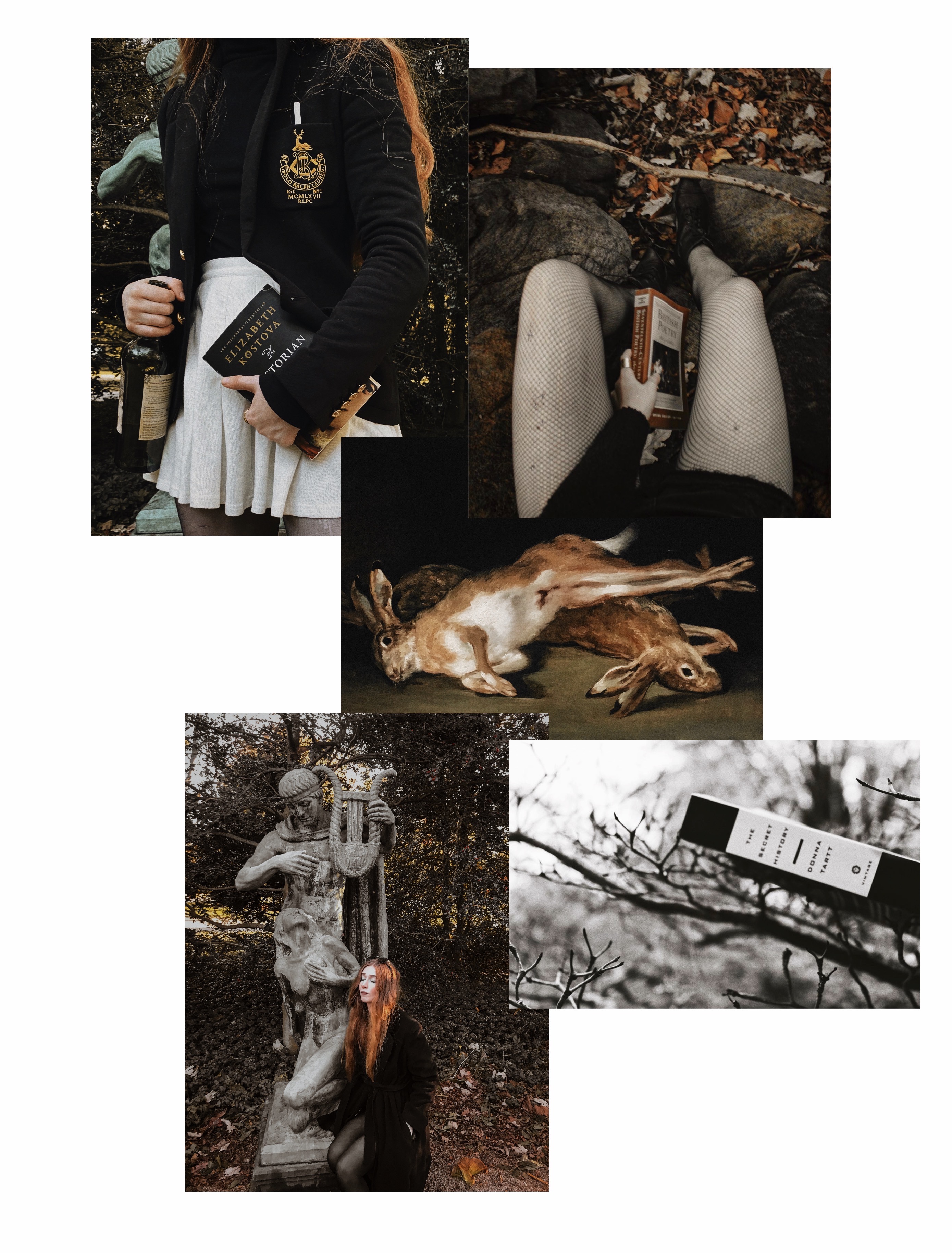
I made a mental note not to bring up Donna Tartt’s “The Secret History” in this review…but seeing as that is my favorite book, I really can’t resist. Much like Tartt’s ‘dark academia’ aesthetic, Bardugo also portrays the forlorn and incredibly troubling atmosphere of a campus cult driven by idealism and nefarious behavior. However, unlike “The Secret History”, this book tackles the social division between class and race on a far more raw level. Alex is biracial and there are many scenes where she expresses her concern over appearing either too much or too little of one ethnicity, similar to her struggle between trying to fit into Yale while simultaneously resenting the overt privilege on display. 

One of the few issues I experienced with this book was the sluggish beginning, which I’ve noticed a few other reviewers also mention. At first, I was hooked because of the rich style of Bardugo’s writing. But then it became apparent that not much was occurring in the first portion of the story, and there was plenty of name dropping and information dumping that did little to help build the setting—rather, it confused me and I felt as though I needed to write down the names and backstories of certain people in order to follow the rest of the plot. But don’t worry! The story does eventually pick up, right around the time when the first corpse is revealed. From then on out, I was turning the pages at rapid speed. Another thing that was likely meant to add to the mystery of the plot, but actually confused me a little more, was the time jumps between chapters. The book fluctuates between seasons and goes back in time on several chapters. 

On a more mundane note, I found this to be a really nice transition for Bardugo’s style. As I’ve mentioned before, this is definitely an adult fantasy story…yet I found a lot of quirky and intriguing hints of previous Bardugo tales hidden within this text and it warmed my heart. (Another side note: the author definitely has a knack for never using a characters ‘true’ name and I think that’s wonderful.) Her writing style has always been unique, but I think Ninth House truly sets Bardugo apart from other authors. All in all, I can’t wait to read her next novel! 

And like all of my positive book reviews, I hope to create a spotify playlist for this story within the week! I’ll post a link once it’s live. 

Sky in the Deep

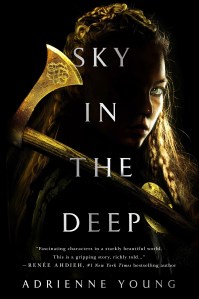
Adirenne YoungBREATHE FIRE— I’ve always had an infatuation with Norse mythology and the Vikings, and I’ve always wondered why no one had written about them through the lens of a YA novel. When I first heard about Sky in the Deep by Adrienne Young, I was like “FINALLY. Someone is finally doing it!” Knowing what I do about reading a new author for the first time, I tried not to get my hopes up too high because I’ve been let down in the past. But Young really delivered with her tale, and I’m so pleased to tell you guys that this book has become near and dear to me. It definitely deserves 5/5 stars and I likely won’t ever stop recommending it. So, let me tell you a little about it!

“I stood at the entrance of the ritual house in the falling snow, holding basket piled high with yarrow. The huge archway was a detailed carving of the mountain, the trees etched into it in slanted patterns and the face of Thora, mouth full of fire.”

Sky in the Deep follows seventeen year old Eelyn, a viking warrior from the Aska tribe set on the coast of the snowy Fjord, who lives by the code “vegr yfir fjor” or “honor above life.” Her clansmen have an ancient rivalry with the Riki clan, who worship the goddess Thora above the Aska god Sigr. She lives to fight, and fights to survive. That is the ways of her people, and that is all she knows. Five years after the death of her beloved brother Iri, a brother who she’d seen fall in battle, she is revisited by his ghost fighting alongside their rival clan. But when she notices how corporal he appears, and how he has seemingly aged with time, she cannot fathom the truth. It is no longer a possibility that Iri is an apparition sent by her god—and her heart refuses to accept the harrowing truth of his deception.

Every five years, the Riki and the Aska converge in the mountains or alongside the coast to fight to the death. It is the way of their worlds, and a tradition that had been kept since the age of their gods. But when Eelyn tries to find her brother amongst broken bodies and swinging axes, she is nearly killed by Fiske—Riki’s new, adoptive brother. Iri pulls them apart before they tear murder one another, but Eelyn is then taken prisoner and sworn to secrecy about her brother’s lineage.

Eelyn must face her brother’s betrayal and live amongst his people, the Riki, and work as their servant if she hopes to survive the winter to then venture back home to her father. When the Riki village is suddenly raided, she must put her life in the hands of the man who nearly took it—Fiske. Her brother’s friend, and her captor, try to figure out how to unite the clans to defeat a deadlier enemy. But some rivalries run too deep, with too much blood spilled, and old rivals will never be truly at rest until their god’s thirst for blood and war is satisfied.

The setting takes place in a vague, Nordic country where one scene goes from thickly iced over lakes to snow-capped mountains where trees tower over the nestled villages. Young’s descriptions of the meeting halls and forests are gorgeous. I loved her writing style, because it easily hooked me from the first page and didn’t leave room for errors. In other words, anything I guessed that would occur actually didn’t occur, even with my close reading. It was a well thought out and characterized story, especially in regards to character development. A major theme throughout was the idea of giving in and changing. When to change, whether or not to change, and who to change for—which ultimately leads to the protagonist’s self-discovery and newfound outlook on life. The best part about this book is definitely following along as Eelyn struggles to find herself in two different worlds. Fiske fights the same inner battle, as does Iri, and all three of them go through this change differently and with contrasting perspectives. It was all very intriguing and stimulating to read.

I also really enjoyed how Young didn’t focus heavily on romance in this story. While there is romance, it isn’t a main aspect to the plot. There are no affairs, love triangles, or unrequited lover tropes involved whatsoever—none of these warriors have time for that. SKY is a story about self identity and coming of age, and Eelyn was a wonderful protagonist whose main concerns rested with her father, her tribe, and understanding how two groups of people can come to live in peace.

Overall, this was an amazing book. I highly recommend it if you’re a fan of the T.V. series Vikings (on History), or if you haven’t seen that show but loved the book…watch it!! I’m biased because Vikings is my favorite television series, and some of the characters in the book reminded me of characters from the show. Also, the soundtrack to the show is a wonderful companion if you want to listen to music while reading.


I have to give a massive thank you to St. Martin’s Press for granting me an early copy of this book and setting up a Q&A with the author, Adrienne Young! Below are the questions Young responded to for the Sky in the Deep Blog Tour.

  1. What inspired SKY IN THE DEEP? How did the idea and Eelyn come to you? DO you have any favorite Viking stories?

The sibling betrayal was definitely the first inspiration for this story. I was driving in the pouring rain on this country road and the first scene just hit me—Eelyn seeing her brother on the battlefield after thinking that he was dead for five years. I pulled over on the side of the road and scribbled a million notes on an old envelope. I was immediately hooked to the idea and I wanted to know what had happened. I started writing that first chapter and I just never stopped.

2. What type of research did you do for your character and world-building? What languages did you study to implement the languages of that the Aska and the Riki speak? What was the strangest thing you had to research for this book?

I did a ton of research for this story. I actually really love to research things so it was a lot of fun. A lot of it was stuff like clothing, landscape, weapons, food, etc. But I did a lot of research into Norse mythology as well to build a foundation for this world. The language used is Old Norse, but it’s a dead language so studying it was really difficult. There is a lot of controversy about it among scholars and there’s no real way to fully understand it, so I just did my best based on my own investigation. I’m definitely not an expert! The weirdest thing I had to research was how to tear out someone’s eyeball. Yuck.

3. What was your writing process like for SKY IN THE DEEP?

Complete and utter obsession. When I draft, I get really buried in the world and I don’t really come up for air until I get to the end. I write as much as I can and list my intake of other influencers that could mess with my mindset. I don’t watch TV or movies or listen o music thats not on my playlist, and I kind of don’t have a social life until it’s done.

4. What was your hardest scene to write? What was the easiest?

I really didn’t struggle to get this story on the page the way I have with other books, so I really don’t know what the hardest scene to write was. But the easiest was the first chapter. I wrote it so fast and it just clicked in so perfectly.

5. Which of your characters are you the most like? Who was your favorite to write?

Eelyn! We have so much in common and she really inspires me. But I think Halvard was the most fun to write. I really, really love him.

6. Do you have a soundtrack for SKY IN THE DEEP? Can you share a couple of songs? What would Eelyn’s favorite song be?

Yes! Music plays a HUGE role in my writing process and I have a playlist for every project. The ones I probably listen to the most while drafting SKY are To the Hills by Laurel, Bare by Wildes, and Rise Up— Reprise by Foxes. But a link to the whole playlist is on my site!

Listen to Young’s playlist here.

7. What books have inspired you to write? What books are you looking froward to reading this year?

The ones that inspired me to write are nothing like my books. One of the most influential ones for me was A Tree Grows in Brooklyn, because the human element is so beautiful and the author explores so many things in that took that really took my breath away. I wanted to write stories that went deep like that, but I love fantasy so I try to write it within that realm.

8. Any advice on querying? Or writing advice for aspiring writers?

Querying—do not just sign with any agent who will take you. Make a dream agent list of qualified agents who have good reputations and make consistent sales. Query them. If they don’t bite, then write another book that they might want. Believe me when I say it is worth waiting or the right agent!

9. Any details about the company novel?

I cant say anything about the companion novel yet! But I’m hoping that we can start talking about it soon because I am really excited about it!


And because I loved this book so much…I made my very own playlist for it! You can follow THIS link to listen on SoundCloud. Most songs are by Wardruna, who I’ll be seeing this spring in concert (aahhh)!Sky in the Deep_cover image
Runaljod // Wardruna
Pertho // Wardruna
Snake Pit Poetry // Einar Selvik
Sacrifice for the Crops // Trevor Moris
Skaldens Song Til Tore Hund // Ivar Bjørnson
Heimta Thurs // Warduna
Resan // Forndom
Burizas // Draugurinn
Dance with the Trees // Adrian Von Zieglers
Viking Boaters Dancing in Scotland // Adrei Krylov


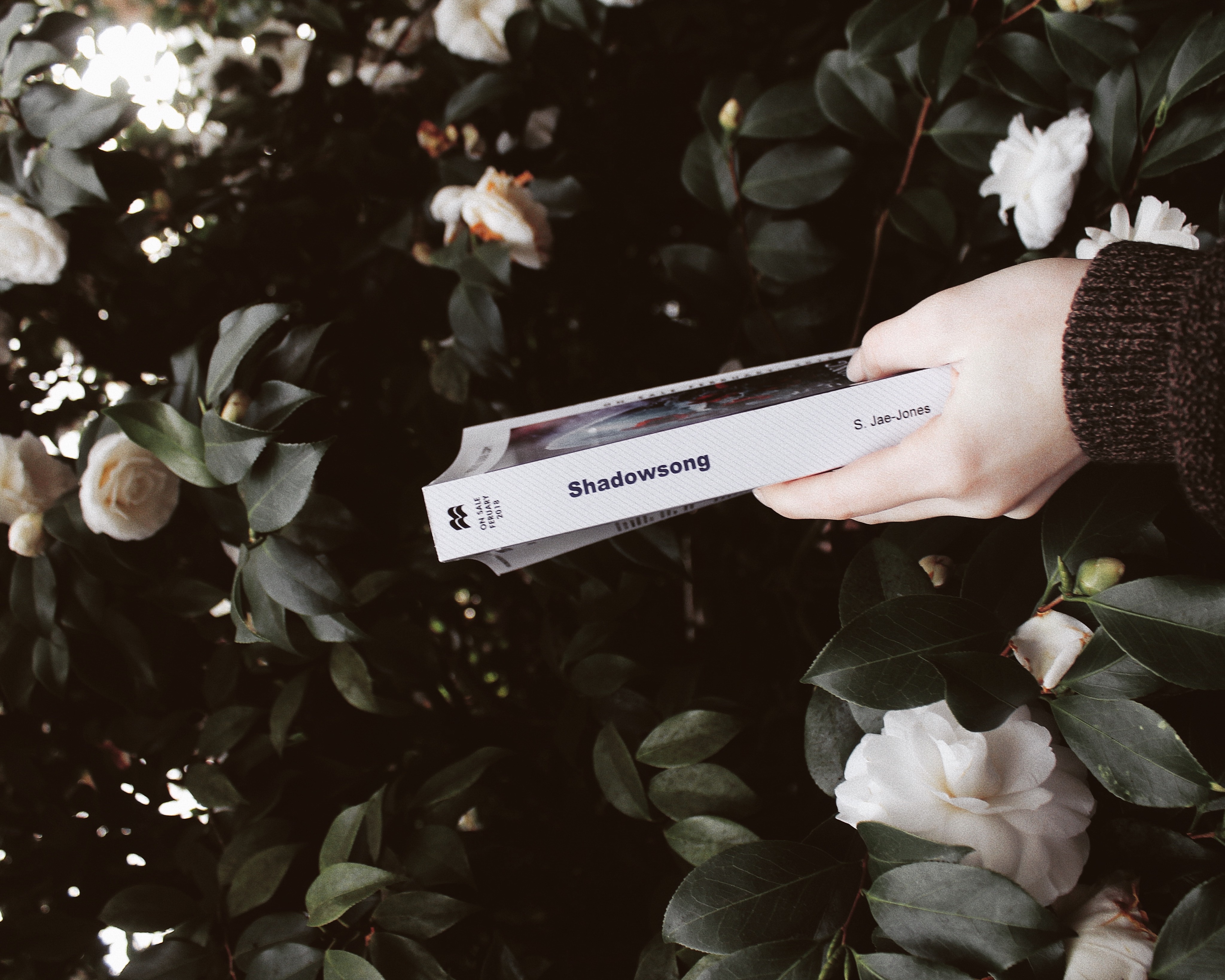
Shadowsong by S. Jae-Jones

*This review does contain spoilers. Please do not read it if you haven’t already read Wintersong or its sequel, Shadowsong. This is also an ARC review—and material in the finished copy is subject to change.

Processed with VSCO with a6 preset

Wintersong by S. Jae-Jones was one of my top three favorite books last year. I was highly anticipating the sequel because of the way in which the first book left us hanging, wondering if Liesl and her Goblin King would ever reunite. In Jones’ lush, austere world of eighteenth-century Bavaria, you find yourself emerged in a story that feels more imbued in folklore than the average genre of fiction. And I LOVE that. The whole time I read Shadowsong I felt the same ambiance as I did in the first novel, even though the first one mostly takes place under the earth and this one traverses between Vienna and our protagonist’s village.

Jones has such a beautiful writing style that brings forth emotions of great heartache and longing for something you might have never experienced, but have heard stories enough that you could almost imagine such an agony. My love for the prose aside, the pace of this story does start out a bit slow.

Unfortunately, I felt that the story never really picked up until the halfway mark or even slightly after that. Perhaps this is because I was anticipating interactions between Liesl and the Goblin King, not Liesl and her siblings. While I enjoyed reading more about Käthe and Josef, I felt like they took up the story and any traces of the main characters from book one were replaced by their tales. This wouldn’t be so bad! If the last book didn’t end with such a cliffhanger about said two characters.

There was definitely a sense of peace and finality at the end of the book, but I was still left longing for more romance between Liesl and Der Erlkönig. I was hoping for a lot more interaction between them. The last moments they share on page made me tear up, but I still wish there were more scenes between the two in this sequel. After all, this is promoted as a YA Romance and I felt the romance aspect severely lacking because there was little to no interaction between the main pairing—just a lot of pining and longing (which is only well-used subtly and in the beginning of a story).

Der Erlkönig didn’t even come across as the same character we fell in love with in Wintersong. He was basically absent most of the book, and although there is a plot-related reasoning for this bizarre behavior, it wasn’t developed enough to make sense until the final pages where the reader is left feeling a bit cheated.

I did, however, particularly enjoy the mention of the Wild Hunt. That has always been a favorite tale of mine, and to have the Goblin King be its head leader me see him as a more antagonistic character, even if he had little control over the matter. It made the story darker than I had thought it could be—which was great.

      “Looming in the shadows was a figure, skin night-black and eyes moon pale. Fingers broken and gnarled like desiccated vines curled around the neck of a violin, the resin cracked and pulled with age. A crown of horns grew from a nest of cobwebs and thistledown, but the face that stared back at me was human. Familiar.”

      Ultimately this book just didn’t sit well with me. The first novel is fantastic, but I feel as though this one was similar to when you’re trying to finish an essay and give up on the conclusion so you just reiterate the first few sentences. I’m really upset by this, but that’s truly how I feel.

My Rating: 3/5
Goodreads link.

winter wrap-up

Books Read in Winter 2017

  • Heart of the Fae by Emma Hamm
  • Veins of Magic (#2) by Emma Hamm [series rating 4/5]
  • Circe by Madeline Miller [4/5]
  • Flux by Orion Vanessa [3/5]
  • The Sun & her Flowers by Rupi Kaur [5/5]
  • Pond by Claire-Louise Bennett [4/5]
  • Little Women by Louisa May Alcott [3/5]
  • Cry of the Firebird by Amy Kuivalainen
  • Ashes of the Firebird (#2) by Amy Kuivalainen
  • Rise of the Firebird (#3) by Amy Kuivalainen [series rating 3.5/5]
  • Shadowsong (#2) by S. Jae-Jones [3.5/5]
  • The Faerie Queen by Edmund Spenser [5/5]
  • Stolen Songbird by Danielle L. Jensen [3/5]
  • The Changeling Sea by Patricia A. McKillip [5/5]
  • A Taste of Honey by Kai Ashante Wilson [4/5]

—All in total, I’d say winter 2017 was a decent reading season. I tried to read some books I’ve never heard of before I stumbled upon them, and even a few sequels here and there. The Faerie Queen was thrust upon me in my Renaissance Literature class, but I loved it enough (and the book is large enough) to warrant a place on this list! Flux and The Sun & Her Flowers are both poetry, while Pond is an autobiography. The rest are fiction, and I believe out of all of them I enjoyed Circe the most, no matter the 4 star rating. I hope spring brings just as many positive reads as winter did! (You can find reviews for all of these books on the homepage.)

Movies Seen

  • It, (dir.) Andy Muschietti
  • Mother! (dir.) Darren Aronofsky
  • Captain Fantastic (dir.) Matt Ross
  • The Lure (dir.) Agnieszka Smoczynska
  • Lady Bird (dir.) Greta Gerwig
  • Very Good Girls (dir.) Naomi Foner Gyllenhaal
  • Call Me by Your Name (dir.) Luca Guadagnino

—I’ve been watching reruns of my favorite show, Vikings, for the most part of winter, but in the meantime these amazing movies found their ways into my heart…especially Captain Fantastic. Lady Bird and Call Me by Your Name were amazing as well, and I cried during both. I’m going to see Black Panther this weekend and I have a feeling it’ll be another winter hit to add to the list! The Lure is a Polish rock-opera type film with mermaids who work in a strip club. Yeah, you just read that.

New Favorite Music

  • gun shy / widowspeak
  • portuguese knife fight / cage the elephant
  • fountain of youth / local natives
  • sure as spring / la luz
  • in the aeroplane over the sea / neutral milk hotel
  • i’m writing a novel / father john misty
  • the spell / naomi punk
  • deer creek canyon / sera cahoone
  • always forever / cults
  • so says i / the shins
  • all apologies / nirvana
  • ancient names (part 1) / lord huron
  • sister / the black keys
  • miracle mile / cold war kids
  • congratulations / MGMT
  • tangible intangible / fly golden eagle
  • happiest man on earth / broken back
  • ruby carol / dan sartain
  • silver lining / guards
  • fire in the sky / palace
  • st.walker / young the giant
  • black beak / young blood hawke
  • so what / the mowgli’s
  • the deep end / hurricane bells

—A bunch of these are fairly old but it’s my first time really getting into the vibe of them. The rest are all recent hits that I’ve been subjected to listen to while working at Free People… and needless to say they’ve grown on me. I really love Widowspeak and Cage the Elephant. You can listen to this playlist here on my Spotify.

Circe by Madeline Miller

I always enjoyed the Odyssey, but it was never a favorite tale of mine. Circe, for those who might not be familiar with the story, was a minor character who’s notorious moment of fame was when she turned Odyssey’s men into pigs. Yes, that actually happened—and yes, she made me enjoy the tale considerably more than had she never been written into it.

With that out of the way, I should begin this review by saying that while I have a decent knowledge of Greek mythology, this story would have been a bit of a struggle to understand had I not known specific myths. For many people, I feel that Circe is going to be one of those books that you’ll need to do some background research to truly understand what is happening. Miller provides enough resources that one can just surmise what is going on without having to recall some middle school lecture about the Odyssey, but there are still going to be holes left unfilled. Even for me, it was a bit confusing at times.

But don’t let this discourage you!

I was already a fan of Miller because of her other novel, The Song of Achilles, so Circe had some big shoes to fill. I’ll just say right now that I didn’t love this story as much as the other novel. For me, it didn’t have the same fast-paced and adventurous ambiance of TSoA, nor did it have the same emotional pull. Circe is a slower read. The romance is essentially nonexistent, which I liked, but the emotional angst wasn’t delivered to the extent that I thought it would be. What I mean to say is; I didn’t really care much for most of these characters. Not like I did with TSoA. However, they are both completely different tales, so its hard to base one book off of the other.

That being said, heres a rundown on the plot.

circe coverCirce is the firstborn daughter of Helios, god of the sun. Her father is a mighty Titan, and her mother a vicious water nymph. Growing up, Circe was an outcast because she appeared more mortal than immortal, and neither of her parents were pleased with her existence but they put up with her regardless. Years later, her mother gave birth to twins—Pasiphaë and Perses. They treated their elder sister with as much contempt as their parents. Circe, being used to the torment, went along with it for centuries. Later, another brother was born into the family named Aeëtes. Circe felt an overwhelming sense of adoration for her little brother and became immensely protective of him. He, in turn, became the only one who spoke to her as an equal.

Circe continued with life, walking in the shadows of her predecessors, until one fateful evening where Prometheus was held on trial for gifting mankind the creation of fire. The Titans unleashed their wrath upon him, and Circe, not knowing what else to do, waited until everyone left to come forth and speak with the cursed god. He told her of his love for mortals, and how their kind treats one another different than how the gods treat themselves. Thus, Circe starts to seek comfort with mortals.

A young sailor by the name of Glaucos enraptures her, and they soon fall in love. Circe finally discovers her powers and is able to transform her lover into a serpentine immortal, to which causes him great fame because everyone believes he was favored by the gods—not that she had been powerful enough to perform the impossible. But when Glaucos starts to fall for another, Circe goes before her father and claims that she was the one who transformed him. Of course, no one believes her. In her frustration, she transforms Glaucos’ new lover into a monster, and is banished to an isolated island to live out her days alone as punishment.

It is on this island that mortals came from the sea in hopes to find shelter. And Circe, having grown desperate, entertains each crew of men that arrive on her island until their true intentions cause her to take matters into her own hands. After attempting to rape her, Circe transforms the men into pigs. She repeats this for each ship that seeks refuge until Odysseus makes an appearances and pleads for her to change them back.
From there, Circe begins to understand life and its often cruel meanings.

I think what I enjoyed the most in this book was the character development. Circe goes from being a small girl who never stood up for herself to an angry woman who transformed people into creatures until she finally blossoms into a wise witch who’s whit and knowledge of mortal and immortal behaviors causes her to become a compelling force.

She is the type of character that you’ll find yourself rooting for. An underdog of sorts. And while she might not ever be the most powerful character in the tale, her presence is one to be noticed and that is why I ended up liking her so much. She doesn’t need blades or even her spells, she just has to rely on her patience and cunning. (There are a few moment between her and Athena that will really demonstrate this.)

Plot aside, Miller has such a beautiful writing structure that she could have given me a story about the adventures of a worm and it wouldn’t have been so awful. Its lyrical and flows smoothly—two things I love in a book. The pace might be a bit dragging at times, but it eventually picks up when you least expect it. Overall, you’ll be happy you kept going.

So if you’re looking for a romantic book, or one about bloodshed and battles, this probably isn’t for you. But if you’re interested in a story with amazing character development that explores the many strengths of a women who has been tested by literally everything she’s ever had to deal with…congrats. Heres your next read.

My rating: 4/5
Goodreads